Product1 publisher3 min readPublished
Tesla asks firefighters to call two support numbers before a Cybercab can be moved
Tesla's new first responder guidance makes a company employee on a support line part of the emergency scene. A former fire chief says the extra steps land on an officer who is still working out what happened.
The Product Desk · Product desk
What happened
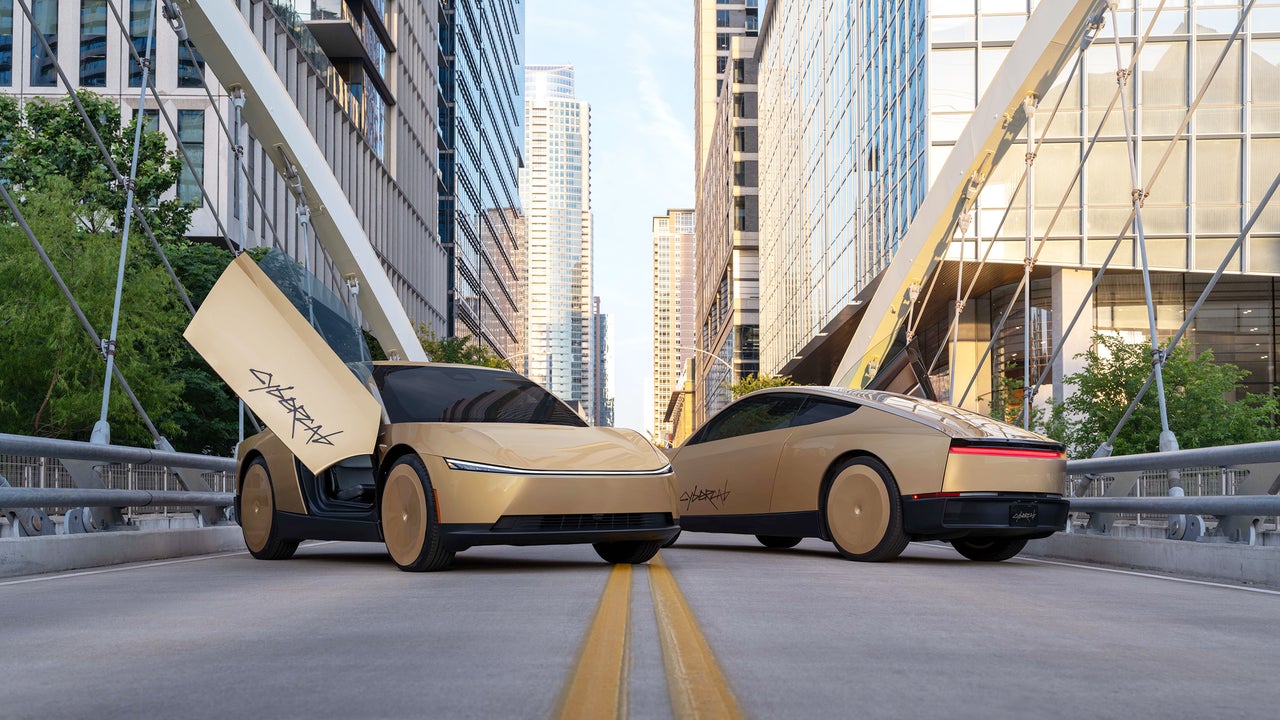
- Tesla's Cybercab reached public roads this month, accepting rides and running autonomous service in Austin, while in some other cities the cars turned up with no announcement.
- Tesla's new first responder guidance says a firefighter at the scene of a crash might have to call two different support numbers and wait for a Tesla staffer to connect with the vehicle.
- Police who want a Cybercab kept out of an area have to ask Tesla to enact a geofence, the software command that bans a self-driving car from a given area for a set period.
- Responders who try to drive the car themselves have to work through a touch screen that may be hard to reach while wearing gloves, according to Fast Company.
- NBC has already reported problems with the emergency hotline numbers responders are told to call.
Compiled by The Product DeskSomething wrong?How this is made
Why it matters
- cost The training hours and the time spent on hold come out of a fire department's budget, and Lindsey says the officer paying that cost is often the only one on scene.
- constraint Until a Tesla employee picks up and connects to the car, the fastest way to clear a blocked lane is outside the responder's control.
- contradiction Tesla's guidance treats manual operation as something responders may attempt, while NHTSA has asked whether the Cybercab can be driven manually at all, so departments cannot yet write a procedure that both parties would sign.
- precedent If every operator ships its own hotline, labels and door mechanism, cities inherit a training obligation that grows with each new entrant.
The person this guidance lands on is the officer who arrives first, sometimes alone. Jeffrey Lindsey, a former fire chief who directs fire and emergency services at the University of Florida's design college, said the first minutes go somewhere else entirely: "When you arrive on the scene of an incident, your main focus in the very beginning is scene safety to make sure everything's safe. You're taking in the whole scene. You're trying to figure out what's going on" [11]. Often only one officer is on scene, he said, and calling a support center adds to what is already "a full plate of things they have to accomplish" [12]. Lindsey told Fast Company that might be too much extra responsibility to put on responders [10].
Tesla's document is written as safety information. It also makes Tesla's own staffing part of the emergency path. It asks responders to learn the Cybercab's doors and cameras, and to recognize the labels that mark when the car is in autonomous mode [5]. The responder here has no account and no training budget from the company whose product they are standing next to.
The guide is blunt about one hazard of improvising. "Trying to support low voltage power on a vehicle that has been in a collision could lead to a possible electrical fire," it says [7].
And Tesla is not the only operator a city's responders have to deal with. Waymo runs its own first responder line, and Fast Company has reported problems with it that predate the Cybercab, including responsiveness and how the cars handle hand signals [17]. A city served by both companies hands its responders three vendor phone paths to keep straight, Tesla's two plus Waymo's one [20]. Earlier this summer the National Highway Traffic Safety Administration wrote to the entire industry about the risk of autonomous vehicles interfering with first responders [18].
The record of actual harm is thin so far. Fast Company reports it is not clear that Cybercabs have yet caused problems for first responders [8]. One customer said they were trapped in a hotel garage after a Cybercab could not navigate its way out [9]. Bloomberg reported last year that the doors on other Tesla models can trap people inside when the car runs out of power [15]. Tesla has also been charged with educating fire departments across the country on the nature of lithium-ion battery fires [16].
The Cybercab's emergency path holds two kinds of steps. Some of them cannot finish until one of Tesla's employees answers a phone. Others have to be done quickly, outdoors, by someone wearing gloves. The step that clears the roadway is both of those at once, and that is where a product fails in public.
What to watch
- Whether NHTSA's questions about manual operation turn into a formal information request or a finding on the Cybercab touch screen.
- Whether any fire department publishes its own Cybercab procedure, or declines to take on the hotline steps at all.
- Whether Tesla consolidates the two support numbers or adds a physical control that works with gloves on.