Invest1 publisher2 min readPublished
JPMorgan models 98% of Tesla's $320bn robotaxi revenue inside a fleet Tesla owns
Rajat Gupta of JPMorgan gives the customer-supplied Tesla Network $5 billion of his $320 billion 2035 robotaxi forecast, and the other $314 billion rides on cars Tesla buys with its own capital. Waymo runs the same structure.
The Investor · Invest desk
What happened
- Rajat Gupta of JPMorgan puts Tesla's robotaxi revenue at $320 billion by 2035 and has roughly $314 billion of it, about 98%, flowing from a fleet Tesla itself owns and operates.
- The customer-operated Tesla Network, the piece of the model that depends on private owners lending out their cars, is projected to contribute about $5 billion.
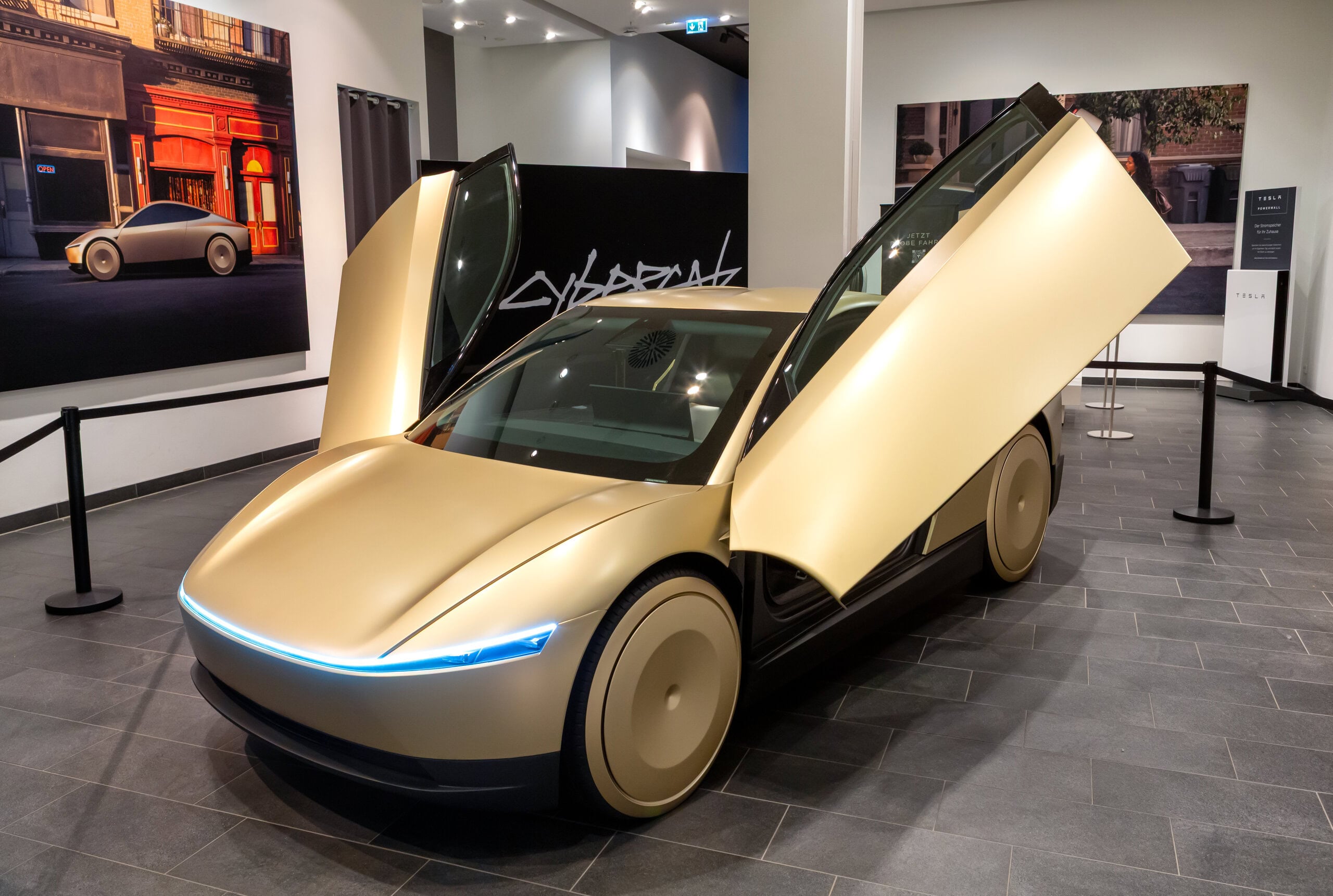
- Tesla's CFO has guided 2026 capital expenditures north of $25 billion, aimed largely at expanding the fleet, ramping Cybercab production at Gigafactory Texas and building ride-hailing infrastructure.
- Tesla reported Q2 FY2026 revenue of $28.24 billion, up 25.5% year over year, with earnings per share below consensus expectations.
- The robotaxi service operates in seven major US metro areas today, alongside 1.48 million active Full Self-Driving subscriptions that generate revenue while the autonomous fleet scales.
Compiled by The InvestorSomething wrong?How this is made
Why it matters
- constraint Every car behind that $314 billion is capital Tesla has to raise or earn first, so the revenue line and the funding requirement now grow together in a way a network supplied by owners' idle cars would not.
- exposure Owners who bought on the fare-sharing promise are holding an asset that accounts for 1.6% of the 2035 revenue in JPMorgan's model, which is 1.6 cents of every projected dollar.
- decision Capex above a fifth of revenue commits Tesla to buying its own ride-hailing supply. Depreciation and the cost of financing each vehicle then sit inside Tesla's P&L for as long as the car is in service.
- precedent If Gupta is right about the structure, the argument for Tesla has to be won on fleet economics against Waymo, which already manages its own vehicles.
Divide the two lines in the model and the company-owned fleet comes out about 63 times the customer-owned one, $314 billion against $5 billion [2][3][1]. The smaller number is the one Elon Musk's pitch depended on, with owners lending their cars out and making money while they slept [4]. Spread $5 billion across the roughly 9 million cars in Tesla's global fleet and each one earns about $556 a year, less if Tesla sells more cars before 2035 [8][2].
Owning the supply means buying it. Gupta describes a vertically integrated, capital-intensive operation [13], and the guided 2026 capital spending of more than $25 billion works out to about 22 cents for every dollar of Tesla's current annualized revenue of roughly $113 billion [7][10][3]. The 2035 figure is close to three times that current run rate, arriving in about nine years [10][4].
Two readings sit under the 98% split. One is the forecast it appears to be. The other is a modelling convenience: capacity supplied by owners depends on owners opting in, on terms Tesla has not published, and an analyst who cannot forecast that will carry a token number for it instead. Crypto Briefing's account of the note does not say how Gupta built the split. A third possibility is timing, with owner-supplied capacity showing up after the 2035 window closes.
The rating belongs next to the number. JPMorgan moved Tesla from Underweight to Neutral in June 2026 and lifted its price target from $145 to $475, more than triple [5][5]. The $320 billion sits inside a model whose conclusion stops at Neutral.
In my view the funding question now governs this business, because a fleet Tesla owns is a depreciating asset base and the margin turns on paid miles per car per day and the cost of the money that bought the car. Gupta has Tesla converging on Waymo's company-operated structure, with the difference that Tesla makes its own vehicles and controls its own chip design [11].
What would undo that reading is Tesla publishing owner-supply terms good enough to pull real capacity in, and the $5 billion line rising in a later note. The base it would start from is narrow: 1.48 million Full Self-Driving subscriptions against about 9 million vehicles is roughly one owner in six [8][9][6]. Gupta's own conditions for the $320 billion are regulatory approvals across dozens of jurisdictions, continued improvement in the autonomous driving technology, consumer willingness to ride in driverless vehicles, and enough Cybercabs to meet demand [12].
What to watch
- Whether a later JPMorgan note moves the $5 billion Tesla Network line, and on what published owner-supply terms.
- Whether 2026 capital spending lands above the guided $25 billion, and how much of it buys vehicles rather than factory.
- Whether the robotaxi service adds metros beyond the current seven, and which regulators clear it.