InvestNot yet confirmed elsewhere1 publisher3 min readPublished
Suede up 124%, leather up tenfold: Korea's fall outerwear buy is a mix problem
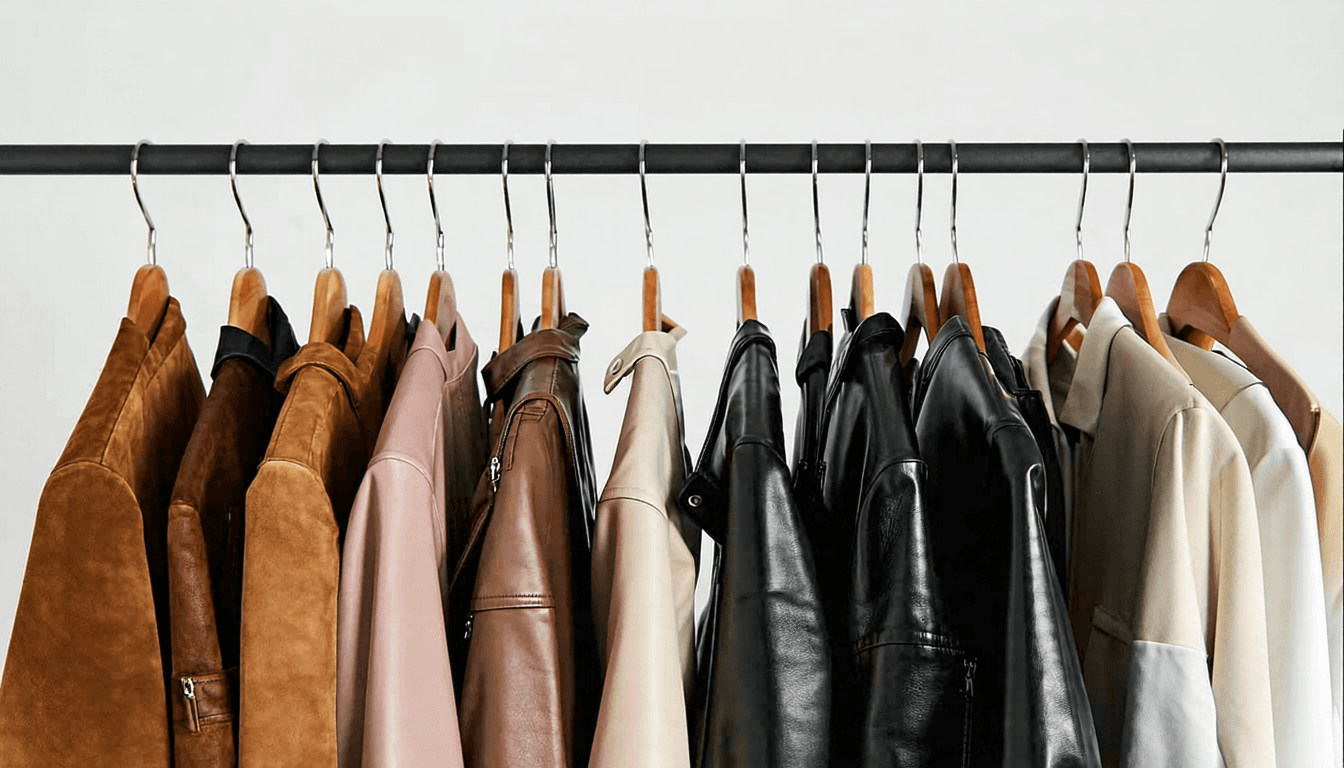
29CM logged a 124% jump in suede transactions and Shinsegae International's Eleil more than tenfold on leather jackets. Vince's own assortment says the leather share is falling.
The Investor · Invest desk
What happened
- 29CM said suede outerwear transactions rose more than 124% year on year over the 7th to the 18th of this month.
- Vince is widening its jacket range to 15 styles from eight, with leather and mouton going to eight from five.
- Jill Stuart New York's women's line took standalone jackets to 78% of its offer, from 32% a year earlier.
Why it matters
- constraint The search spike is a week-on-week comparison, which limits how far it can be read as seasonal demand; only two lines in the material are year on year, and neither discloses its base.
- exposure Shearling and mouton buys were committed long before this month's data existed, so a mild autumn leaves the unsold stock with the distributor rather than the platform reporting the spike.
- decision With faux-leather and goatskin suede both trading on the same trend, the buying choice is a price tier rather than a material, and that choice is what sets the realised margin.
- precedent Eleil has already pushed leather past outerwear into skirts and pants, which sets up bottoms as the next season's ask instead of a jacket-only trade.
Vince's assortment shows the mix problem the platform numbers hide. It is going to 15 jacket styles this year from eight, and leather and mouton jackets to eight from five [10]. That is 87.5% more jackets against 60% more leather ones [14][15]. So the leather and mouton share of the jacket range actually falls, from 62.5% to 53.3%, while everything else more than doubles, three styles to seven [13][16]. A buyer reading 29CM's 124% suede transaction gain [2] as a mandate to load leather would be buying against what one of these brands did with its own open-to-buy.
The two platform figures also do not sit on the same axis. The 124% is measured against the same period a year earlier; the 140% gain in searches for "suede jacket" is measured against the previous week [2][3]. Week-on-week search volume in the run-up to Cheoseo [1] tracks the weather more than it tracks the season. That leaves two year-on-year lines: the transaction number, and Eleil's leather jackets, which Shinsegae International puts at more than tenfold over the first 20 days, an increase above 900% [4][18]. Neither comes with a base, and a tenfold move on a small women's-wear leather program is a different fact from a tenfold move on a core one.
Where the margin sits is decided inside the material rather than by it. Vov has gone both directions at once, adding faux-leather shirts, skirts and short jackets to widen a cheaper range while rolling out natural sheepskin and goatskin suede as premium [6]. Della Lana pairs sheepskin with goose down in a single bomber [7]. Vanessa Bruno puts nylon alongside leather, suede and fur across its bombers and blousons [12]. One trend word on the tag, several cost structures underneath it.
The number with real money already behind it is Isabel Marant's. LF, which distributes the French brand in Korea, raised its fall-winter outerwear buying volume by 188% year on year, concentrated in shearling fur and mouton [9]. That stock was committed well before the 12-day window the platform data covers [19]. LF's stated read is that the light formal look is moving off lightweight summer fabrics and onto texture: leather, suede, shearling and tweed [8].
The more durable signal is category, not fibre. Jill Stuart New York's women's line took standalone jackets to 78% of its offer from 32%, 46 points and roughly 2.4 times [11][17], and Eleil pushed past sheepskin jackets and shirt-jackets into leather flare skirts and lambskin pants [5]. Shinsegae International attributes the appetite to leather being shown heavily in 2026 fall-winter collections in Paris, Milan, New York and London [21]. A less flattering explanation also fits the same data: a jacket sold on its own is a jacket sold at full price, and a leather skirt is the second unit in the same basket.
What to watch
- Whether 29CM publishes September suede transaction data on a year-on-year basis once the end-of-summer heat effect has passed.
- Whether Eleil's leather flare skirts and lambskin pants sell through, or the tenfold gain stays confined to jackets.
- Which Vov tier carries the volume, the faux-leather range or the sheepskin and goatskin premium.
Clarity's read
What the record supports and how the coverage leans. The claims behind it follow.
Reality
- Evidence30
- Adoption52
- Hype gap+32
- Incentives76
- Confidence34
Claim ledger
Ranked by verification strength, evidence, and original report placement.
- [1]
Demand for fall fashion is picking up ahead of Cheoseo, the traditional end-of-summer heat marker, prompting fashion firms to roll out new outerwear built around suede and leather.
- [2]
Suede outerwear transactions on 29CM rose more than 124% between the 7th and 18th of this month from a year earlier, the platform said on the 23rd.
- [3]
Searches for "suede jacket" on 29CM over the same period jumped more than 140% from the previous week.
- [4]
Eleil, a women's wear brand run by Shinsegae International, saw leather jacket sales rise more than tenfold between the 1st and 20th of this month from a year earlier.
- [5]
Eleil has widened its range beyond sheepskin jackets and shirt-jackets to leather bottoms, including leather flare skirts and lambskin pants.
- [6]
Vov released faux-leather shirts, skirts and short jackets to expand a more affordable range, and also rolled out premium items such as natural sheepskin and goatskin suede jackets.
- [7]
Della Lana introduced a leather bomber pairing sheepskin with goose down, along with suede jackets and skirts.
- [8]
LF said a "light formal" style is in vogue, and that where the trend emphasized lightweight materials and loose silhouettes in summer, it is shifting for fall-winter toward highlighting the texture of materials such as leather, suede, shearling and tweed.
- [9]
Isabel Marant, the French brand LF distributes in Korea, increased its outerwear buying volume by 188% from a year earlier this fall-winter, centered on shearling fur and mouton.
- [10]
Vince is expanding its jacket offerings to 15 items this year from eight, and increasing its leather and mouton jackets to eight from five.
- [11]
Jill Stuart New York's women's line raised the share of standalone jackets to 78% this year from 32% a year earlier, strengthening items suited for everyday use on their own rather than as part of a set.
- [12]
Vanessa Bruno has built its jackets around relaxed tailoring that layers over shirts or knits, applying materials including nylon, leather, suede and fur to its bombers and blousons.
- [13]
Leather and mouton fall from 62.5% of Vince's jacket assortment to 53.3%.
- [14]
Vince's total jacket count rises 87.5% year on year, from eight styles to 15.
- [15]
Vince's leather and mouton jacket count rises 60%, from five styles to eight.
- [16]
Vince's non-leather, non-mouton jackets go from three styles to seven, an increase of about 133%.
- [17]
Jill Stuart New York's standalone jacket share rises by 46 percentage points, about 2.4 times the prior year's share.
- [18]
A rise of more than tenfold in Eleil's leather jacket sales is an increase of more than 900%.
- [19]
The 29CM transaction comparison covers a 12-day window (the 7th to the 18th inclusive), and the Eleil comparison covers 20 days.
- [20]
The 124% transaction figure and the 140% search figure use different baselines: one is year on year, the other week on week, so they are not comparable measures of the same trend.
- [21]
A Shinsegae International official said interest in leather products is higher than ever this year, after major luxury brands showcased leather pieces heavily in their 2026 fall-winter collections at the four major fashion weeks in Paris, Milan, New York and London.
- [22]
A fashion industry official said product differentiation through materials and silhouettes will stand out in this year's fall-winter outerwear market, and that consumers' leather choices will widen further as brands vary materials, collars, lengths and silhouettes.
Sources
1 independent publisher whose own reporting we read for this story.
- en.sedaily.comSuede and Leather Drive Korea's Fall Outerwear Push
1 article · August 22, 2026
Topics and entities
Follow any of these and your For You feed starts watching them — no settings page required.