Science1 publisher3 min readPublished
Quake-weakened rock and human-caused warming combined to cause Nepal's 26 August avalanche, study finds
World Weather Attribution scientists found human influence has made annual temperatures about 1.9C warmer near the site of Nepal's 26 August avalanche. A Canterbury researcher on the team says the Southern Alps share many of the same conditions, though he expects any such event there to be much smaller.
The Scientist · Science desk
What happened
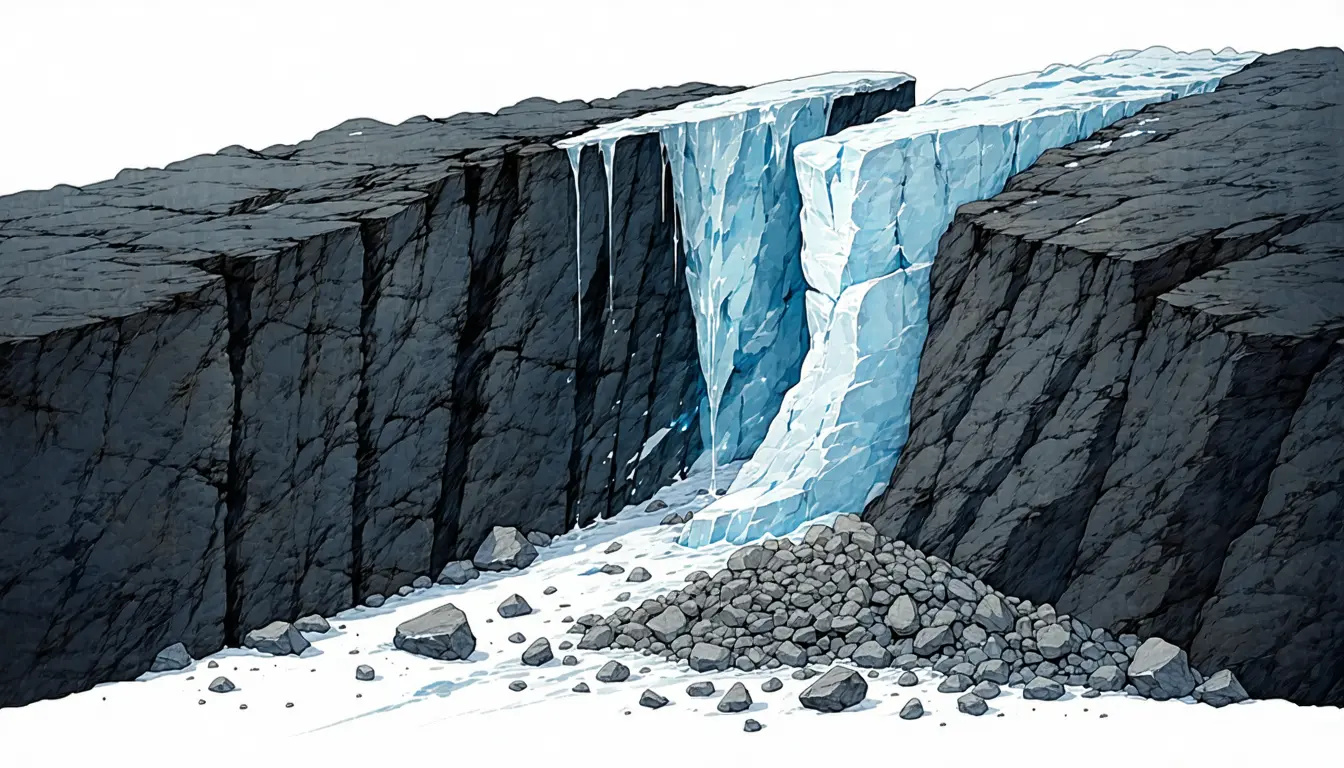
- The rock and ice avalanche in the Himalaya rapidly transformed into a devastating debris flood.
- Team member Robinson, a senior lecturer at the University of Canterbury, said no single factor explains the disaster.
- Robinson's part of the study examined whether Nepal's magnitude 7.8 earthquake of 2015 played a role and how it combined with climate-driven changes.
- Robinson puts the chance of a major Alpine Fault earthquake in New Zealand within the next 50 years at 75%.
- World Weather Attribution published the study on 17 September under a title saying rapid Himalayan warming pushes geohazard cascades beyond adaptation limits.
Compiled by The ScientistSomething wrong?How this is made
Why it matters
- exposure Robinson expects events like this in the Southern Alps, and growing tourism at places like Aoraki Mount Cook National Park will put more people in that terrain.
- decision If quake-damaged rock stays prone to collapse for years, as the Nepal evidence suggests, Southern Alps hazard plans have to treat an Alpine Fault rupture as raising slope risk long after the shaking ends.
- constraint If no level of adaptation could have limited Nepal's losses, as Robinson argues, local hazard planning has a ceiling for the largest cascades, and cutting emissions remains part of reducing the risk.
The figure the study attributes to human influence is a temperature. Near the collapse site, July and August are now about 1.5C warmer because of human influence, and annual temperatures are about 1.9C warmer [6][7]. The annual figure is about 0.4C above the summer one. On average, then, the other ten months have warmed more than July and August [1]. The phys.org account of the study does not report how much that warming changed the odds of the collapse itself.
On the earthquake, Robinson described what the team already knew. "We knew the earthquake had caused substantial damage in this area and triggered a catastrophic fatal landslide on the other side of the mountain," he said [9]. "Since then, the number of landslides in this region has increased, particularly at high elevations. That suggests the earthquake damaged and weakened the rock, making these large collapses more likely even years after the event." [10]
As Robinson describes it, the evidence for weakened rock is a rising landslide count, and his verb is "suggests" [10]. Warming has acted on the same high slopes over the same years [7]. A count on its own cannot say how much of the increase comes from quake damage and how much from heat. I think the multi-cause conclusion holds even if the earthquake's exact share stays open, because it only requires that each factor contributed. Robinson's summary lists them together: "When we combine the role of the earthquake in 2015 with longer-term trends of warming temperatures, the loss of glacial ice and permafrost, and changing snow and rainfall, it's clear that a multitude of factors came together to cause this event." [5] The team behind it included specialists in landslides, glaciology, climate change, flooding, data science and risk management [3].
New Zealand has most of the same ingredients, according to Robinson. "We find many of the same conditions here in Aotearoa New Zealand. Our climate is warming, our glaciers are receding rapidly, and at higher elevations we are seeing less snow and more rain," he said [11]. The Southern Alps have not had a major earthquake recently [12]. "We shouldn't be surprised to see events like this in the Southern Alps in the future," Robinson said [13]. He was just as plain about scale: "Fortunately, they are highly unlikely to be anywhere near the size we saw in Nepal, and we have far fewer people living in our mountains." [14]
Robinson was blunt about adaptation. "No level of adaptation could have prevented or minimized the losses Nepal has seen," he said [16]. He wants local preparation to go together with cuts at the source: "We need to continue addressing climate change at the source and limit warming by reducing carbon and other greenhouse gas emissions, alongside adaptation." [17]
What to watch
- Whether the full study estimates how much warming changed the likelihood of the collapse itself, beyond the 1.5C and 1.9C temperature attribution.
- Landslide inventories for the region that separate post-2015 quake damage from warming effects at high elevations.
- Hazard assessments for visitor areas in Aoraki Mount Cook National Park that consider glacier retreat, rain-on-snow changes and Alpine Fault shaking together.