Product2 publishersIndependently confirmed3 min readPublished
Shoppers turn Amazon's editable About You page into a showcase of its strangest guesses
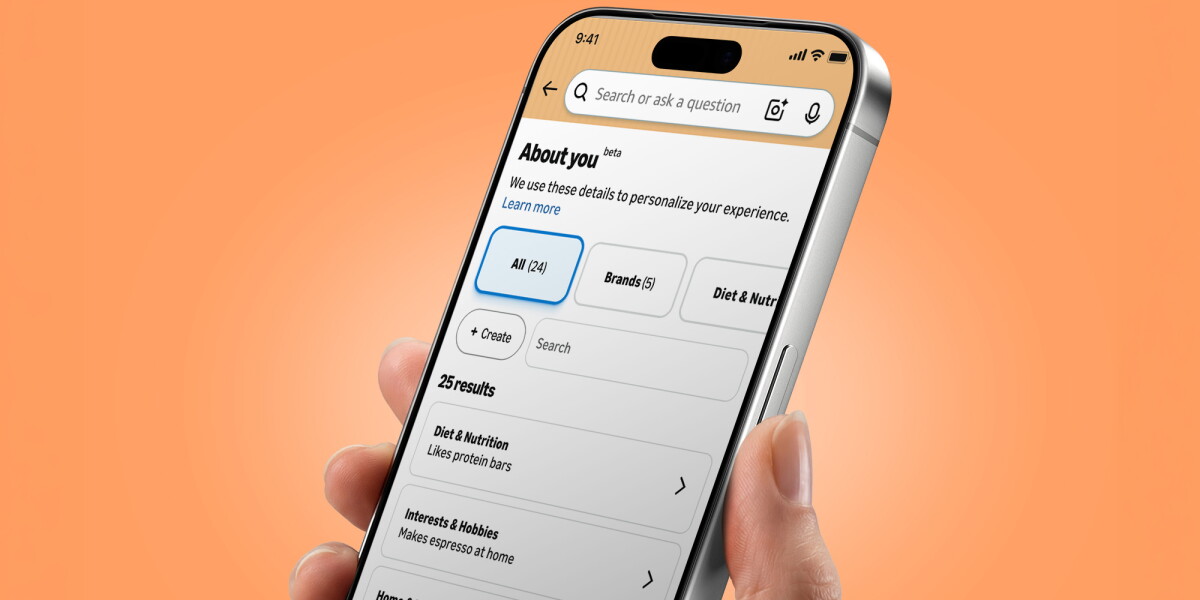
Amazon's About You page, built from five kinds of shopping data, went viral after a Threads user found it had concluded she "has flat buttocks." Teams planning to show users an inferred profile should expect the strangest line to be the one that gets posted.
The Product Desk
Drafted by a language model from the sources cited here and checked against its claim ledger before publication. How we use AISend a correction
What happened
- Other shared profiles say users "cannot keep real plants alive," "treats cats as biological children" and "has no friends," and one says its owner does not "trust people easily."
- Another shopper told Business Insider that Amazon had decided she has a husband with "skinny legs."
- The page lists what Amazon has inferred from each customer's activity to shape recommendations, and shoppers can edit or remove each item.
- Shoppers can also put the question "What do you know about me?" to the Alexa for Shopping assistant.
Compiled by The Product DeskSomething wrong?How this is made
Why it matters
- exposure Any inference written as a sentence about a shopper's body or relationships is one screenshot from a public feed, so recommendation labels now carry the exposure of published copy.
- constraint The edit control helps only after a shopper has read an entry, so a team copying the page absorbs the full cost of every badly worded guess on first view.
- decision Judging the page by shares would reward its most uncomfortable entries; a team has to commit to edit and delete rates tied to later purchases as the measure before it counts the viral posts as success.
One shared profile noted that its owner reads Kindle books on a phone in the shower [12]. On Reddit, a user said Amazon had decided they do not know what truffle should taste like [13]. Neither entry names a product; each is a sentence about a person, written by a recommendation system and left in a settings menu for that person to find [1].
Amazon pitched the page as a way to improve recommendations. "Understanding your preferences is fundamental to providing you with high-quality, relevant recommendations," the company wrote when it launched About You on 13 May [16][15]. According to Amazon, the profile draws on five inputs: purchase history, searches, saved lists, product reviews and conversations with the Alexa for Shopping assistant [5][19].
The path a product team pictures for a page like this is short. The shopper opens the list, spots a wrong guess, deletes it, and the next recommendation improves. The shoppers in the Business Insider and Verge accounts did something else. They looked for the entry that sounded like a verdict on them and posted it, and one post set off the rest [2]. The Verge reported that the "flat buttocks" conclusion came from one woman's purchases [9]. Other entries read "cusses when scared" and "finds it hilarious when toys get stuck to ceiling tiles in the classroom" [8].
Those odd sentences did something the settings menu had not. They sent people looking for the page. It sits under Shopping preferences in account settings [6], and the route The Verge printed runs through three selections and two scrolls from the account icon [7][20]. The Verge wrote that "some of us didn't realize" the profile could be checked there at all [18].
By The Verge's account, most entries are dull. "While some of these descriptions seem like a roast from Amazon, most of them are pretty generic," The Verge's Emma Roth wrote [4]. Her own list covers aquariums, coffee and video games, and she said all of it is accurate [10]. The posts show which entries people notice: the ones about bodies, friendships and temperament. They do not yet show a trust problem in any form a product team could measure. Neither report includes figures on how many shoppers edited or deleted entries.
A team weighing its own version can put each inference on a two-by-two grid. The top row describes the shopping, the bottom row describes the shopper, and the columns split right guesses from wrong ones. Roth's aquarium list is a right guess about the shopping, useful and unlikely to be posted. A wrong guess about the shopping is the case the edit button was built for. An accurate line about a shopper's friendships or body is the box to fear, since being right is what makes it uncomfortable. Getting the shopper wrong looks like the profile that misnamed a Business Insider editor's partner [14].
I'd keep the whole bottom row off the screen and show those inferences as the product category they drive. The tradeoff is discovery. I'd expect a list of categories to draw no Threads wave, and a page nobody shares stays three selections deep in settings [20].
What to watch
- Whether Amazon discloses how many shoppers edited or deleted About You entries, or rewrites how person-level guesses are phrased.
- Whether Alexa for Shopping's answer to "What do you know about me?" repeats the same sentence-style guesses about bodies and relationships.
- Whether Amazon adds a single switch to turn off inferred entries instead of editing them one at a time.