Seoul cuts healthcare from a services framework bill that has stalled since 2011
Seoul wants a services framework law passed this year by excluding healthcare, the issue that has stalled the bill since 2011. Three of the four bills pending in the Assembly already use that carve-out, so the test now is a floor vote.
The Investor · Invest desk
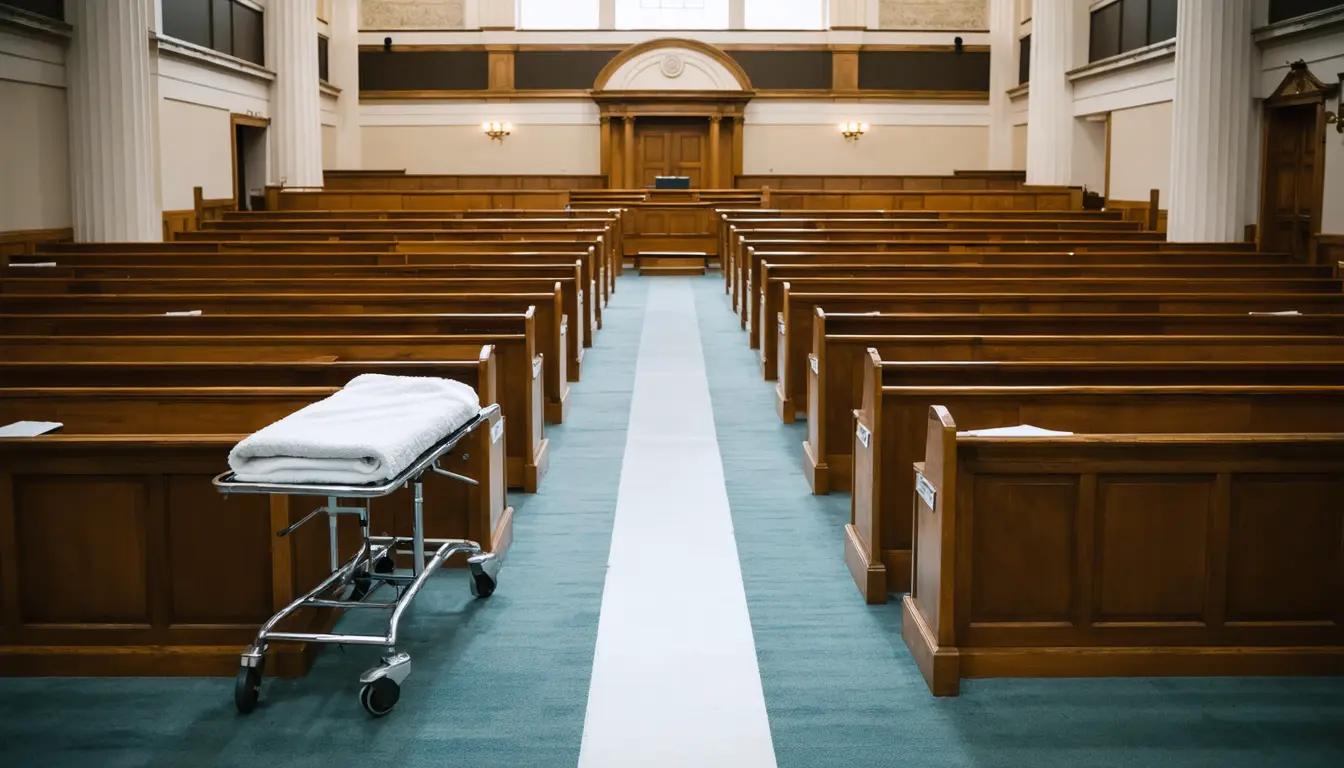
Under the compromise, matters governed by five statutes, including the Medical Service Act, are excluded from the law's scope. Three of the four bills pending in the Assembly leave healthcare out. The effort to enact the law has run 15 years.
| Figure | Value | Note | Claim |
|---|---|---|---|
| Statutes whose matters the compromise excludes | 5 statutes | 7 | |
| Pending bills that leave healthcare out | 3 bills | of the four pending in the Assembly | 8 |
| Years of effort on the law | 15 years | 1 |
What happened
- Deputy Prime Minister Lee Hyoung-il asked the National Assembly on the 14th, at a ministers' meeting that doubled as a service industry task force, to enact the bill this year.
- A Ministry of Economy and Finance official said the main points of contention had largely been resolved as the two parties agreed to narrow the scope.
- Separately, the government unveiled a K-beauty package that includes a 25 billion won venture fund and 7.2 billion won for cosmetics manufacturing AI.
Why it matters
- constraint The sector where the 2011 fight began is outside the law, so any deregulation the framework authorizes has to come from finance, retail, education, tourism and other services.
- contradiction The framework law leaves medical matters out while the K-beauty package eases visa rules for medical services and wellness; the instruments are separate, and the report does not say how they interact.
- cost The only spending in the report is 32.2 billion won for cosmetics, so the framework law's first funded test is small and its sector list is still unpublished.
The case for passage rests on one diagnosis, and it comes from the ministry that wants the bill. A Ministry of Economy and Finance official said fears that healthcare would be commercialized had been the main barrier, and that the two parties had mostly settled their disputes by agreeing to make the law narrower [9]. Three of the four pending bills, or 75%, take that approach [8][16]. If the fourth still covers healthcare, it is where the old fight would resume.
The 2011 version was broad on purpose: a legal basis for deregulation and support across finance, healthcare, retail, education and tourism [5]. The Democratic Party, then in opposition, objected that allowing for-profit hospitals serving foreign patients would lay the groundwork for privatizing healthcare [6]. The compromise now removes matters governed by five statutes, including the Medical Service Act and the Pharmaceutical Affairs Act, from the law's scope [7]. Deputy Prime Minister Lee Hyoung-il told ministers the country needs "second and third runners that can race alongside semiconductors and drive growth" [3], but the report does not list which sectors the new bill would cover beyond the exclusions.
The only money in the report sits in a separate package for cosmetics: a 25 billion won venture fund [10] and 7.2 billion won for manufacturing and quality-control AI [11], 32.2 billion won together [15]. Support for that one industry is split across three ministries: Health and Welfare handles promotion, Food and Drug Safety handles oversight, and Culture, Sports and Tourism handles tourism [13]. Statistics on the customized-cosmetics market are not properly compiled [13]. Joo Hwan-wook, who coordinates policy at the Ministry of Economy and Finance, said domestic services are under-supported given how much they could grow [14]. The same package eases visa requirements in fields such as medical services and wellness [12]. That route is a government plan, separate from the bill before the Assembly.
We think the carve-out improves the odds of passage this year and shrinks what passage delivers, because it removes the sector that repeatedly derailed the bill [2]. The Assembly may raise an objection the ministry did not anticipate, which would make the single-cause story too tidy. The fourth bill may keep healthcare and split the parties again. Or the bill may pass and the sector list prove thin. So far the ministry's own account is the only evidence that the dispute is settled.
What to watch
- Whether the National Assembly schedules committee review of the four pending bills before year-end, and how the fourth bill treats healthcare.
- Whether the Ministry of Economy and Finance publishes the sectors and deregulation measures the framework law would cover beyond the five-statute exclusions.
- Whether K-beauty support is consolidated from the three ministries that now split promotion, safety oversight and tourism.
Clarity's read
What the record supports and how the coverage leans. The claims behind it follow.
Reality
- Evidence50
- Adoption
- Insufficient
- Hype gap
- Insufficient
- Incentives55
- Confidence50
Claim ledger
Ranked by verification strength, evidence, and original report placement.
- [1]
South Korea's economic policymakers are reviving a 15-year effort to enact a framework law on service industry development, with a push to pass the bill this year.
- [2]
The strategy excludes healthcare, the issue that repeatedly derailed the legislation over concerns about medical privatization, and instead establishes grounds to support other service sectors.
- [3]
Deputy Prime Minister Lee Hyoung-il said the country needs "second and third runners that can race alongside semiconductors and drive growth."
- [4]
At a meeting of economy-related ministers on the 14th that doubled as a service industry development task force, Deputy Prime Minister Lee Hyoung-il asked the National Assembly for active attention and cooperation so the service industry bill can be enacted this year.
- [5]
Efforts to pass the law date to 2011 under the Lee Myung-bak administration, when the government submitted a bill providing a legal basis for deregulation and support across the entire service sector, including finance, healthcare, retail, education and tourism.
- [6]
Because the 2011 bill covered health and medical services, the Democratic Party, then in opposition, objected, arguing that measures such as allowing for-profit hospitals serving foreign patients would lay the groundwork for privatizing healthcare.
- [7]
Under the compromise, matters governed by five statutes, including the Medical Service Act and the Pharmaceutical Affairs Act, would be excluded from the law's scope.
- [8]
Three of the four bills currently pending in the National Assembly, introduced by both ruling and opposition parties, reflect the approach of leaving healthcare out.
- [9]
An official at the Ministry of Economy and Finance said concerns over commercializing healthcare had been the biggest obstacle to the legislation, but that the main points of contention had largely been resolved as the two parties found common ground on narrowing the law's scope.
- [10]
The government's K-beauty promotion package includes a 25 billion won venture fund for startup investment.
- [11]
Another 7.2 billion won in the K-beauty package will go toward developing artificial intelligence for cosmetics manufacturing and quality control.
- [12]
To upgrade the cosmetics industry, the K-beauty package will ease visa requirements in fields such as medical services and wellness.
- [13]
K-beauty support is scattered across ministries: promotion falls to the Ministry of Health and Welfare, safety oversight to the Ministry of Food and Drug Safety, and tourism to the Ministry of Culture, Sports and Tourism; even statistics on the domestic market for customized cosmetics are not properly compiled.
- [14]
Joo Hwan-wook, policy coordinator at the Ministry of Economy and Finance, said the domestic service sector receives less support than its growth potential warrants.
- [15]
The two K-beauty package amounts total 32.2 billion won.
- [16]
Three of four pending bills is 75% of them.
Get this ledger inside ChatGPT. Ask about any of our stories and the answer brings its figure, each claim’s verdict and the sources. Free, no account.
Sources
1 independent publisher whose own reporting we read for this story.
- en.sedaily.comKorea Revives 15-Year-Old Service Industry Bill, Carving Out Healthcare
1 article · October 14, 2026
Topics and entities
Follow any of these and your For You feed starts watching them — no settings page required.
Entities
- Korea Cosmetic Industry InstituteFollow
- Ministry of Economy and FinanceFollow
- Democratic Party of KoreaFollow
- Lee Hyoung-ilFollow