ScienceNot yet confirmed elsewhere1 publisher2 min readPublished Updated
Part of a batch of Sidra coffee seed in Ecuador grew into plants genetically closer to Kenya's Batian
UTPL researchers found that only two of four coffee morphotypes grown from seed sold as Sidra and Gesha on a southern Ecuador farm matched their labels. The plants grew about three years before anyone checked, and a single farm cannot show how common such mix-ups are.
The Scientist · Science desk
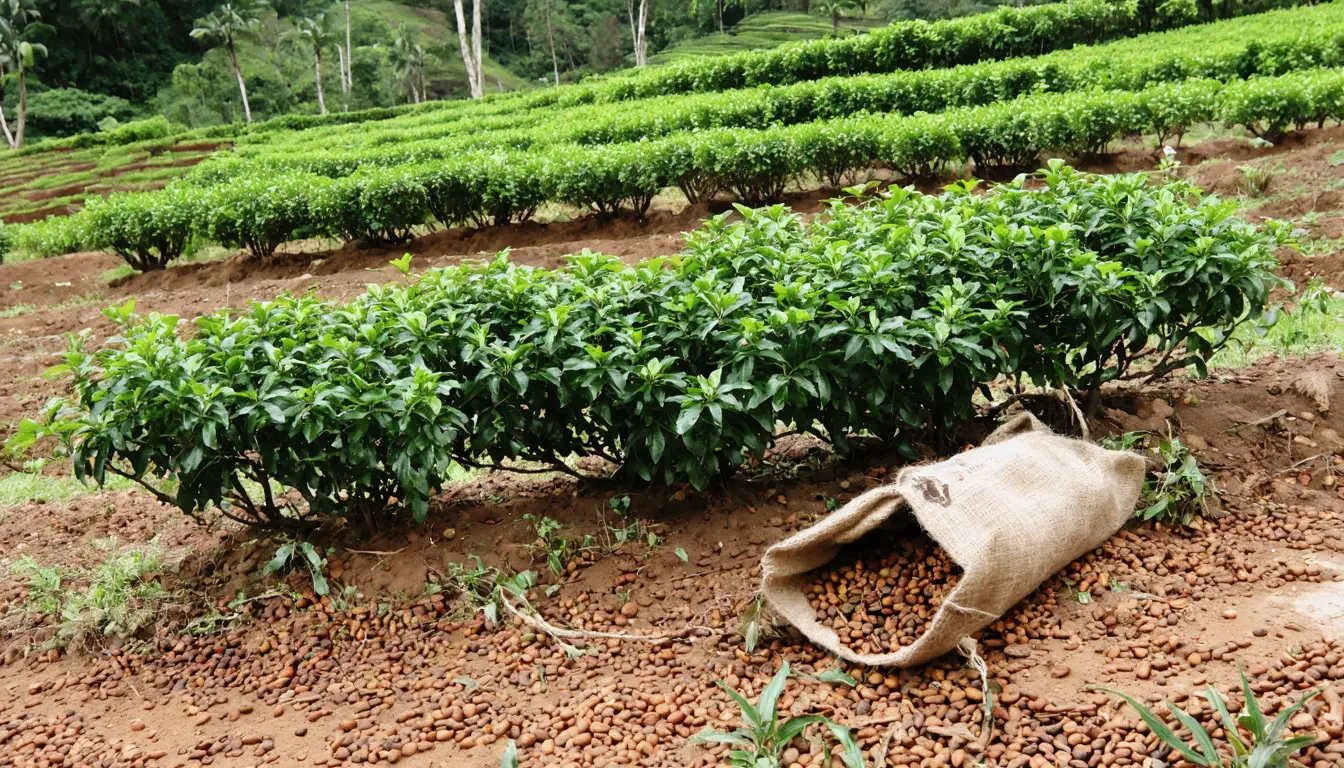
Ecuador farm: only two of four morphotypes matched the declared variety. Coffee producers: invest three to four years before significant production. Producers checking a variety: methods can be costly or hard to access. UTPL researchers: a single farm cannot show how common discrepancies are.
- exposure The southern Ecuador farm Only two of four morphotypes grown from seed sold as Sidra and Gesha matched the variety declared at purchase, claim 1
- cost Coffee producers Invest in seed, planting and crop management while plants take three to four years to reach significant production, claim 11
- constraint Producers checking a variety Methods for verifying a coffee variety's identity can be costly or difficult to access, claim 12
- constraint UTPL researchers A single farm with a limited number of plants cannot show how common such discrepancies are in Ecuador, claim 13
| Who | How | Kind | Claim |
|---|---|---|---|
| The southern Ecuador farm | Only two of four morphotypes grown from seed sold as Sidra and Gesha matched the variety declared at purchase | exposure | 1 |
| Coffee producers | Invest in seed, planting and crop management while plants take three to four years to reach significant production | cost | 11 |
| Producers checking a variety | Methods for verifying a coffee variety's identity can be costly or difficult to access | constraint | 12 |
| UTPL researchers | A single farm with a limited number of plants cannot show how common such discrepancies are in Ecuador | constraint | 13 |
What happened
- One plant type in the batch sold as Sidra had a genetic profile consistent with Batian, a variety of Kenyan origin.
- The farm had bought the seed without genetic or phytosanitary certification.
- Internode length, the length of branch segments between growth points, was among the visible traits that best told the varieties apart.
Why it matters
- cost A grower who plants uncertified seed pays three to four years of seed, establishment and management costs before learning whether the trees are the variety a buyer expects.
- constraint Without a prevalence figure, anyone designing seed certification or testing in Ecuador has one documented failure and no estimate of how often it occurs.
- capability If visible traits such as internode length hold up on more farms, growers could screen young plants in the field before paying for a molecular test.
Coffee takes three to four years to reach significant production. Over that period the grower pays for seed, planting and crop management, expecting a harvest with specific characteristics for a specific market [11]. On this farm, the check came at the low end of that window, around the time the trees would have started producing a crop [17].
The label matters because a variety's identity is tied to genetic traits that shape growth, productivity and cup quality [15]. The team used two lines of evidence. They commissioned a molecular-marker analysis from a coffee genetics specialist, comparing short regions of DNA across plants [7]. They also scored traits visible in the field, including plant architecture and the shape of leaves, branches and fruit [8]. Half of the four morphotypes did not carry the identity printed on the seed purchase [16].
The two mismatches differ in kind. Batian is not part of the genetic group of Ethiopian landraces that Sidra is related to, so that morphotype comes from a different lineage than the one ordered [3]. The Gesha plants did sit inside the expected group. They were an Ethiopian landrace, and the discrepancy is that they were not identical to one reference accession held by CATIE in Costa Rica [4].
How cheap these checks can be is less clear from this work. Verification methods can be costly or hard for producers to access, according to the phys.org account of the study [12]. The cheaper tool the study points to is visual: taken together, the physical traits assigned a high proportion of plants to the right variety on this farm [10]. The account gives neither a price for the marker analysis nor the exact share of plants the visible traits classified correctly.
The authors are plain about the denominator. "The study does not allow us to determine how common this type of discrepancy is in Ecuador, as it was carried out on a single farm with a limited number of plants. Nevertheless, this case highlights the need for identification tools and certification systems that are accessible to producers," the researchers said [13].
I think the case supports checking planting material before it goes into the ground, with the condition the authors set. It shows that a mislabel can happen and can stay hidden for about three years [6]. It does not show how often that happens [13]. It also leaves open whether a DNA test or a field screen of visible traits is the cheaper first check, because the trait screen has so far been tried only on the varieties growing on one farm [10].
What to watch
- Whether UTPL's planned sampling across more plants and farms yields an estimate of how often seed sold as Sidra or Gesha in Ecuador proves to be another variety.
- Whether internode length and the other visible traits still assign plants correctly when tested against confirmed-identity material from several farms.
Clarity's read
What the record supports and how the coverage leans. The claims behind it follow.
Reality
- Evidence55
- Adoption
- Insufficient
- Hype gap+10
- Incentives
- Insufficient
- Confidence50
Claim ledger
Ranked by verification strength, evidence, and original report placement.
- [1]
Researchers at the Universidad Tecnica Particular de Loja (UTPL) analyzed four morphotypes of plants grown from seeds marketed as Sidra and Gesha on a farm in southern Ecuador; only two of the four morphotypes matched the variety declared at purchase.
- [2]
The study, by Maria Fernanda Tapia-Armijos et al, is published in Frontiers in Plant Science (2026).
- [3]
One morphotype within the Sidra batch showed a genetic profile consistent with Batian, a variety of Kenyan origin that does not belong to the same genetic group as the Ethiopian landraces to which Sidra is related.
- [4]
Plants purchased as Gesha belonged to an Ethiopian landrace; they fell within the same genetic group but were not identical to the CATIE reference accession in Costa Rica known as Geisha T.02722.
- [5]
The seeds had been purchased without genetic or phytosanitary certification.
- [6]
The plants grew for approximately three years before differences observed in the field led the researchers to verify their identity through genetic analysis and morphological characterization.
- [7]
The genetic analysis was commissioned from a specialist in coffee genetics and used molecular markers, small regions of DNA that allow different organisms to be compared genetically.
- [8]
The research team recorded visible morphological traits such as plant architecture and the shape of the leaves, branches and fruits.
- [9]
Internode length, the length of the branch segments between two growth points, was one of the physical traits that contributed most to telling the varieties apart.
- [10]
Taken together, the physical characteristics assessed allowed a high proportion of plants to be correctly assigned to their variety on the farm studied.
- [11]
Coffee plants can take three to four years to reach significant levels of production; during that period producers invest in purchasing seed, establishing plants and managing the crop in expectation of a harvest with specific characteristics destined for a particular market.
- [12]
Methods for verifying a coffee variety's identity can be costly or difficult for producers to access.
- [13]
"The study does not allow us to determine how common this type of discrepancy is in Ecuador, as it was carried out on a single farm with a limited number of plants. Nevertheless, this case highlights the need for identification tools and certification systems that are accessible to producers,"
- [14]
The next step is to extend the analysis to more plants and farms to establish more robust genetic and morphological references and develop mechanisms for verifying planting material before it reaches the field.
- [15]
In specialty coffee, a variety's identity is linked to genetic traits that can influence its growth, productivity and cup quality.
- [16]
Two of the four morphotypes, or half, did not match the variety declared at purchase.
- [17]
The roughly three years of growth before verification falls at the low end of the three to four years coffee takes to reach significant production.
Sources
1 independent publisher whose own reporting we read for this story.
- phys.orgGenetic analysis reveals that some specialty coffee seeds do not match their commercial identity
1 article · October 9, 2026
Topics and entities
Follow any of these and your For You feed starts watching them — no settings page required.