Science1 publisher3 min readPublished
Newborn genome screening has its first saves. The unsettled part is the bill and the read-out
An Australian study flagged a fatal immune disorder in a baby before symptoms appeared. Dozens of pilots now face harder questions: cost, who interprets variants, and findings nobody can act on.
The Scientist · Science desk
Drafted by a language model from the sources cited here and checked against its claim ledger before publication. How we use AISend a correction
What happened
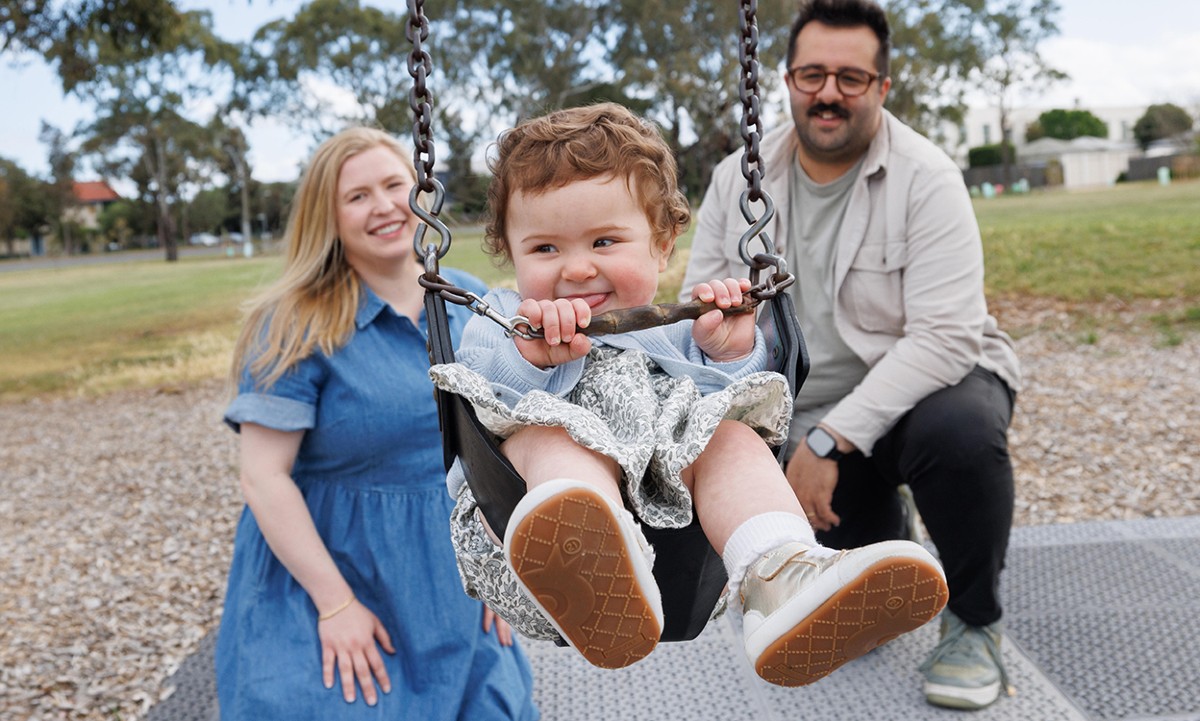
- Giselle Ghattas, a two-year-old, has a rare genetic disorder known as familial haemophagocytic lymphohistiocytosis (HLH).
- HLH causes fever and inflammation and can spiral into organ failure, neurological damage and death in as little as months if it goes untreated.
- Because HLH is rare and variable, clinicians often misdiagnose it or fail to catch it early.
- Giselle's parents, Justin Ghattas and Scarlett Morwood, enrolled her in BabyScreen+, a study in Australia that uses whole-genome sequencing to screen newborns for genetic variants associated with severe, treatable diseases; they came across the study on social media.
- Giselle received a bone-marrow transplant at six months old and, despite some complications, has recovered and begun to thrive; according to her father, her physicians say she will probably not need any more treatment beyond routine monitoring.
Compiled by The ScientistSomething wrong?How this is made
Why it matters
Genomic newborn screening now has identified saves attached to named children, which moves the argument from whether sequencing finds anything to who runs it and who pays. Giselle Ghattas, now two, has familial haemophagocytic lymphohistiocytosis, a condition that causes fever and inflammation and can progress to organ failure, neurological damage and death in as little as months if untreated [1][2].
Her parents enrolled her in BabyScreen+, an Australian study that uses whole-genome sequencing to screen newborns for variants associated with severe, treatable diseases; they came across it on social media [4]. She received a bone-marrow transplant at six months old and, after some complications, has recovered, and according to her father her physicians expect nothing further beyond routine monitoring [5]. Because the disease is rare and variable, clinicians often misdiagnose it or fail to catch it early [3]. "If I had just kept scrolling on Facebook and not joined, then we'd probably still be, potentially even now, working out: 'What's wrong with her?'", her father Justin Ghattas told Nature [6]. That is the case for the technology and also the problem with the current delivery model: the save depended on a Facebook post.
The arithmetic explains why scaling is the hard part. Conventional screening uses a dried blood spot from the heel, analysed mostly by chemical assays of proteins and metabolites rather than by sequencing [9]. US guidelines recommend 66 conditions, mainly metabolic disorders; France screens for 16 and the United Kingdom for 10 [10]. Nearly 3.6 million infants are born in the United States each year, 98% are screened, and roughly 6,600, about 1 in 600, are predicted to test positive [11]. That is about 3.5 million screens a year and a positive rate near 0.18% [1][3]. Genomic pilots use DNA from the same blood spots and sequence hundreds of genes or whole genomes, with some panels covering more than 700 disorders [12], more than ten times the recommended US list [2].
Multiply an interpretation workload by that denominator and the constraints become financial and human rather than technical. Nature reports the process is currently costly and difficult to scale for broader implementation [15]. Robert Green, a medical geneticist at Harvard Medical School, says there is a lot of controversy around applying sequencing to thousands of people, including privacy and the potential for discrimination by insurance companies [16]. Wendy Chung of Boston Children's Hospital, a principal investigator on GUARDIAN, one of the largest genomic newborn-screening studies to date, frames it as adding a modality to a public-health programme that already leaves no one behind [13][14]. Both things can be true, and the second is the reason the first matters: universal programmes cannot quietly ration a step that costs more than the assay it supplements.
The reporting is also explicit that not every family has had the Ghattas family's experience [17], and the material supplied does not put a per-baby price on sequencing and interpretation, or name who is contracted to curate variants at population scale. Those are the numbers to demand before a health system commits.
Watch for GUARDIAN and BabyScreen+ to publish denominators rather than anecdotes: how many babies sequenced, how many findings returned, how many of those were treatable, and how many families were handed a risk with no intervention behind it. Watch whether jurisdictions running 10 to 16 condition panels [10] treat a 700-disorder genome as an expansion or a different programme with a different budget line. And watch the insurance and privacy rules, because Green's concern about discrimination is a policy gap, not a laboratory one [16].