Science1 distinct publisher3 min readPublished
The Nature paper puts PVC in a solvent with aluminum trichloride and alpha olefins for three hours and pulls out polyalphaolefin, a genuine result that still leaves the yield and the fate of the chlorine unstated.
The Scientist · Science desk

Compiled by The ScientistSomething wrong?How this is made
Convert the temperature first. 158 degrees Fahrenheit is 70 degrees Celsius [6], which is low-grade heat, and that matters more than it sounds, because process heat is where a lot of chemical recycling schemes lose their case before the chemistry is even argued. Three hours in a solvent with aluminum trichloride and alpha olefins [5] does not obviously require high-temperature kit behind it.
The method history is worth reading as method history. Liu's starting hypothesis, in his own account, was that PVC is "one of the most activated forms of polyethylene" and should therefore swap its chlorine atoms for other groups without much trouble [9]. That worked and the products were disappointing: soft, somewhat gooey, short of the performance the group wanted [10]. The pivot was to stop decorating the backbone and start shortening it, breaking the chains into smaller segments [11].
The thing this doesn't tell you is where the product carbon came from. Alpha olefins go into the vessel alongside the waste [5], and the public account carries no yield figure [12], so there is no way to see whether the PVC supplies most of the oil's mass or a minor slice of it. Those are two different businesses. One is a recycling route with a waste stream as its main input; the other is a polyalphaolefin process that happens to tolerate a chlorinated co-feed. The chlorine sits in the same blind spot. It leaves the polymer by design [9], and nothing in the summary says what it becomes [12], which is the line a permit engineer reads first.
Feedstock is the other gate. What went in is described as PVC of the sort found in household plumbing, window structures and credit cards [4], the tractable end of the stream. The stated reason PVC accumulates in landfills is chlorine plus an additive load that varies with how each piece was manufactured [3], and additive-heavy scrap is exactly the case the available account does not cover [12].
The market side of the angle is sturdier than the process side. Virginia Tech's framing is that demand for lubricants such as engine oil keeps growing and that producing them carries significant environmental cost [7], and Liu's claim is that the oils his group made are green and can meet emerging sustainability demand from the market [13]. That is a single-source claim about a material no one outside the lab has yet tested. My read is that the strategic instinct is still correct: an output sold into a performance specification has somewhere better to go than an output competing with cheap virgin resin, and this lab has now aimed twice at specialty chemicals rather than back at plastic, having previously routed other plastic waste into surfactants [8].
Until a yield per kilogram of PVC in and a chlorine balance are on the table, the accurate description is the one Liu uses himself, which is that feasibility has been proved [13].
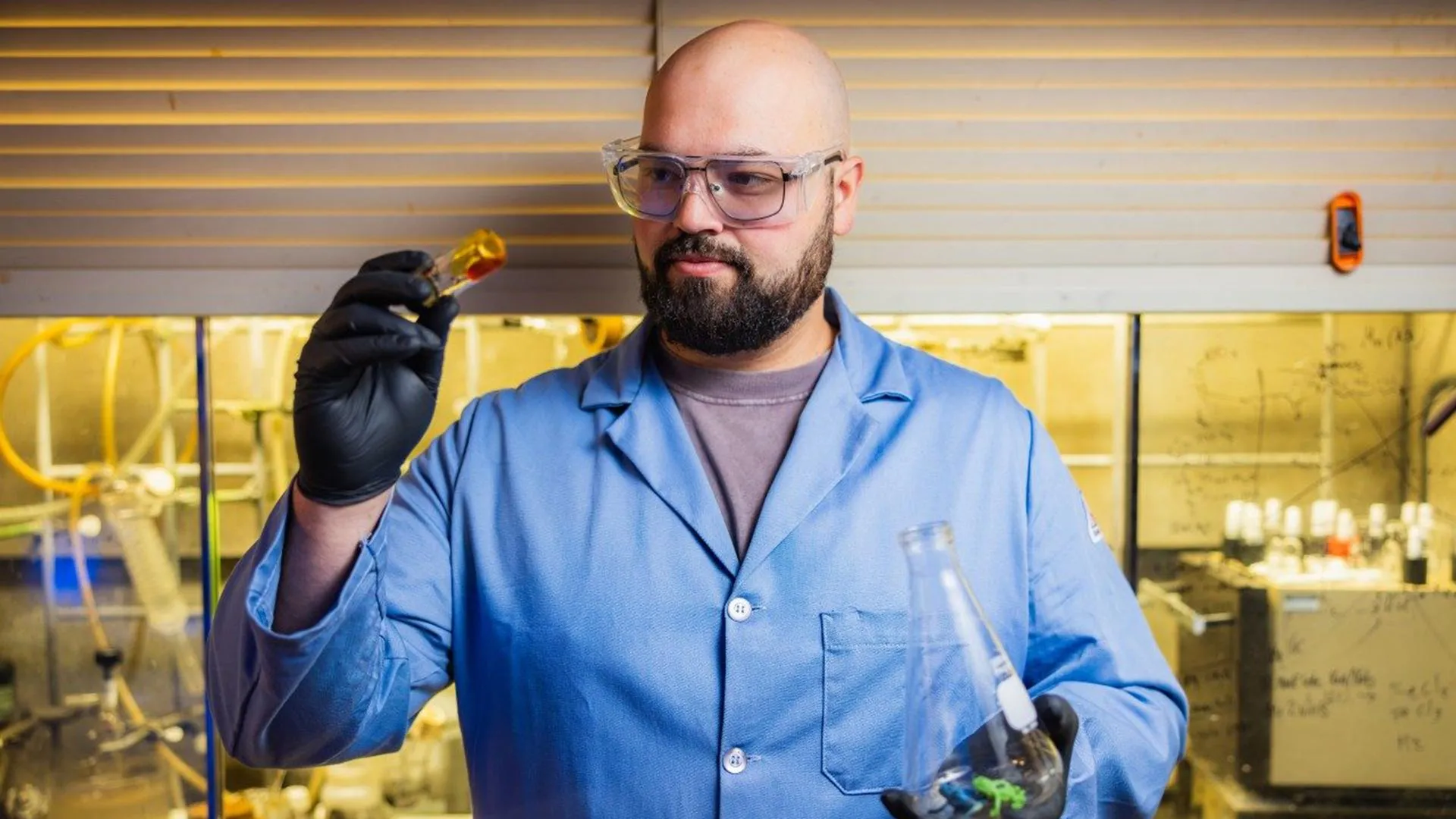
Ranked by verification strength, evidence, and original report placement.
The Virginia Tech account of the work reports no yield figure, no accounting of where the chlorine ends up, and no performance data for the resulting lubricant against commercial material; the available text ends as the team begins evaluating the resulting materials.
Virginia Tech chemist and chemical engineer Guoliang "Greg" Liu and his research team developed a method for transforming polyvinyl chloride (PVC) into polyalphaolefin, an ingredient used in lubricants including engine oil.
The work was published Aug. 5 in Nature; Virginia Tech's account of it was dated August 29, 2026.
PVC is especially challenging to recycle because it contains chlorine and can include a wide range of additives depending on how it was manufactured, and those complications mean large quantities of PVC end up in landfills.
The method begins with PVC similar to the material found in household plumbing, window structures, and credit cards.
Researchers place the PVC in a solvent, add aluminum trichloride and alpha olefins, heat the mixture to 158 degrees Fahrenheit for three hours, then extract from the solvent a relatively thick oil that functions as a lubricant.
Distinct publishers with included, body-backed reporting in this cluster.
Follow any of these and your For You feed starts watching them — no settings page required.
science
A tweezer array stops benchmarking itself and measures two conformal field theories1 distinct publisher
science
A pole-on magnetar hands vacuum birefringence its first astrophysical candidate1 distinct publisher
science
A phage kinase with no target list: EMBL finds one enzyme that breaks several bacterial defences1 distinct publisher
science
HIPAA Covers Less Than You Think, And "Anonymized" Is Not A Legal Shield1 distinct publisher
Evidence-backed comparisons of source perspectives and observed adoption signals. Read the methodology
Which Builder, Operator, and Investor concerns the observed source mix emphasized—not a truth score.
Evidence, demonstrated adoption, hype gap, incentives, and confidence are assessed independently, each on its own current evidence. How these are measured.
Real paper, single retelling
Underneath this sits a Nature article with a full author list and a DOI, plus outside groups at Texas A&M and Caltech credited with the testing and the computation — that is more spine than most upcycling stories carry. What a reader can check, though, is Virginia Tech's own summary reprinted by ScienceDaily, and every quantity that would settle the matter stays inside the paper.
Bench only, nothing to count
There is no uptake to measure: one reaction, samples mailed to a collaborator, and a model of how the oil might one day be made at volume. Liu's stated wish to 'produce the oil on a larger scale to reach more people' is an intention, and we decline to score an intention as adoption.
Headline outruns the data table
The headline promises high-performance engine lubricant; the text delivers a thick oil that 'functions as a lubricant' plus a researcher's word that it is green. Missing is the one number every chemist would ask for — how much oil per kilo of plastic — and the one fact that defines PVC's whole recycling problem, namely where the chlorine went. This is not invention; it is the ordinary distance between a press office and a results section, and here that distance is wide enough to notice.
One institutional voice throughout
Virginia Tech wrote this and ScienceDaily's own note says so. The university has a scale-up ambition, a grant record and three named graduate students to promote, and no one in the piece occupies a position from which the process could be called uneconomic — no blender, no recycler, no competing chemist was asked. That is not a scandal; it is a one-sided information supply, and it should be priced as such.
Firm at the flask, soft after it
We are confident about the checkable spine: the paper exists, and the recipe — aluminum trichloride and alpha olefins in solvent, three hours at roughly 70 °C — is specific and internally consistent. Confidence falls away past the flask, because a single institutional retelling is the entire coverage and it stops before the numbers begin.