Product1 distinct publisher2 min readPublished
After a decade of capital spending, Rolls-Royce now owns ground and altitude test cells in Indiana. The programs leaning on them are the Air Force B-52 and Army MV-75 engines, both still future engines rather than production ones.
The Product Desk · Product desk

Compiled by The Product DeskSomething wrong?How this is made
Nothing in the announcement says where those engines were tested before the Indiana cells existed, or what the wait looked like [13]. That absence matters: a company does not spend a decade of its own capital on ground and altitude test infrastructure it could rent cheaply and promptly somewhere else. Owning the cell buys the calendar, and the calendar is the piece of a propulsion program that cannot be compressed after a flight date is fixed.
The arithmetic breaks down like this. Rolls-Royce puts its US facilities investment at more than $1.5 billion over the past decade and its US R&D at nearly $2.5 billion [8]. Set the $1 billion Indiana line against the facilities figure [1] and roughly two thirds of the company's facilities money over that decade went into one state [2], averaging about $100 million a year [3]. The Purdue University alliance that supports the LibertyWorks research arm on the Indianapolis campus runs $75 million over ten years [10], about $7.5 million a year [4]. The test hardware carries roughly thirteen times the annual spend of the research relationship sitting next to it [5]. The money went toward plant capacity, not research.
The document is also addressed to someone. It carries quotes from Indiana's governor, both of the state's senators and the mayor of Indianapolis [11], and it repeats the company's estimate that every dollar the US government invests in Rolls-Royce returns four dollars to the US economy [9]. That estimate is the company's own and arrives without a method. Separate what is being pitched, which is a defense industrial base argument aimed at appropriators, from what has been done, which is narrower and more useful: two kinds of test capability that now physically exist at a named location [3].
Teams often assume that when a supplier opens a test facility, capacity has been added for their program. In practice, an internal test asset serves its owner's queue first, and this owner has development work and production work drawing on the same site [5].
So the sorting question for anyone whose schedule rides on someone else's new cell has two axes. Do you hold the test asset or rent it, and are your qualification dates fixed by contract or still soft. Fixed dates plus rented capacity is the quadrant that produces slips, and it is where most subsystem and integration programs live. The practical version is one request to the supplier: name the cell, name the window, and say what happens to that window when the supplier's own program wants it. Those answers live in a scheduling agreement, which is the document worth asking for.
Ranked by verification strength, evidence, and original report placement.
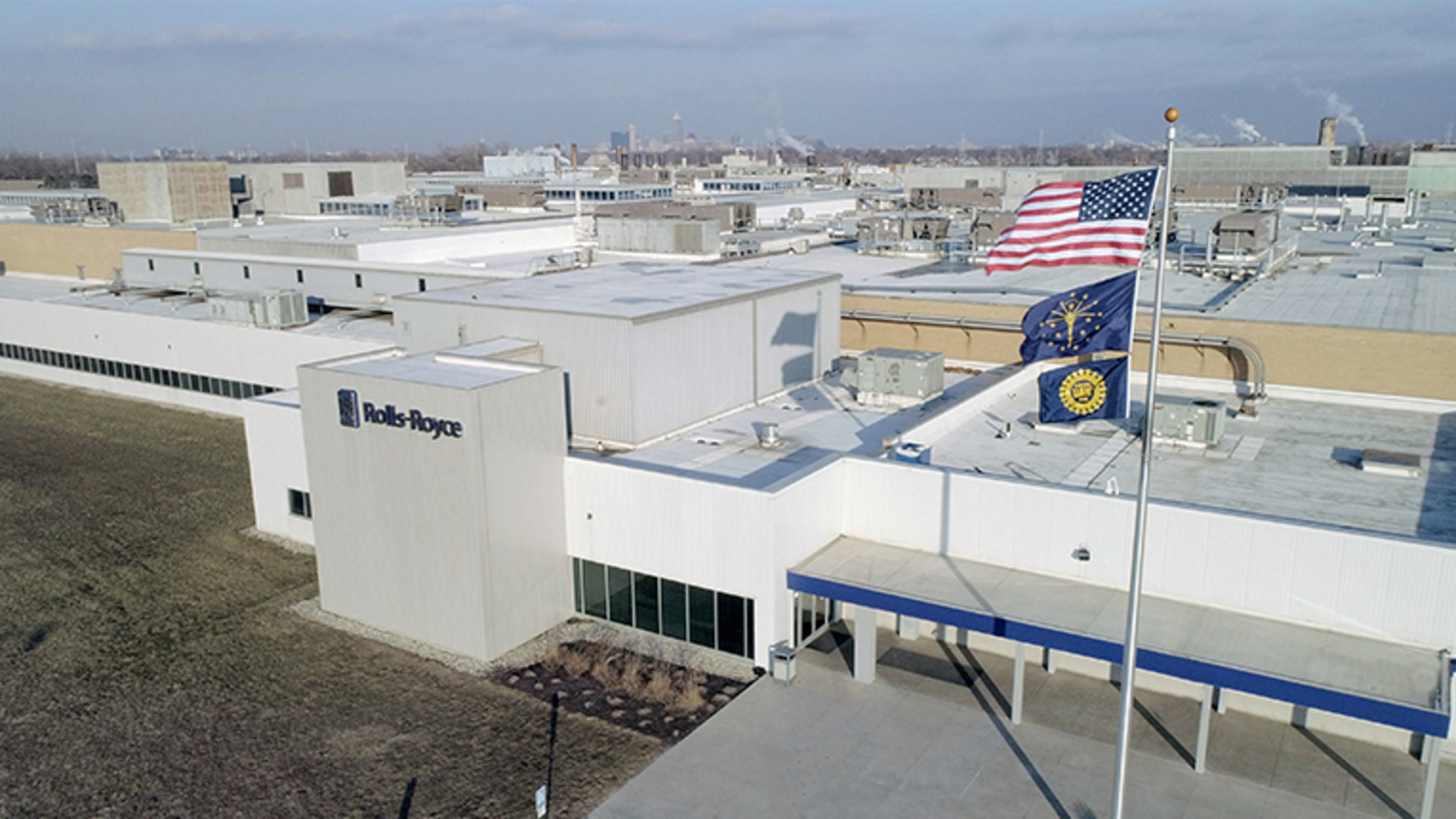
Rolls-Royce has completed a $1 billion, decade-long investment in its manufacturing, assembly, and test facilities in Indiana, described as the largest investment the company has made in the United States.
The modernization expanded advanced manufacturing across the Indianapolis campus and added full engine-test capabilities, including new ground-test facilities and an altitude test facility in West Lafayette.
The Indianapolis campus builds and tests future engines for the US Air Force B-52 strategic bomber and the US Army MV-75 Cheyenne, along with current engines for the V-22 Osprey, the US Navy MQ-25A Stingray, and the C-130J.
Rolls-Royce employs approximately 3,500 people in Indianapolis, including a skilled UAW workforce, and says it supports thousands of additional jobs through its Indiana supply chain.
Rolls-Royce builds more of its defense products in Indianapolis than at any other location worldwide.
Rolls-Royce has invested more than $1.5 billion in facilities and nearly $2.5 billion in research and development across the United States during the past decade.
Distinct publishers with included, body-backed reporting in this cluster.
Follow any of these and your For You feed starts watching them — no settings page required.
product
Vigor unveils USAV Craney Island, and the Army's landing craft plan finally has a hull1 distinct publisher
product
Navy moves countermeasure qualification off the jet and onto a 578-foot rail1 distinct publisher
science
Purdue's touch probe attacks the prep bench, not the mass spectrometer1 distinct publisher
science
Gateway's parking rules are being written before the vehicles that must obey them1 distinct publisher
Evidence-backed comparisons of source perspectives and observed adoption signals. Read the methodology
Which Builder, Operator, and Investor concerns the observed source mix emphasized—not a truth score.
Evidence, demonstrated adoption, hype gap, incentives, and confidence are assessed independently, each on its own current evidence. How these are measured.
One release, one retelling
Every figure that matters here — the billion dollars, the 3,500 jobs, the $6.2 billion, the four-to-one return — originates with Rolls-Royce and reaches readers through a single outlet, Interesting Engineering, with the company's and politicians' quotes intact. Nothing is set against a contract award, a filing or a test schedule. The facts that are checkable in principle (buildings, programmes) are plausible and undisputed; the ones that carry the argument are self-reported.
Cells built, use undisclosed
Concrete is the sturdiest thing in this story: the campus is modernised, the altitude facility stands in West Lafayette, and engines for the V-22, MQ-25A and C-130J are already produced there, so the site is working today. Utilisation is the blank. The two programmes the buildout is pitched around, the B-52 and MV-75 engines, are still called future engines, and not one hour of test-cell occupancy is put on the record.
Ribbon-cutting arithmetic
The billion dollars looks like real money already spent, which keeps this from being vapour. The lean forward comes from the framing stacked on top: largest-ever US investment, a four-dollar return on every federal dollar, delivery 'for the American warfighter, on time' — all asserted while the story withholds any measure of what the new cells produce or when the engines they exist for enter service.
Written for appropriators
A completion announcement is a choice about timing. A governor, two senators and a mayor each supply a Hoosier-jobs or defense-industrial-base line, the company supplies a multiplier arguing that federal money spent on it pays back fourfold, and the whole package lands while the B-52 and MV-75 engines are still ahead of production rather than behind it. Everyone quoted benefits from the same number being large, and no one in the story is positioned to shrink it.
Firm on spend, blank on output
We would defend what was spent, where, and which engine programmes live on that campus — those details are specific, internally consistent and unlikely to be wrong. We would defend nothing about consequence. Whether in-house altitude testing shortens a queue is unanswerable from this reporting, because the queue is never described, and a second independent account could change the interpretation without contradicting a single figure.