Invest1 publisher3 min readPublished
Rocket Lab to pay about 16 times EBITDA in $8 billion deal for Iridium
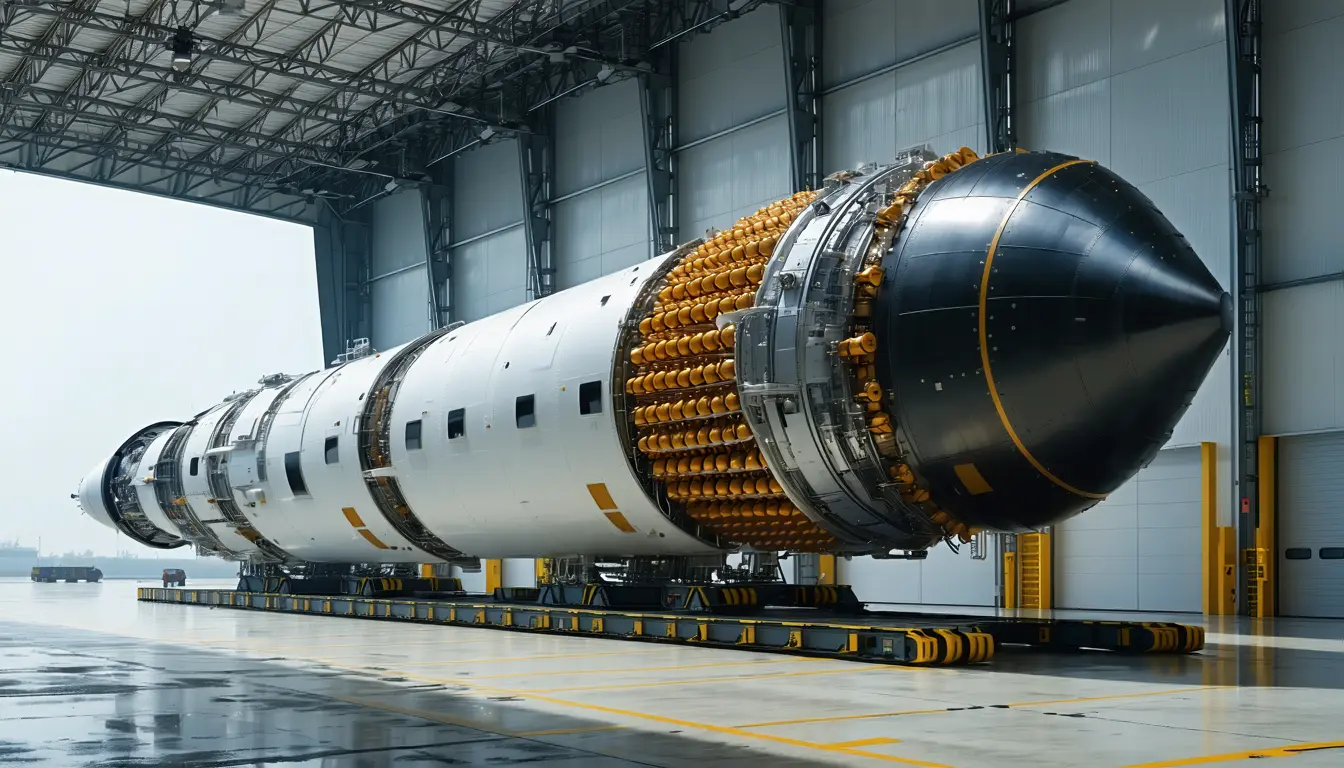
The offer is $54 a share, half of it cash, so about $4bn falls due at a closing the companies expect in mid-2027. Neutron's first-flight hardware is due at the pad in the fourth quarter of 2026.
The Investor · Invest desk
What happened
- Rocket Lab agreed to buy Iridium at $54 a share, valuing it at about $8 billion, with $27 of each share in cash and the balance in a variable amount of Rocket Lab stock.
- The network Rocket Lab is buying generated $871.7 million of revenue in 2025 at a 57% EBITDA margin, with roughly 2.6 million subscribers attached to it.
- Rocket Lab booked record second-quarter revenue of $234 million, up 62% year on year, and a record backlog of $2.36 billion, up 137%.
- Rocket Lab now expects hardware for Neutron's first flight to reach the launch pad in the fourth quarter of 2026 without committing to a launch date.
- Iridium stockholders vote on September 24, 2026, and the parties expect the transaction to close in mid-2027.
Compiled by The InvestorSomething wrong?How this is made
Why it matters
- cost About $4.0 billion of the price is cash, and money committed to an operating constellation is money Rocket Lab is not putting into Neutron or additional manufacturing capacity.
- constraint At roughly 16 times EBITDA, the return has to come from the L-band spectrum and the 500-plus partner channel; a subscriber base growing 6% a year covers only part of that multiple.
- decision Iridium holders voting on September 24 are choosing whether to trade a 57%-margin annuity for cash plus stock in a company whose medium-lift rocket has not flown.
- contradiction Cryptopolitan says both that Rocket Lab has completed the acquisition and that the stockholder vote is still to come with closing in mid-2027, so the deal's status is unsettled in the record.
Iridium's second quarter turned $225.2m of revenue into $119.1m of operational EBITDA [4], a margin of 52.9% [3]. Annualize that and $8bn is 16.8 times cash earnings [2]. Measured on the 2025 year and its 57% margin, EBITDA is about $497m and the multiple is 16.1 [1]. Billable subscribers grew 6% [6].
Per subscriber the price works out near $3,080 [5], against roughly $335 of revenue per subscriber a year [6]. That is a bit over nine years of revenue for each of the 2.6 million accounts [7]. The premium above that has to come from what Rocket Lab does not own today: the globally synchronized L-band spectrum, the low-Earth constellation and the 500-plus partners and customers in maritime, aviation, defense and government [14].
Half the consideration is cash: $27 of the $54 [2], or about $4.0bn payable at closing [4]. Cryptopolitan's account does not say how that half is financed.
Closing would roughly double reported revenue. Iridium's quarter is 96% of the record $234m Rocket Lab booked in its own second quarter [8]. About 72% of Iridium's revenue is service revenue that the company treats as mostly recurring [5], roughly $162m a quarter on subscription terms [9]. The US government accounts for almost 17% of that line [7], about $28m a quarter [10]. Iridium expects to sign a new Enhanced Mobile Satellite Service contract with the US Space Force by March 2027 [8], ahead of the close.
Brian Gesuale of Raymond James rates Rocket Lab Outperform with an $80 price target [16]. According to Barron's he expects free-cash-flow break-even by 2028, possibly two years before SpaceX, and flags Neutron deployment and Iridium integration as the risks [17]. Neutron flies and Iridium's roughly $476m of annualized EBITDA pays for the rest of that program [11]. A slip leaves the annuity carrying a launch business that still consumes cash [13], at 16 times the annuity's own EBITDA. And if the vote or the closing date moves [11], there is nothing to reprice before mid-2027.
In my view this is a purchase of cash flow at a mature multiple. The vertical integration case pays out only if Rocket Lab launches Iridium's replacement satellites on its own vehicles. That is what the company points at when it says the combined business will design, produce, launch and operate most of its satellite systems [15]. That view is wrong if the L-band spectrum and the 500-partner channel push revenue growth well past 6% under new ownership, or if the Space Force contract lands large enough to move the base. SpaceX built Starlink from scratch, while Rocket Lab is buying a network and a customer list [18].
What to watch
- The September 24, 2026 Iridium stockholder vote, and how the variable stock half of the $54 is fixed before it.
- Whether Neutron's first-flight hardware reaches the pad in the fourth quarter of 2026 and whether a launch date follows.
- Whether Iridium signs the Space Force Enhanced Mobile Satellite Service contract by March 2027, ahead of a mid-2027 close.