Product1 publisher3 min readPublished
Rheinmetall launches a single satellite to test whether orbital imagery can feed air-defense networks
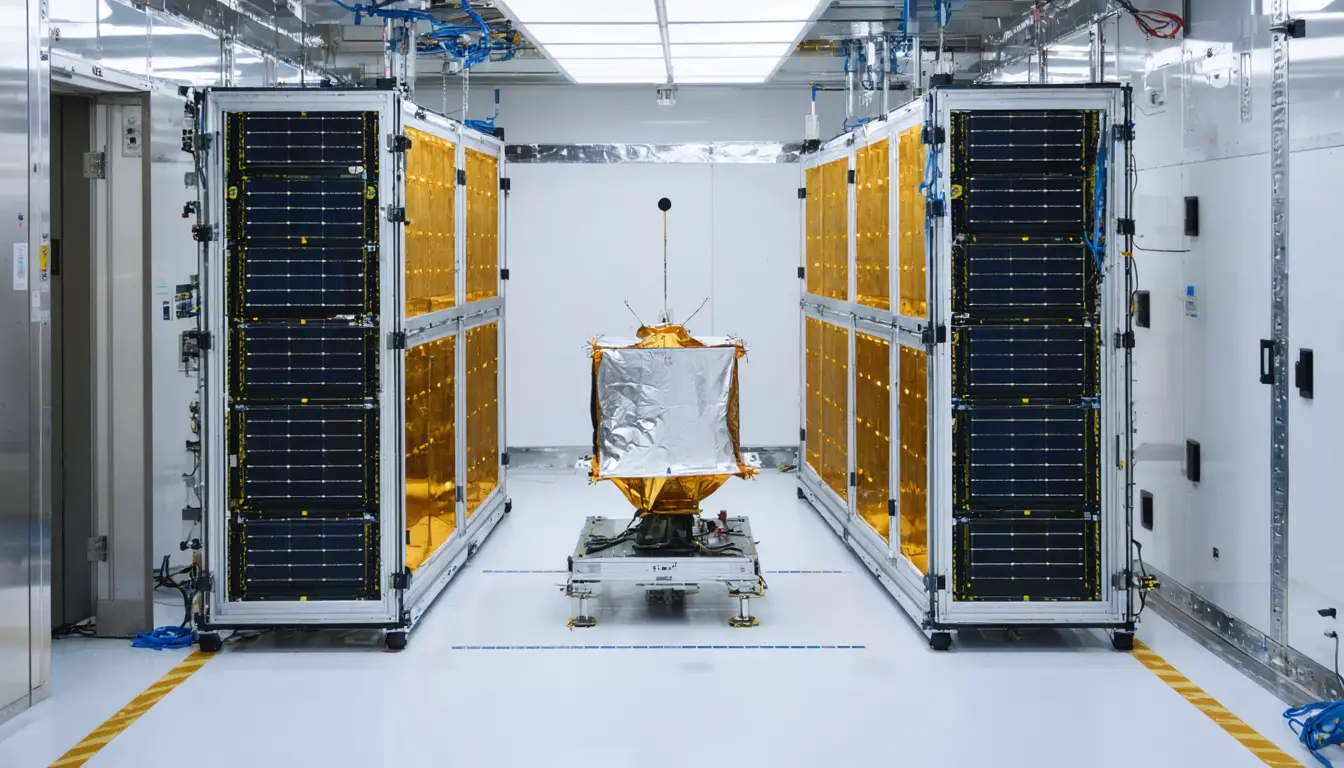
Rheinmetall and Argotec put their first jointly built satellite into orbit on October 1 to test space-based early warning for air defense. With a second satellite on the roadmap for 2028, what buyers can evaluate now is how the feed would plug into air-defense networks they already run.
The Product Desk · Product desk
Drafted by a language model from the sources cited here and checked against its claim ledger before publication. How we use AISend a correction
What happened
- The spacecraft flew on a SpaceX Falcon 9 from Vandenberg Space Force Base in California.
- Argotec, the Italian partner, builds satellite systems and space infrastructure and has taken part in NASA missions.
- Rheinmetall says AI will help process the satellite's data before it is fed into existing national defense and air-defense architectures.
- Neither company has disclosed a final constellation size or a detailed timeline for full deployment.
Compiled by The Product DeskSomething wrong?How this is made
Why it matters
- decision A defense ministry looking at this is being asked to back the next development stage on the evidence of one test spacecraft, so what it would be buying today is a stake in a roadmap.
- constraint Without a constellation size, a buyer cannot yet estimate how much of its early-warning picture the space layer would carry, or plan budgets past the second satellite.
- exposure Forces already running Rheinmetall ground systems stand to get the feed with the least integration work, while forces on other vendors' networks would carry the integration risk themselves.
The person this satellite is built for works at a command-and-control post. In Rheinmetall's design, that post is where the orbital layer meets ground-based nodes and tactical networks [7]. The company says the approach is meant to make what the satellite gathers available inside existing defense networks, so the spacecraft is not run as an isolated surveillance system [15].
I think the design choice is right for the operator. Teams that build sensors tend to tell themselves that each new feed adds awareness. An officer on shift acts on the warning that turns up, already processed, on the screen they were watching anyway.
The sensor is described in plainer terms than the software around it. The spacecraft is meant to spot ground-based indicators associated with emerging airborne threats and return imagery and situational data for early warning [5]. Rheinmetall sets the program apart from conventional Earth-observation satellites, built mainly to map or image the surface, by saying it is focused on intelligence for air-defense operations [4]. The output is still imagery [5]. On the company's own account, the difference from an ordinary imaging satellite lies in the processing and in the network the pictures feed.
The buyer this suits first is a force already running Rheinmetall equipment on the ground. The partnership gives Rheinmetall a route into space-based sensing that connects satellite data to the defense systems it already develops, and the company calls that integration an important part of its space strategy [12]. The work runs through Rheinmetall Italia S.p.A., its Italian subsidiary [3]. For a customer on Rheinmetall's ground kit, the satellite is one more input to a system they know. For a customer on another vendor's network, the integration claim is the part to test before anything else.
The executives spoke in general terms. Rheinmetall chief executive Armin Papperger said the launch would help strengthen space capabilities and networked situational awareness [14]. Argotec founder and CEO David Avino said the satellite belongs to a wider push to build space infrastructure for defense and operational use [13]. Neither statement, as reported, attaches a customer or a delivery date to the plan for a larger constellation [16].
Anyone weighing a space-layer feed can sort it with two tests. The first is whether the feed has been shown working inside an architecture like yours. The second is whether the vendor has committed to a constellation size and a schedule. Yes on both is a capability you can put in a budget. Shown integration without a committed constellation is a pilot, worth joining mostly for forces that already run the vendor's ground systems. A committed constellation without shown integration is another imagery source for analysts to fuse by hand. No on both is a development program you would be helping to pay for. Rheinmetall describes this as a validation mission ahead of further funding stages and has not disclosed a constellation size, so the program sits in that last box today [8][10].
What to watch
- Whether Rheinmetall publishes results from the in-orbit validation, in particular a demonstration of the feed reaching a national air-defense network through a command post.
- Which national customer, if any, funds the next development and funding stage named in the program plan.
- Disclosure of a final constellation size and deployment schedule ahead of the 2028 second launch.