Science1 publisher3 min readPublished
Kentucky forest grass fungus stops two alkaloid pathways at their intermediates
University of Kentucky plant pathologists report that a fungus inside a wild forest grass keeps two alkaloid intermediates as its end products. The blend likely deters insects, and the team hopes the finding can guide breeding of safer pasture grasses.
The Scientist · Science desk
Drafted by a language model from the sources cited here and checked against its claim ledger before publication. How we use AISend a correction
What happened
- Christopher Schardl said Epichloe brachyelytri is the first fungus shown to keep both exo-1-acetamidopyrrolizidine and chanoclavine as final products at the same time.
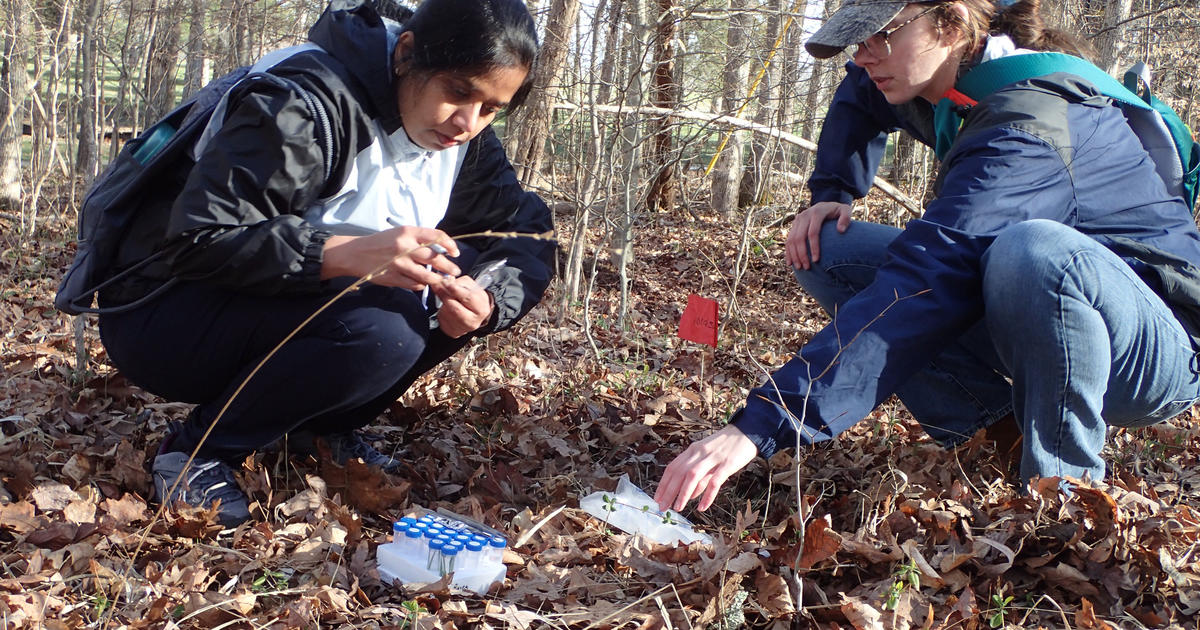
- The team sampled the grass at six Kentucky locations along a 171-kilometre path, including Mammoth Cave National Park and Red River Gorge, plus plants grown at the state botanical garden.
- Ultrahigh-performance liquid chromatography with tandem mass spectrometry measured how much of each alkaloid was in leaves, seeds and young shoots.
Compiled by The ScientistSomething wrong?How this is made
Why it matters
- constraint Until the blend goes through an insect feeding test, its value as a deterrent cannot be ranked against the more complex alkaloids other fungi build from the same intermediates.
- cost The fungus pays an energy price for the defence, most visibly in young shoots, and populations that stop paying it shed compounds, so the full blend cannot be assumed in every stand of the grass.
- capability Pasture breeders gain a wild example of a fungus defending its grass with simpler compounds, useful to them only if those compounds also prove harmless to grazing cattle and horses.
Other fungi treat exo-1-acetamidopyrrolizidine and chanoclavine as intermediates and convert both into more complex chemicals [4]. Epichloe brachyelytri also makes a third alkaloid, but on these two it stops early [4]. The fungus lives inside bearded shorthusk without harming it. The grass gives the fungus a home, and the fungus makes chemicals that keep insects off the plant [16]. The work appears in Applied and Environmental Microbiology [2].
The best evidence that the blend matters to the fungus comes from its history. The team, led by Schardl and Padmaja Nagabhyru of the Department of Plant Pathology, found that the same rare combination arose in other fungal species by different evolutionary paths, including gene swapping between species and hybridization [3][12]. "Finding it more often than expected by chance motivated us to investigate if this chemical blend is an especially potent protectant from insects," Schardl said [14]. I think this is the strongest point in the work as reported. A blend assembled by more than one route, and found more often than chance predicts, looks like a trait that selection keeps, though that is an inference from where the chemicals occur.
The chemistry is expensive. Schardl said it costs the fungus a lot of energy [8]. "We have intriguing evidence that in young shoots, the endophyte has an internal struggle over which chemical pathways to feed, when those pathways need the same building blocks," he said [9]. The university's account concludes that an investment this large means the chemicals must be important for survival in most places [11].
Schardl ties the sites that lost a compound to that cost, describing them as locations "where we guess that insects aren't as much of a problem and the fungus can save energy by skipping some of the chemistry" [10]. His word is "guess." The account reports neither an insect feeding trial with the blend nor insect counts at those sites. Until one of those exists, the link between missing chemistry and fewer insects is a correlation across a few of six sampled locations [6]. The university's own summary says only that the chemicals likely help protect the plant [1].
The applied interest is in pastures. Related fungi live inside grasses that cattle and horses eat, and some of them make chemicals that can be toxic to livestock [13]. "Studying wild examples like this helps scientists understand how the whole system evolved and how they might use it to breed better, safer pasture grasses in the future," Schardl said [15]. His stated aim is pasture breeding, and a sampling survey is a long way from a new class of pest-control chemistry. A safer grass would need the two intermediates to pass two separate tests: deterring insects, and sparing the animals that graze on it.
What to watch
- An insect feeding test comparing the two-intermediate blend with the finished alkaloids that other Epichloe fungi make.
- Insect surveys at the Kentucky sites where the fungus lost a compound, to test Schardl's guess that insect pressure is lower there.
- Livestock toxicity data on exo-1-acetamidopyrrolizidine and chanoclavine, the condition for using the blend in pasture grass breeding.