Science1 publisher3 min readPublished
University of Kentucky team sequences Arctic wildlife where three bird flyways converge
University of Kentucky engineers ran portable genomic sequencing on wildlife samples in Utqiaġvik, Alaska, where three major North American bird flyways converge. Strains that surface there tend to reach Kentucky within months, giving the state's poultry industry an early warning.
The Scientist · Science desk
What happened
- The center Berry directs exists to monitor the environment for biological threats that could become human pandemics.
- Utqiaġvik is a migratory-bird hotspot because the Mississippi, Pacific and Atlantic flyways all meet there, bringing avian populations from across the globe together to breed.
- Kentucky lies on the Mississippi Flyway, so the same birds pass over the state's fields, wetlands and waterways in fall and winter.
Compiled by The ScientistSomething wrong?How this is made
Why it matters
- capability Running sequencing on field chips lets pathogen detection happen in remote places with no medical laboratory, the surveillance gap Berry says pandemics exploit.
- decision A dangerous variant flagged in Alaska would give Kentucky's poultry sector and agriculture officials months to prepare vaccines and biosecurity before it arrives.
- constraint The chips are still prototypes and the plan leans on training local operators, so the surveillance continues only if residents can run it after the researchers leave.
Scott Berry, who directs the Environmental Surveillance Center for Assessing Pathogen Emergence at the University of Kentucky, put the geography in terms of air travel [4]. Just as planes fly over the poles to get to Europe and Asia, Berry said, the birds migrate through Alaska, where all these flyways come together. There the birds exchange pathogens, and then they migrate back down to places like the United States [9]. Crowding species that would never otherwise meet is what makes the site useful for catching a virus as it jumps hosts [8].
That last leg is why a Kentucky lab cares about what happens in Arctic Alaska. Kentucky lies on the Mississippi Flyway, so many of the birds mixing in the north over summer spend the fall and winter over the state's fields and wetlands [13]. A new avian flu variant seen up north is therefore likely to reach Kentucky within months, and the team treats that gap as an early-warning window for the state's poultry industry [14]. The strain they are watching most closely is H5N1 [10]. "If we can get a sense of what's going on up there, it can be predictive for what's going to happen down here in the future," Berry said. "If we know what strains are coming, we can prepare better as far as vaccines and other precautions" [11].
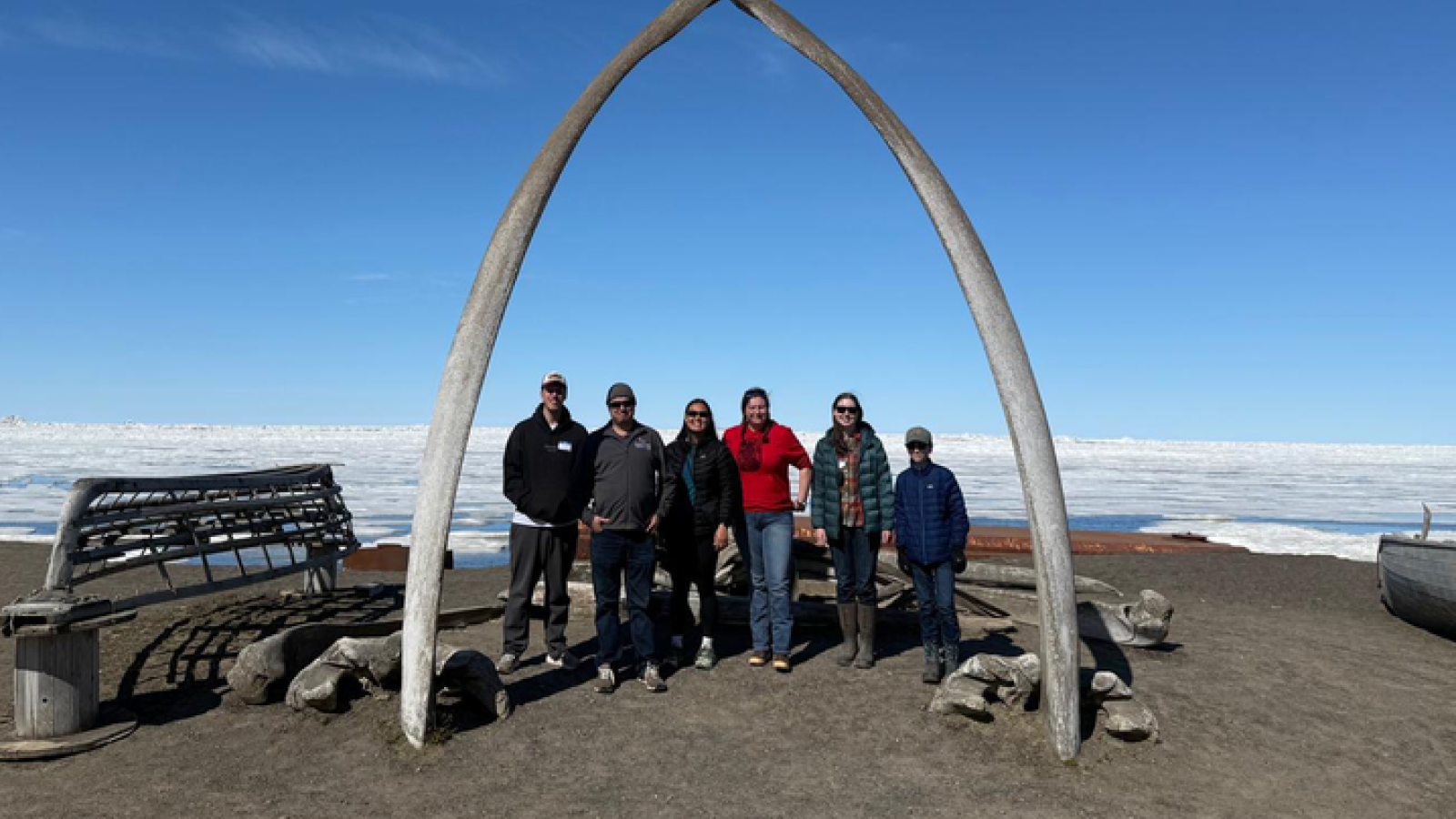
The method is what Berry, an engineer, brings to it. His team took newly developed microfluidic chips to Utqiaġvik to run genomic sequencing in the field, and is writing training materials and instruction manuals for the device, which is still a prototype [7]. The idea is to sequence samples where they are collected instead of shipping them to a distant medical laboratory [5]. "Our goal is to really enable genomic analysis in all corners of the world. Pandemics don't respect borders, national borders or boundaries. To get a good sense of what's circulating out there, we need to go test places that are off the beaten path," Berry said [6]. The wildlife samples were collected by the local community; Berry traveled with Ph.D. student August Bodin and lab manager Anni Noble and worked with the Wildlife Conservation Society [3].
The account describes a program being stood up, not a set of results. It does not report how many samples were sequenced or whether any strain of concern turned up on this trip. Berry's case for early warning is a claim about what the surveillance could deliver, and the reporting does not yet show the field chips detecting anything.
Community members raised a separate concern with the team: that thawing permafrost could release long-dormant pathogens [12]. That would widen what the surveillance has to watch beyond the migrating birds.
What to watch
- Whether the team reports any H5N1 variants detected from this season's Utqiaġvik samples.
- Whether the microfluidic chips move past the prototype stage into a field-deployable kit.
- Whether trained local operators can run the sequencing independently once the researchers leave.