Science1 publisher3 min readPublished
Remote cameras catch Gabon's cave crocodiles ambushing bats for the first time
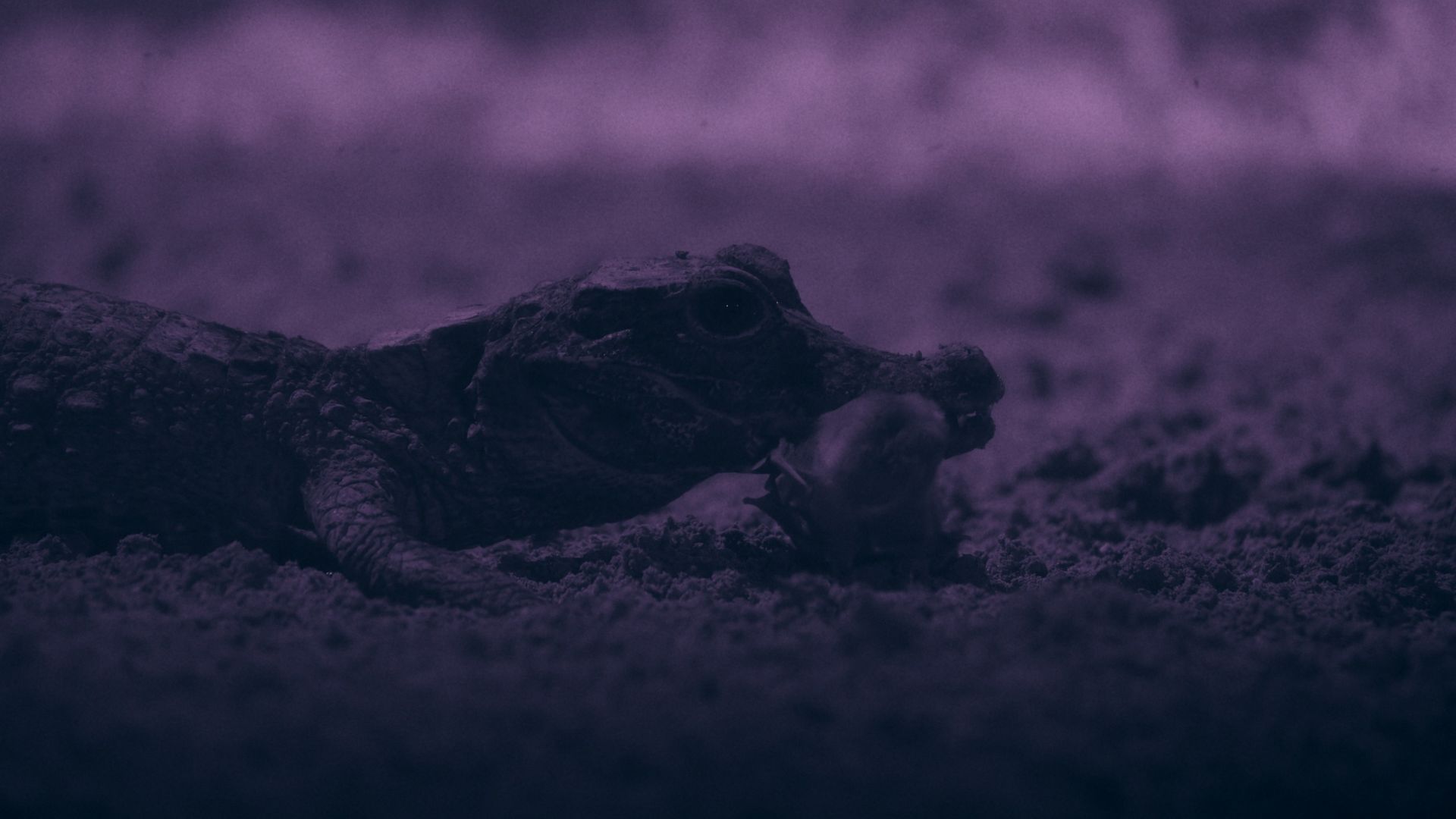
Remote cameras filmed Gabon's cave-dwelling dwarf crocodiles ambushing bats, a hunt ecologist Matt Shirley had not seen in about 15 years of studying them. Shot for a TV series, the footage is a first sighting that has yet to be turned into counts of strikes and catches.
The Scientist · Science desk
What happened
- Researchers already knew the Abanda Caves crocodiles ate bats and insects, but the animals would not hunt while people were in the cave with them.
- The cave population, discovered in 2008, spends its days in total darkness on mounds of bat guano in Gabon's remote Abanda Caves.
- The cave group is still classified within the dwarf crocodile species but is genetically isolated, with its members mating only with each other.
Compiled by The ScientistSomething wrong?How this is made
Why it matters
- capability Behavior that people suppressed just by being present can now be recorded and, in principle, counted, giving the team a way to measure how this population feeds.
- constraint Until strike counts and success rates come out of the footage, the feeding question is settled only as a sighting, and the share of bats against insects in the diet stays unmeasured.
- exposure A genetically isolated population sits inside a species whose vulnerable listing is decades out of date, so its risk cannot be read off the Red List.
Matt Shirley's problem in the Abanda Caves is an old one in field biology: watching the animals changed what they did. "No matter how deeply in the bat guano I've been, or how long I've spent in the caves, whenever I'm in there, the crocodiles just aren't doing what they want to be doing," Shirley, a conservation ecologist and Rolex National Geographic Perpetual Planet Explorer, told Live Science [7][20]. Every earlier look at these crocodiles came with a person in the cave. The remote cameras took the person out, and the crocodiles hunted [5].
The footage was shot for National Geographic's seven-part series "Africa: Earth's Wild Home" and will appear in its "Jungle" episode [1][19]. Live Science describes the hunt as a sneak attack on bats [1]. One sighting has no denominator. The report does not say how many hunts the cameras recorded, how many strikes succeeded, or how bats compare with insects in a diet already known to include both [4]. Shirley said the footage can be used to reconstruct the population's behavior patterns and trends [8].
Those numbers would also test an earlier result. Shirley was part of the team that first documented the crocodiles in 2010, work that led to a 2016 study in the African Journal of Ecology comparing them with dwarf crocodiles in the forests above ground [9]. He and his colleagues have found the cave animals often better fed, and the team thinks abundant prey and a lack of predators are the likely reasons [10]. The comparison is a correlation with a proposed cause. Film of crocodiles catching bats fits the prey half of that explanation. The predator half needs other evidence.
The cave is a hard place to work. "If it's the dry season, you're just kind of standing on this like fluffy mattress cloud of bat guano, but if there's any rain, you're in a bat guano slurry," Shirley said [18]. The guano is acidic, and over time it erodes the crocodiles' grayish skin to a distinct orange [11]. The population was discovered in 2008 [3]. Researchers are not sure when the crocodiles moved underground, and they may have been there for thousands of years [15].
The species, Osteolaemus tetraspis, grows to about 1.5 meters and normally lives in forests, rivers and swamps across West and Central Africa [2]. The cave animals are still counted within it, but they are a genetically isolated group [12]. Shirley explained that by staying in the cave and mating only with each other, they are accumulating genetic differences that he expects will help them adapt to it [13]. "This is evolution in action," he said [14].
Dwarf crocodiles are listed as vulnerable on the IUCN Red List, but the IUCN has not assessed them in decades, so their current status is uncertain [16]. National Geographic reported that the species is threatened by habitat loss and by overharvesting, since people in parts of West and Central Africa eat it as a common source of protein [17].
What to watch
- A peer-reviewed analysis of the camera footage from Shirley's team, with numbers of hunts, strikes and successful catches.
- A fresh IUCN assessment of dwarf crocodiles, and whether it treats the Abanda Caves population separately.
- Genetic work that would move the cave group from an isolated population of Osteolaemus tetraspis toward a separately described lineage.