Product1 publisher2 min readPublished
Qualcomm fits micro-power Wi-Fi 6E into a chip that sits inside an earbud
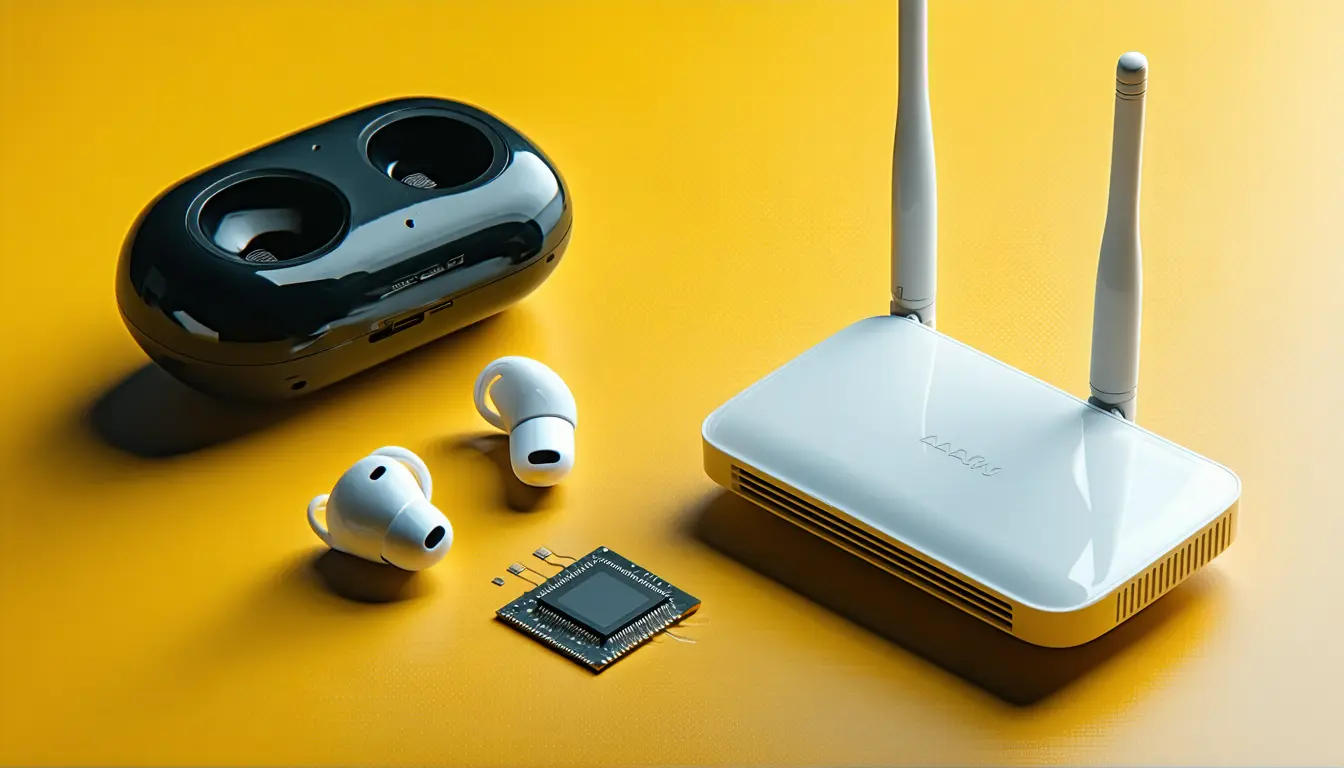
Sound Elite Gen 2 can sit on 2.4, 5 or 6GHz so the buds hold their own link to the router, and Qualcomm's XPAN path reaches 24-bit/192kHz. The chipmaker kept quiet about which products will carry it.
The Product Desk · Product desk
What happened
- Qualcomm used Snapdragon Summit to launch Sound Elite Gen 2, a second-generation audio chip small enough for earbuds that includes micro-power Wi-Fi 6E connectivity.
- The chip can use the 2.4GHz, 5GHz and 6GHz bands, which Qualcomm presents as access to more spectrum than Bluetooth offers by itself.
- XPAN's full capability over Wi-Fi reaches 24-bit, 192kHz, which Gizmodo describes as true hi-res lossless streaming.
Compiled by The Product DeskSomething wrong?How this is made
Why it matters
- constraint Once the buds hold their own link to the router, the household network is part of the audio path, and the earbud maker fields complaints about access points it did not sell.
- capability A device maker can now specify earbuds at roughly 6.5 times CD-quality stereo bit rate. That puts hi-res on the box for a product that fits in an ear canal.
- decision Anyone building on this has to decide whether Wi-Fi mode is the default or a toggle, and the efficiency claim on offer is a platform-to-platform comparison.
- precedent Qualcomm frames the same part for audio glasses, so the next Wi-Fi audio product may not be earbuds; camera-equipped designs are pushed to the Snapdragon Wear Elite.
The phone stays on the kitchen counter and the audio stutters out on the landing. Sound Elite Gen 2 changes which radio holds that link. Qualcomm says buds built on the chip connect to the router, so a listener can move between floors and behind walls without minding the distance to the phone [2]. The chip can sit on 2.4GHz, 5GHz or 6GHz [3].
The reason that matters for sound quality is bandwidth. Uncompressed stereo at 16-bit/44.1kHz, the aptX Lossless figure Gizmodo reports for the chip, works out at 16 x 44,100 x 2, or 1.41 Mbps [4][15]. The same sum at the 24-bit/192kHz ceiling XPAN reaches over Wi-Fi gives 9.22 Mbps [5][16], about 6.5 times as much [17]. Gizmodo also reports that when its writer last used XPAN, Qualcomm put the ceiling at 24-bit/96kHz [6].
So the same launch carries two quality numbers. The chip is described as running aptX Lossless for 16-bit/44.1kHz "CD-quality" sound [4], and XPAN over Wi-Fi is described as reaching 24-bit/192kHz for true hi-res [5].
Qualcomm promises 40% better power efficiency than the previous Snapdragon S7+ Gen 1 platform [7]. That comparison is platform to platform. Runtime with the Wi-Fi radio in use, the figure a product manager has to plan around, is missing from Gizmodo's account [19]. The chip also carries its own small eNPU, which Qualcomm intends to work alongside the phone's on-device and cloud AI processing [9].
Qualcomm did not have much to share about which devices will use the chip, according to Gizmodo [8]. Gizmodo disclosed that Qualcomm paid travel and lodging for Snapdragon Summit and that it did not guarantee coverage as a condition of the trip [11].
Two things decide whether Wi-Fi in the buds is worth its cost for a given listener: whether the content they play actually exceeds 1.41 Mbps [15], and whether they administer the network the buds will live on. Where both are true, the router link buys real headroom over a Bluetooth-scale pipe. Where the content is lossy and the access points belong to a landlord or an IT team, the buyer has taken on a dependency without needing the extra bitrate. Others got to Wi-Fi audio first: Gizmodo senior reporter James Pero reviewed updated Sonos Ace Ultra headphones that can switch audio from the headphones to speakers over Wi-Fi [12], and Gizmodo called Qualcomm's version still relatively unique for earbuds [13].
What to watch
- The first shipping product that states its default mode and its battery runtime with the Wi-Fi radio active.
- Whether Qualcomm publishes how buds join a network, including behaviour on guest SSIDs and captive portals.
- Whether an audio-glasses design ships on this chip before an earbud does.