Science1 publisher2 min readPublished
ORNL wins two more years to make bacterial spores pull rare earths from acid mine drainage
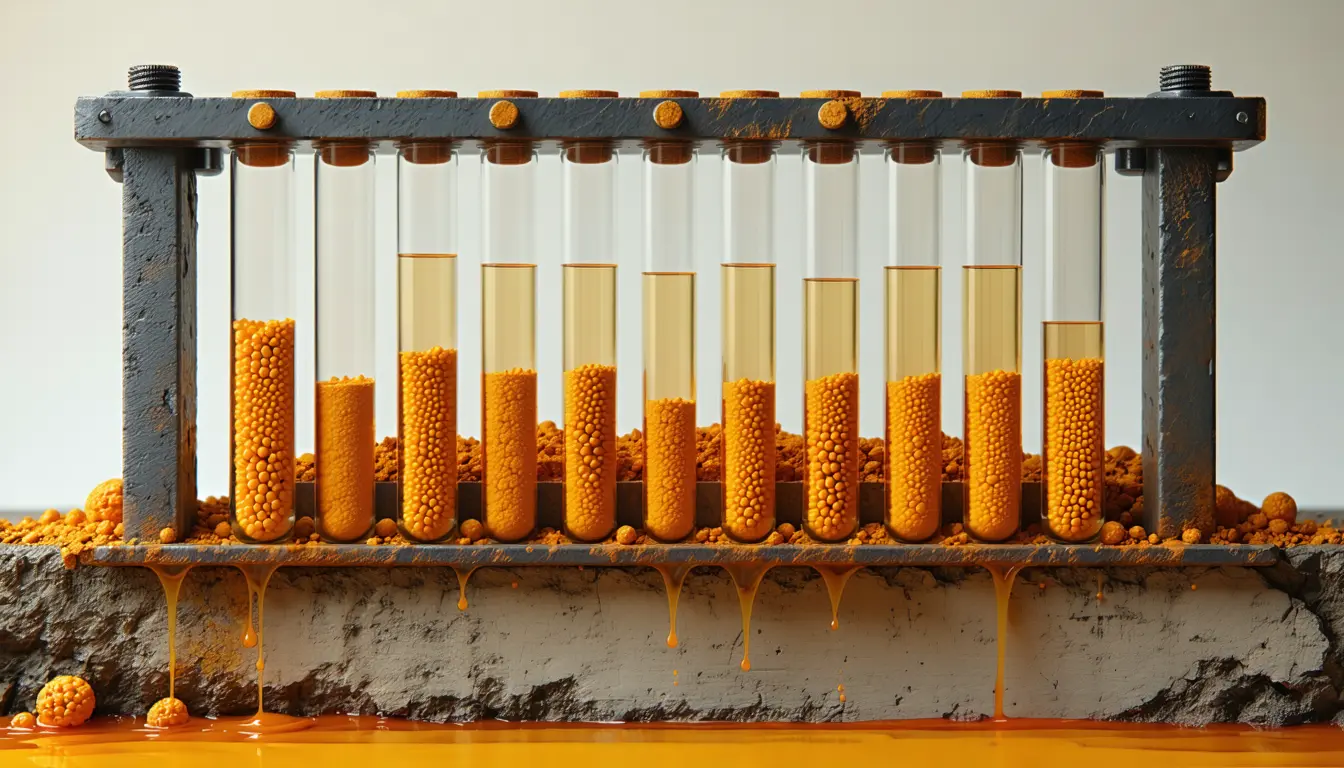
Oak Ridge is engineering spore surfaces to bind neodymium and dysprosium in Appalachian mine water, where those metals are dilute. The pilot's main output was the assay needed to tell one engineered design from another.
The Scientist · Science desk
What happened
- ORNL's SpoREE project, started as a critical minerals pilot under DOE's Office of Science Biological and Environmental Research program, has been approved for a two-year extension on its initial results.
- The work engineers the surfaces of dormant bacterial spores to display metal-binding proteins, combining AI-aided protein design, advanced imaging and chemical analysis on metal-bearing liquid waste.
- Project lead Brian Sanders said the pilot's major accomplishment was the analytical pipeline: screening many samples, measuring very small metal quantities and imaging metal around individual spores.
Compiled by The ScientistSomething wrong?How this is made
Why it matters
- constraint Dilution sets the bar. A binder has to prefer neodymium over iron by a wide margin in the same acidic water, so a spore that loads up impressively in a clean test solution tells you little.
- capability Without the screening and imaging methods, protein design cannot tell which surface change helped. With them in hand, the group can rank engineered variants against each other.
- cost The value case runs through reuse, since the plan is to strip the metal off and put the spores back to work. Spores that do not survive stripping cut into the net value of the metal recovered.
Selectivity is the hard part here. Acid mine drainage turns acidic through geochemical and microbial processes, and under those conditions metals leach out of the surrounding rock and soil and accumulate in the water [10]. In Appalachia, where coal mines produce large volumes of it, the rare earths are present at very low concentrations among much larger quantities of iron, manganese and aluminum [11]. A material that binds metal roughly in proportion to how much metal is there will come back loaded with iron. "Biology could offer a solution because proteins can distinguish among different metals," Sanders said [12].
That constraint explains the choice of container. Spores are dormant structures that protect a bacterium's genetic material under harsh conditions, and their tough multilayered surfaces tolerate dehydration, temperature changes, ultraviolet radiation and the highly acidic chemistry found in some mine drainage [6][8]. "You can think of the spore as a robust biological bead," Sanders said [7]. Fermentation could produce them in large quantities, and genetic tools can modify proteins on the surface or within the inner layers [9].
What the pilot produced is mostly measurement capability. The team established the analytical pipeline needed to evaluate different biological designs, with methods to screen many samples, to measure very small quantities of metals, and to use advanced imaging to examine where metals sit around individual spores [18].
Sanders's own summary of the pilot is careful. "Broadly speaking, we reduced some of the uncertainty surrounding the concept of displaying metal-binding proteins on spore surfaces to capture and potentially separate rare earth elements," he said [16]. He also said the team learned that "metal binding involves more than simply placing a protein on a spore" [19].
The Q&A does not report binding capacities, recovery rates, the number of strip-and-reuse cycles the spores survive, or a comparison with any process in use now [20]. Those figures decide whether the route is worth building, because the design as described strips concentrated elements off the spores and converts them into valuable materials, then cleans the spores and uses them again [3].
The extension runs two years and was approved by DOE's Office of Science Biological and Environmental Research program on the pilot's initial successes [4]. Neodymium and dysprosium, used in high-performance magnets, are among the highest priorities, and Sanders said several elements have to be tested to understand how selective each biological design is [13][14]. The longer-term aim is a customizable platform in which changing the displayed proteins points the spore at a different target, such as gallium [15].
What to watch
- Whether the extension reports selectivity and capacity numbers for neodymium and dysprosium measured in real drainage rather than in clean laboratory solutions.
- How many strip-and-reuse cycles the engineered spores survive with their displayed proteins still binding.
- Whether swapping the displayed protein for a gallium binder works.