Science1 publisher2 min readPublished
Male pigeons take more egg-sitting shifts when feeding bans leave females short of food
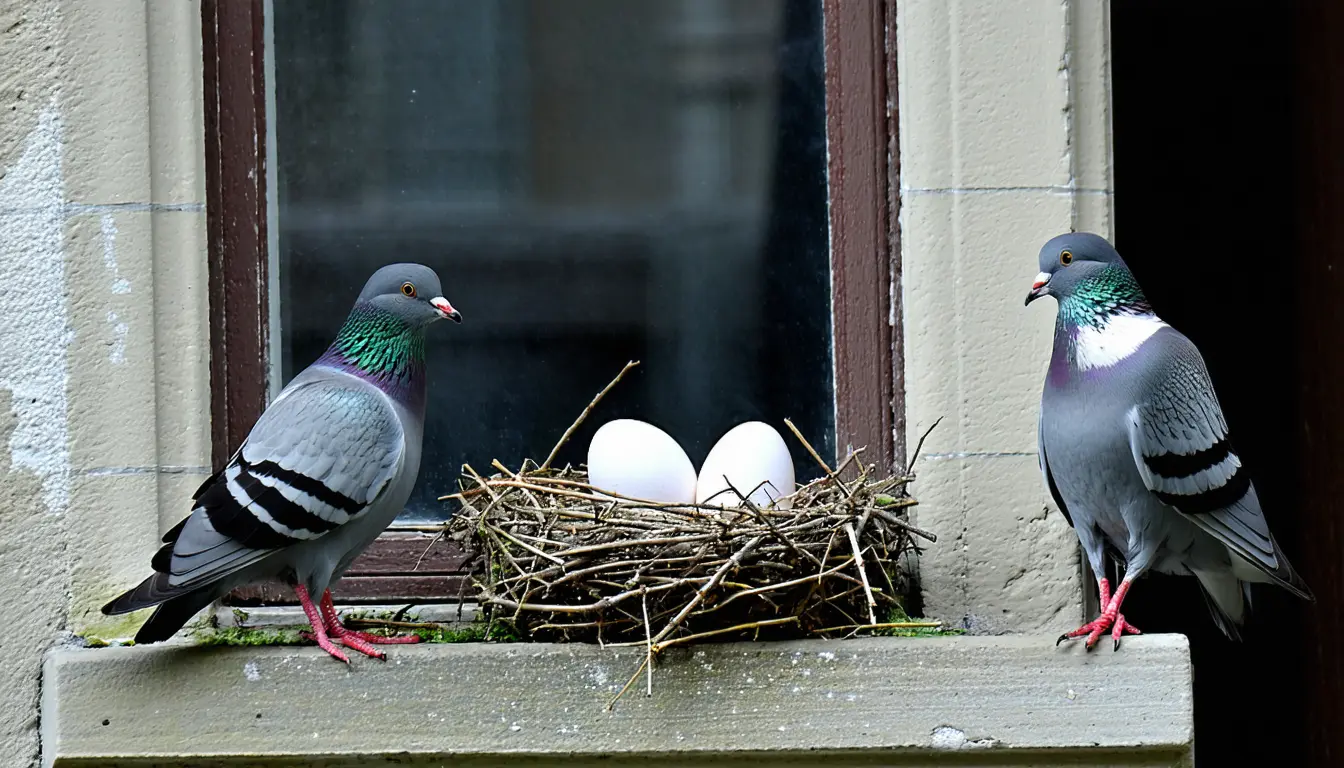
Technical University of Munich ecologists found male pigeons raised their incubation share from 17% to 22% as food-short females fell from 81% to 75%. The eggs stayed covered almost as fully, so city feeding bans left incubation running.
The Scientist · Science desk
What happened
- The researchers tracked 75 pigeon nests across three cities that ban feeding the birds.
- Some nests were in managed lofts with a reliable food supply, while the rest sat on church roofs and ledges where the birds had to find their own food.
- Weight sensors under the nests recorded incubation and parent condition automatically, so the birds did not have to be disturbed.
- Fed females were about 35 grams, or 10%, heavier than unfed females, while males showed no meaningful weight difference.
Compiled by The ScientistSomething wrong?How this is made
Why it matters
- constraint A feeding ban squeezes pigeon mothers while the eggs stay warm, so whatever a ban does to flock size has to happen after hatching.
- exposure If TUM's account of later chick starvation holds, the cost of a ban lands on young birds, and cities running bans answer for that welfare outcome.
- decision Cities choosing between bans and dummy-egg swaps get the authors' welfare argument but no head-to-head numbers, since egg replacement was outside this study.
Add the two parents' shares together and the eggs were covered 98% of the time with a reliable food supply and 97% without one [1]. The males' gain of five percentage points nearly offset the females' loss of six. For the males it was a big change in proportion, about 29% more time on the eggs [2]. The mothers still did most of the sitting. Females carry the bulk of incubation whatever the food supply, and according to the researchers their effort is limited only by their energy reserves [11].
The shortage showed up in the females' bodies for the same reason. The 10% weight gap implies unfed females of roughly 350 grams [3], and the researchers read it as a difference in energy reserves [9]. Males spent so little time incubating that unfed males had time to find food elsewhere, and their weights did not differ meaningfully [10].
The design compares two living arrangements inside the same ban cities [7]. Food was not taken away from the same birds. A managed loft differs from a church roof in more than its food supply, so housing and diet move together in these data. The researchers' reading rests on the weights: the gap appears in the sex that sits most and not in the one with spare foraging time [9][10]. The published summary does not report hatching rates, chick survival or how the 75 nests divided between the two groups.
Cities use feeding bans to shrink pigeon numbers because urban flocks live largely on human food [6]. This study tested one link in that chain, whether hungry parents keep their eggs warm, and they do. Brandon Mak, the study's lead author at TUM, said: "Even under adverse conditions, pigeons are able to successfully hatch their offspring." [12] According to TUM's account, the young that hatch may then struggle to find enough food and starve in great numbers [13].
Mak's recommendation is about welfare. "Against this background, measures that act earlier in the reproductive cycle, such as regularly replacing eggs with dummy eggs, are a more welfare-friendly way of keeping pigeon populations under control," he said [14]. Wolfgang Weisser, professor of terrestrial ecology at TUM, said: "Pigeon management is controversial because of how it is done." [15]
I think the incubation finding is sound for the nests measured. The verdict on bans is the authors' argument built on top of it. Nest shifts and parent weights can show that a ban leaves incubation running; whether a city ends up with fewer pigeons is a question for a population count.
What to watch
- Whether the full paper reports hatching and fledging success separately for loft and free-nesting birds, which would put numbers behind Mak's statement that pigeons still hatch their young.
- A trial in one city comparing pigeon counts under a feeding ban against counts under regular dummy-egg replacement.
- A repeat with fed and unfed birds nesting in similar sites, which would separate the food effect from the loft-versus-ledge difference.