Science1 publisher3 min readPublished
Male swordtails steered nine generations of virtual females toward bigger bodies
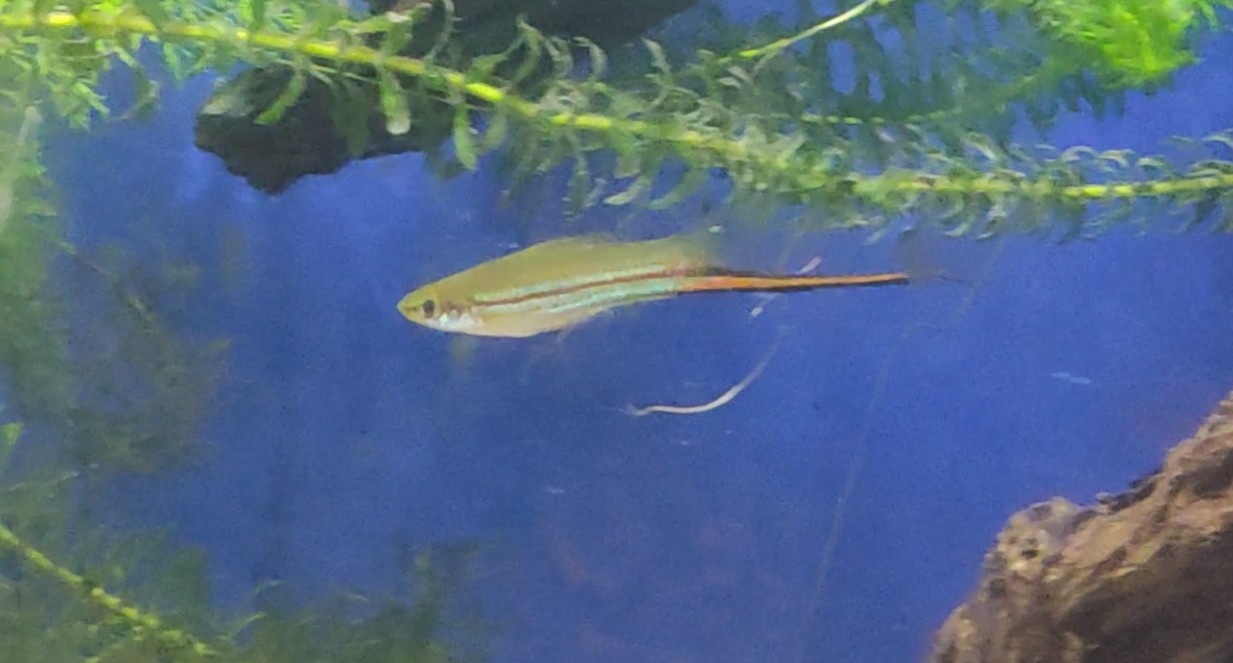
Male green swordtails in a University of Exeter experiment bred on-screen females more than 24% larger over nine generations of virtual mate choice. The method lets a two-screen test range over far more possible mates, on evidence from 23 fish watching video.
The Scientist · Science desk
What happened
- Female swordtails varied far more than males, with individual females favoring traits such as longer tails or brighter colors.
- In each trial, the virtual mate a fish stayed near longer was declared the winner and used to build the next virtual fish.
- The team tested 11 female and 12 male swordtails one at a time, each facing a moving virtual mate on either side of the tank.
- One female's choices produced virtual mates that looked increasingly female, a result the researchers say they cannot yet explain.
Compiled by The ScientistSomething wrong?How this is made
Why it matters
- capability An animal can now reveal a preferred combination of traits that no experimenter put on screen, where fixed-choice tests could only rank the options the researcher picked in advance.
- constraint Eleven females are enough to show that tastes differ between individuals, but too few to say how those tastes are spread across a wild population.
- precedent Labs working on species that react to video could swap multi-year live-breeding designs for screen trials, once evolved stimuli are shown to predict choices among real animals.
The Exeter tanks had one screen at each end [1], so every trial was still a choice between two options [6]. The range comes from the step between trials. Winning virtual fish were paired with winners from other trials, and their offspring became the next round's options [3]. Over nine generations [4], a run of two-way choices can move a stimulus a long way from where it started.
"Studying mate choices in animals is difficult because experiments can only present animals with a limited range of potential mates," said Kathryn Bullough of the Centre for Ecology and Conservation at Exeter's Penryn Campus [12]. "Our new approach allowed fish to 'design' their ideal partner, with genetic algorithms creating new sets of options for fish to choose from, allowing them to refine their preferences," Bullough said [13].
The choice of species was part of the design. "Green swordtail fish are good test subjects for this experiment as they respond to videos of other fish, and they provide no parental care for their young. This means their mate choice is relatively straightforward, as fish are primarily looking for good genes to pass on to their offspring," said Laura Kelley [14].
The headline figure is that virtual females were more than 24% larger on average by the final generation [9]. That number describes the population of stimuli. It does not directly measure how much a male prefers size. How far a genetic algorithm travels in nine rounds [4] depends on how it builds offspring from winners, as well as on who does the choosing. The account's explanation, that larger females can produce more offspring, comes with a "probably" [10]. The trials themselves recorded only where each fish swam [7].
A fish choosing at random would still crown a winner every round, and the virtual population would still drift. The thing this doesn't tell you is how much of the 24% exceeds that drift. The phys.org account does not report statistical tests or a random-choice baseline. The word "consistently" in the males' result [5] is the best sign in the summary that the shift is real. If each of the 12 males [6] drove his own lineage, a shared direction would be hard to get by chance.
One female's virtual mates grew steadily more female-looking. The team's tentative explanation is that she avoided threatening male characteristics, moving away from them and so toward female traits [11]. That idea rests on a single fish out of 11 females tested [6].
Kelley sees wider use. "A study like this using real fish would take years, and our new method provides a powerful tool to understand how wild animals choose their mates," Kelley said [15]. The evidence so far is 23 captive fish [1] reacting to moving images in a tank [6]. Whether males in the wild in Central America, where the species is native [16], favor females as large as the ones this algorithm bred is a separate experiment.
What to watch
- Whether the full Royal Society Open Science paper compares the size shift against a random-choice baseline or reports statistics for it.
- Whether live-mate trials show male swordtails picking real females that match the enlarged virtual ones.
- Whether other females, or the same female retested, again drive their virtual mates toward female-looking forms.