Invest2 publishersIndependently confirmed2 min readPublished
China's central bank answers Europe's cheap-yuan charge by pointing to deficits abroad
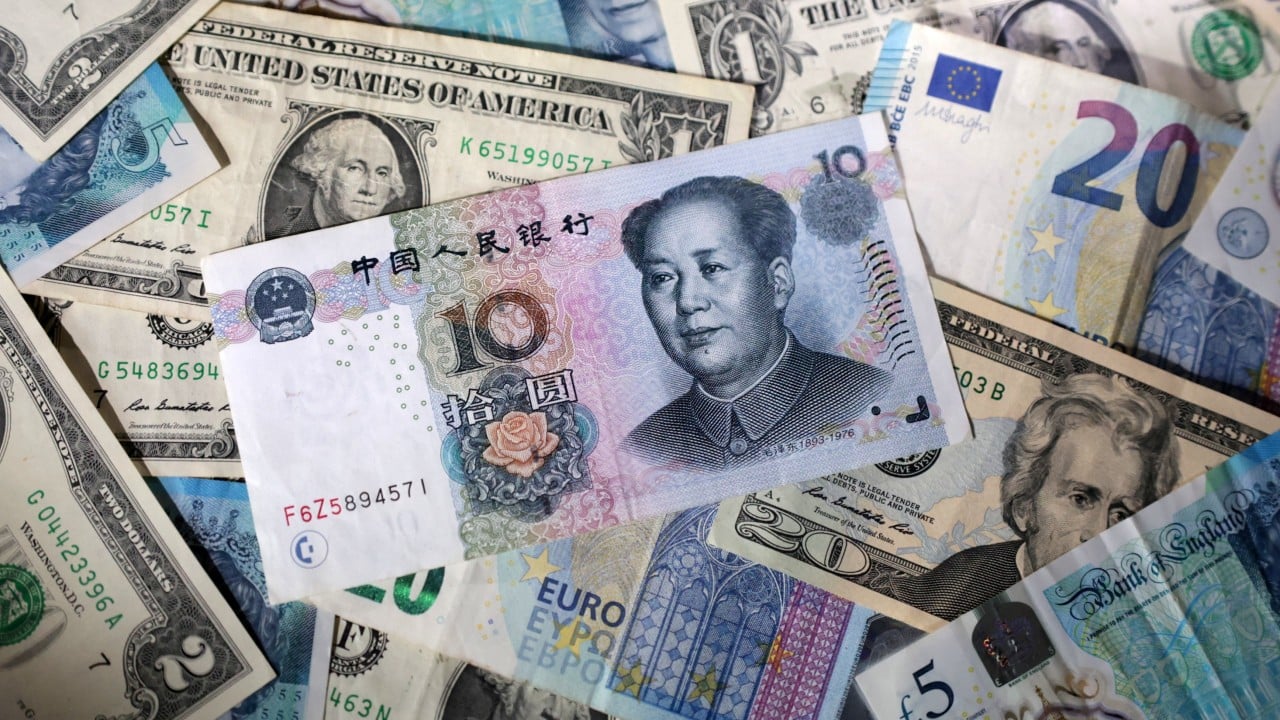
China's central bank published a paper on Thursday denying that it weakens the yuan to boost exports, as EU trade talks begin. By ruling out the exchange rate as the problem, Beijing leaves Brussels with its overcapacity charge and the trade restrictions that come with it.
The Investor · Invest desk
What happened
- The paper argues that, historically, a stronger yuan did not hurt China's trade expansion and a weaker one did not boost its exports, according to SCMP's account relayed by Semafor.
- The People's Bank of China said those accusing it of devaluing the yuan to win exports were "dodging accountability".
- Europe has long accused Beijing of holding the yuan down by perhaps as much as 30% and of industrial overcapacity that harms European industry, Semafor reported.
- China has vowed a "resolute response" if the EU takes collective action to restrict Chinese companies or products.
Compiled by The InvestorSomething wrong?How this is made
Why it matters
- decision Brussels has to choose between pressing a currency charge Beijing has now rejected in a formal paper and moving its weight to the overcapacity complaint, where its tools are restrictions on goods and firms.
- precedent With the denial set out in a central bank position paper, any later yuan concession in a deal would be a public reversal of the PBOC's own written stance.
- constraint Because Beijing denies any undervaluation at all, the two sides have no agreed gap from which to negotiate an appreciation target, so any currency term would start without a shared baseline.
Take Europe's figure of up to 30% [5] and run it both ways. If the yuan sits 30% below fair value, reaching that value means a rise of about 43%, since 1 divided by 0.7 is roughly 1.43; if the 30% is a discount measured from today's price, the rise is 30% [8]. Neither report gives the yuan's current rate against the euro or the value of the trade in dispute.
The People's Bank of China offered its own list of causes. "Global economic imbalances are deeply intertwined with shifting global division of labour, inherent flaws in the international monetary system, and persistently high fiscal deficits and high consumption in some countries," the bank said [7]. China's exchange rate is not on that list. The paper adds that China has never resorted to deliberate devaluation and has no need to gain a competitive edge that way [3].
The paper's historical argument cuts both ways. Its claim that the yuan's level has not moved China's trade in either direction [2] is also an argument that a stronger yuan would be cheap for Beijing. Taken at its word, the PBOC could let the currency rise and then cite steady exports as proof that the paper was right.
So the talks, which SCMP reported began as the paper came out [1], can go more than one way. The paper may be an opening position, and opening positions get traded. Beijing may take the exit in its own logic and allow a stronger yuan without conceding in writing that it was ever held down. Or Brussels sets the currency charge aside and presses the overcapacity complaint it has made alongside it [5], using collective action on Chinese companies or products, the step China has said it will answer [6].
I'd put most weight on the last. Beijing is declining to treat the exchange rate as something to bargain with, so whatever it gives, if anything, has to come from the goods and firms Brussels is worried about. The case against that view is the exit path: a stronger yuan would cost Beijing nothing it has put in writing. I'm wrong if the yuan climbs steadily while the talks run, or if Chinese negotiators engage with an exchange-rate term in the EU's demands.
What to watch
- Whether the EU moves to collective action against Chinese companies or products, and what form China's promised response takes.
- Whether Brussels puts a formal number on the undervaluation it alleges, which would fix the size of any currency demand in the talks.
Clarity's read
What the record supports and how the coverage leans. The claims behind it follow.
Reality
- Evidence55
- Adoption
- Insufficient
- Hype gap+10
- Incentives65
- Confidence55
Claim ledger
Ranked by verification strength, evidence, and original report placement.
- [1]
The People's Bank of China published a position paper on the yuan exchange rate on Thursday, as China-EU trade talks began.
ReportedSupportedSource: South China Morning Post2 sources— create a free account to open themView cited source - [2]
The PBOC paper argued that past experience did not suggest a stronger yuan hurt China's trade expansion, or that a weaker yuan boosted exports, according to the South China Morning Post as reported by Semafor.
- [3]
The paper argued that China has no need to gain a competitive edge by devaluing its currency and has never resorted to deliberate devaluation.
- [4]
The central bank said those accusing China of devaluing the yuan to boost exports were 'dodging accountability'.
- [5]
Europe has long charged Beijing with deflating the yuan, by perhaps as much as 30%, and with pursuing a policy of industrial overcapacity that harms European industries.
- [6]
China has vowed a 'resolute response' if the EU takes collective action to restrict Chinese companies or products.
- [7]
"Global economic imbalances are deeply intertwined with shifting global division of labour, inherent flaws in the international monetary system, and persistently high fiscal deficits and high consumption in some countries," the People's Bank of China said.
ReportedSupportedSource: People's Bank of China, quoted by the South China Morning PostView cited source - [8]
If the alleged 30% undervaluation is the yuan's gap below fair value, closing it requires a rise of about 43%; if the 30% is measured from the current price, the required rise is 30%.
Sources
2 independent publishers whose own reporting we read for this story.
- scmp.comChina’s central bank slams currency manipulation claims as EU trade talks begin
1 article · October 8, 2026
- semafor.comChina rejects yuan manipulation claims amid EU trade dispute
1 article · October 8, 2026
Topics and entities
Follow any of these and your For You feed starts watching them — no settings page required.