BuildNot yet confirmed elsewhere1 publisher2 min readPublished
One percent-encoded character gets an attacker admin API access to Cisco SD-WAN Manager
Cisco disclosed CVE-2026-76504, a CVSS 9.8 authentication bypass in Catalyst SD-WAN Manager that is already exploited and has no workaround. A dev.to analysis says one Manager can administer up to 6,000 devices, so patching is the only defense.
The Engineer · Build desk
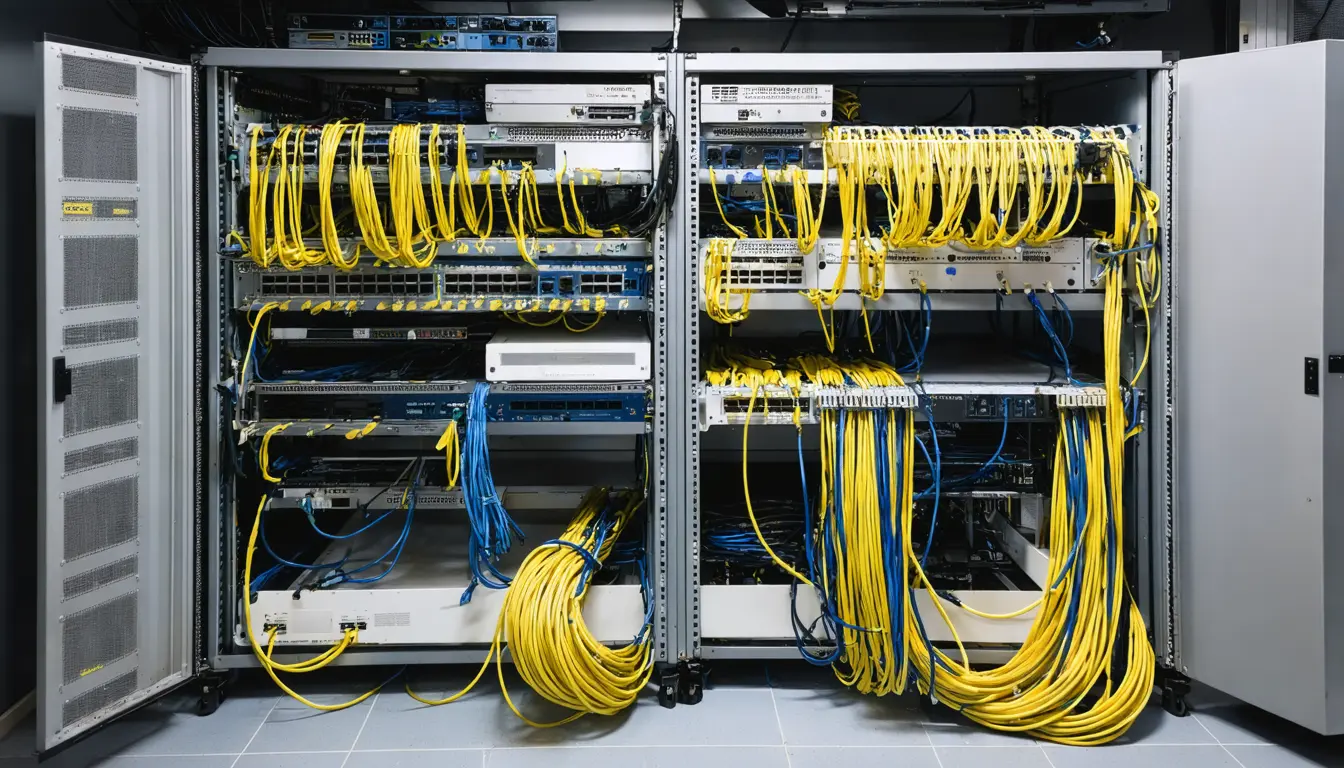
Key figures: a CVSS score of 9.8, rated Critical; one SD-WAN Manager instance can administer up to 6,000 devices; and 3 days between CISA's September 30 listing and its October 3 federal deadline.
| Figure | Value | Note | Claim |
|---|---|---|---|
| CVSS severity score | 9.8 CVSS (Critical) | 1 | |
| Devices one Manager can administer | 6,000 devices | up to | 12 |
| CISA listing to federal deadline | 3 days | 11 |
What happened
- An attacker needs no credentials: one crafted HTTP request with a single percent-encoded character in the URI returns admin-level API access.
- Cisco PSIRT learned of the exploitation during a TAC support case and confirmed it as active in September 2026.
- CISA added the flaw to its Known Exploited Vulnerabilities catalog on September 30 with a federal patch deadline of October 3.
- There is one fixed build for each of six branches. Newest first, they are 26.2.1, 26.1.2.1, 20.18.4.1, 20.15.6.1, 20.12.8.2 and 20.9.10.1.
Why it matters
- cost Operators on releases earlier than 20.9 have no patch to apply and must migrate to a supported release, which is a project with its own schedule.
- constraint Because the product is affected regardless of configuration, triage reduces to two questions: is the Manager reachable, and is it below the fixed build for its branch.
- decision For a reachable Manager below a fixed build, the post says to treat it as compromised until proven otherwise; we think that is the right default, since an upgrade closes the request path but does not undo earlier access.
The mechanism, as the dev.to author reconstructs it, is two components disagreeing about what a request says [13]. The author says the reconstruction comes from the advisory's description, so the detail is inference and not Cisco's own text [13].
Here is the sequence the post describes. An authentication filter guards the j_security_check login-check path with a literal string match on the raw request URI [14]. The attacker sends %6a, the hex encoding of "j", in place of the letter [14]. The filter compares the still-encoded string to its rule, finds no match, and passes the request as one that needs no authentication [15]. The backend then decodes the URI before routing, sees the protected endpoint, and serves it as privileged [15].
The weakness class is CWE-177, improper handling of URL encoding [10]. The post argues these bugs recur because the fix is architectural: every layer that inspects a request must agree on its canonical form before any security decision is made [16]. It adds that such a flaw survives code review because each component looks correct in isolation [16]. In our view the ordering is the bug. Normalization has to run before the match, and a filter that matches first is wrong however clean its rule is.
The CVSS vector rates the attack as reachable over the network, low in complexity, and needing no privileges and no user interaction, with unchanged scope and high impact on confidentiality, integrity and availability, so the attack needs nothing from the victim [10]. The reach into branch devices comes from the post's own assessment. From admin API access, it says, an attacker "can push configuration to every branch router, harvest device credentials, alter routing policy to redirect traffic, or use the management network as a launchpad into the enterprise" [17]. Those are capabilities the author infers. The post cites no observed post-exploitation activity.
Cisco's advisory and CISA's listing landed on the same day, and the federal deadline gives agencies three days from listing [11]. The post also notes that cloud-hosted 20.15.605 was already fixed [8].
What to watch
- Whether Cisco's advisory or fixed-release notes describe what changed in URI handling, which would confirm or correct the post's reconstruction.
- Whether Cisco or CISA publish indicators of compromise for Managers hit during September.
- Whether any report documents what attackers did after getting admin API access, since the post's list of capabilities is inferred.
Clarity's read
What the record supports and how the coverage leans. The claims behind it follow.
Reality
- Evidence50
- Adoption
- Insufficient
- Hype gap+15
- Incentives
- Insufficient
- Confidence55
Claim ledger
Ranked by verification strength, evidence, and original report placement.
- [1]
On September 30, 2026, Cisco published advisory cisco-sa-sdwan-webauth-xr8beuuU for CVE-2026-76504, an authentication bypass in Cisco Catalyst SD-WAN Manager rated CVSS 9.8 (Critical).
- [2]
A remote attacker with no credentials can gain admin-level API access with a single crafted HTTP request by percent-encoding one character in the request URI.
- [3]
Cisco's PSIRT confirmed the flaw was actively exploited in September 2026, and became aware of it through a real TAC support case.
- [4]
CISA added CVE-2026-76504 to the Known Exploited Vulnerabilities catalog on September 30, 2026, with a federal patch deadline of October 3.
- [5]
There are no workarounds for CVE-2026-76504.
- [6]
Cisco Catalyst SD-WAN Manager is affected regardless of configuration; there is no setting that avoids the flaw.
- [7]
Fixed releases: 20.9.10.1 (20.9 branch), 20.12.8.2 (20.12), 20.15.6.1 (20.15), 20.18.4.1 (20.18), 26.1.2.1 (26.1) and 26.2.1 (26.2).
- [9]
Releases earlier than 20.9 have no fix; operators must migrate to a supported release.
- [10]
The weakness is CWE-177, improper handling of URL encoding (hex encoding); the CVSS 3.1 vector is AV:N/AC:L/PR:N/UI:N/S:U/C:H/I:H/A:H.
- [11]
CISA's listing (September 30) and federal deadline (October 3) are three days apart.
- [12]
One SD-WAN Manager instance can administer up to 6,000 devices.
- [13]
The post presents its description of the bypass mechanism as reconstructed from the advisory's description.
- [14]
In the post's reconstruction, the authentication layer guards the j_security_check login-check path with a filter that does a literal string match on the raw request URI, and the attacker sends %6a (the hex encoding of the letter j) instead of the literal j.
- [15]
In the post's reconstruction, the filter compares the still-encoded string against its rule, finds no match, and passes the request as if it needed no authentication; the backend then decodes the URI before routing, sees the real protected endpoint, and serves it as privileged.
- [16]
The post argues encoding-normalization mismatches keep recurring because the fix is architectural: every layer that inspects a request must agree on its canonical form before any security decision, and the flaw survives code review because each component looks correct in isolation.
- [17]
The post says that from admin API access an attacker can push configuration to every branch router, harvest device credentials, alter routing policy to redirect traffic, or use the management network as a launchpad into the enterprise.
- [18]
The post advises that if the Manager is internet-reachable and below a fixed build, it should be treated as compromised until proven otherwise.
Sources
1 independent publisher whose own reporting we read for this story.
- dev.toCVE-2026-76504: Cisco Catalyst SD-WAN Manager Authentication Bypass — Analysis & Mitigation
1 article · October 11, 2026
Topics and entities
Follow any of these and your For You feed starts watching them — no settings page required.
Topics
- Known Exploited Vulnerabilities catalogFollow
- Authentication Bypass FlawsFollow
- SD-WAN securityFollow
- URL encoding and canonicalization flawsFollow