Invest1 publisher3 min readPublished
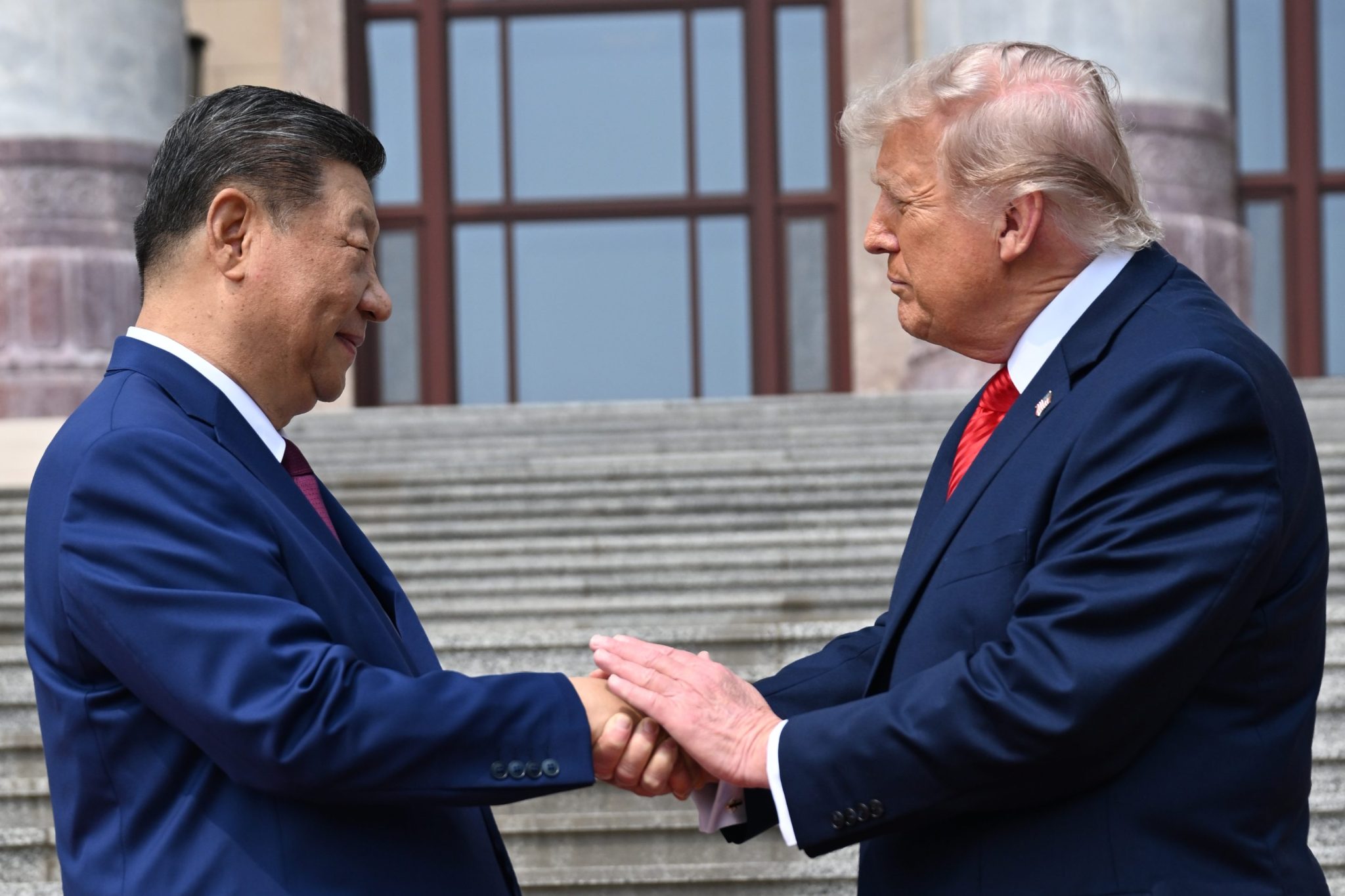
Trump shrugs off reports of Chinese satellite help for Iran before Xi's state dinner
Trump has twice declined to retaliate against Beijing, and the tariff campaign he did run ended in an armistice that China's rare earth monopoly helped force. Anyone pricing a snapback argues against that record.
The Investor · Invest desk
What happened
- Asked about reports that China had supplied Iran with satellite imagery, Trump said of Xi Jinping, "I think he's behaved reasonably well," and took no action in response.
- Having accused Beijing of accessing U.S. voter files in 2020, Trump signalled he would not retaliate now, saying China "is maybe a little bit different today than it was then."
- China holds a relative monopoly on the rare earths used in electronics and deployed it to help force a trade armistice with Trump, according to Fortune.
- Michael Kovrig of the International Crisis Group said of the tariff fight: "Xi and Trump got into a contest of leverage, and Xi came out on top."
- Fortune reports it is unclear whether Thursday's state dinner will produce a policy deliverable at all.
Compiled by The InvestorSomething wrong?How this is made
Why it matters
- constraint The ceiling on any new U.S. tariff round is set by what Beijing can do with export licences, so an escalation has to be survivable against a rare earth cut-off before it is announced.
- decision Anyone underwriting China exposure has to choose between pricing the truce as a settlement and pricing it as both sides buying time to rebuild.
- contradiction The improving deficit number the administration can claim credit for is partly rerouting. The same figure also supports a case for aiming the next tariffs at third countries.
- exposure Germany, Japan and South Korea absorb the cheap-EV competition while the only summit on the calendar is a bilateral one they do not attend.
The leverage here runs through export licences. Trump's mounting tariffs of last year backfired, according to Fortune [5]. He now speaks of Xi in different terms: "He's a great gentleman; we get along great," he said this month [2]. Michael Kovrig, a senior adviser at the International Crisis Group and a former Canadian diplomat whom China detained during Trump's first term, gave a cause for the change: "Trump has dramatically shifted his approach to China because his initial attempt to use super-high tariffs and export restrictions was unsuccessful," he said [7].
China ran a $1.2 trillion global trade surplus last year, roughly $3.3 billion a day, with its low-priced EVs undercutting the auto sectors of Germany, Japan and South Korea [17][21]. The tariffs did not curb Chinese manufacturing. The country found new markets and boxed out competition from other industrialized countries [16].
Hospitality is what replaced the tariffs. Trump travelled to Beijing in May and could meet Xi twice more this year at international summits, which with Thursday's dinner comes to as many as four meetings in a single year [12][22]; Xi met Joe Biden three times, on the sidelines of summits [14]. A helipad has been readied on the White House South Lawn for Xi's arrival, and Trump has said he regrets that his ballroom will not be finished in time [13].
He has not rebuilt the alliances that used to apply pressure. He has mocked Emmanuel Macron in speeches, run hot and cold on NATO after several members did not fully support his choice to start a war with Iran, and opened a trade fight with Canada [10]. Kovrig said Trump has largely undermined the economic and national security alliances that could previously apply pressure on China [11]. "He's executing Xi's wedge tactics for him, and along the way, helping Xi to tell a story about China as the more stable and responsible power," Kovrig said [9].
The goods imbalance with China has narrowed against the same period in 2025 on Census Bureau figures. The administration says China appears to be routing more goods through other nations such as Vietnam to minimise the tariffs [15]. Germany, Japan and South Korea sit both among the economies Chinese technology puts at risk and among the car industries its EVs are undercutting [20][23], and neither group is at Thursday's table.
In my view no retaliation follows the two passes Trump has already given Beijing [3][4], because the instrument that would deliver one was tried and failed [5]. Two developments would overturn that. If Beijing ever trades away the rare earth licence lever, the constraint on Trump goes with it [6]. And if the truce is only time to rebuild, the next round arrives once both sides have finished [19].
What to watch
- Whether Thursday's state dinner ends with a named policy deliverable or only the visit itself.
- Any new tariff or export-control action against China in the weeks after the dinner. Such a move would cut against the pattern of passes.
- The next Census Bureau goods figures, and whether the China deficit keeps narrowing while volumes through Vietnam rise.