Invest1 publisher3 min readPublished
Rio Tinto's chair on tariffs by tweet: geopolitical risk belongs in the balance sheet, not the dinner speech
Dominic Barton says the diplomats who used to telegraph trade shocks have been replaced by social media posts, and that companies should be re-planning debt, data and incorporation around it.
The Investor · Invest desk
Drafted by a language model from the sources cited here and checked against its claim ledger before publication. How we use AISend a correction
What happened
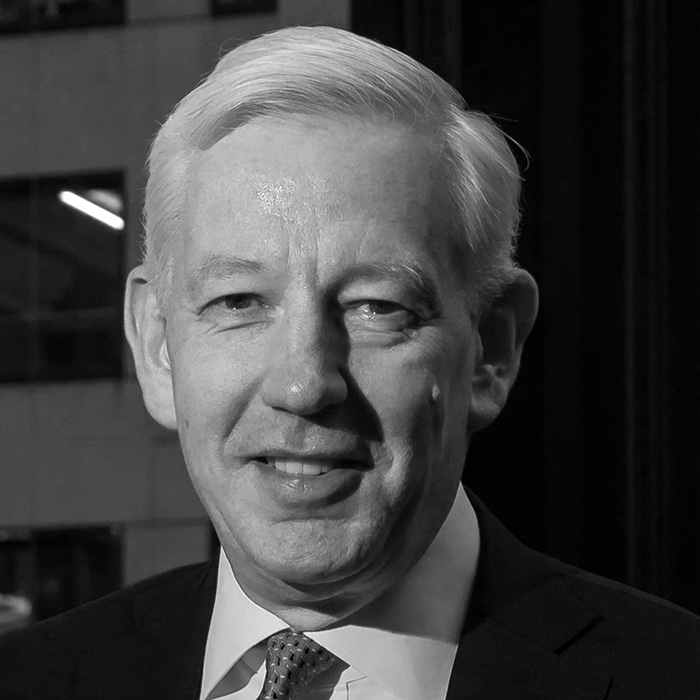
- Dominic Barton is strategic counselor to Eurasia Group and chair of mining company Rio Tinto.
- Barton spoke with Fortune days after U.S. President Donald Trump imposed 50% tariffs on some Canadian goods including autos, dairy and alcohol.
- Barton said: "Fifteen years ago, there would have probably been diplomats bringing this forward... Now it's just tweeted."
- On Aug. 19, Trump announced on social media that he will delay the new Canada tariffs by three days as the two countries near a deal.
- Trump had also threatened tariffs in response to wildfire smoke drifting across the Canadian border.
Compiled by The InvestorSomething wrong?How this is made
Why it matters
Dominic Barton, chair of Rio Tinto and strategic counselor to Eurasia Group, told Fortune that geopolitical risk has to stop being a side activity and start showing up in balance sheet decisions, supply chain security and where a company incorporates [1][9]. He made the argument days after U.S. President Donald Trump imposed 50% tariffs on some Canadian goods including autos, dairy and alcohol [2], and on Aug. 19 Trump announced on social media that he would delay the new Canada tariffs by three days as the two countries neared a deal [4].
The point Barton is making is about speed of delivery, not novelty of conflict. "Fifteen years ago, there would have probably been diplomats bringing this forward," he said. "Now it's just tweeted." [3] Trump had also threatened tariffs in response to wildfire smoke drifting across the Canadian border [5]. Both the imposition and the reprieve reached exporters through the same channel [1], which is the practical problem: the lead time a company gets on a 50-point tariff is now the lead time of a post.
Barton's diagnosis is blunter than most incumbent-friendly commentary. "We're in a world where all the assumptions about international institutions, free trade, a rules-based order, that's all going away," he said [6], adding that there is "a lot more risk, but there's also a lot more upside," and that companies can "whine about it" while hoping for a return to the old settlement he does not expect [7]. His prescription is procedural: "You have to move away from the after-dinner speaker," the former politician invited to a board dinner to recount his experience [8]. What replaces it is a list of ordinary finance and operations questions: how much debt you want, whether you can withstand periods of trouble with customers or supply chain security, where your data is managed, where you incorporate [9]. He also said CEOs will have to spend more time with governments and on government relations than they ever have [14], naming Temasek chief executive Dilhan Pillay Sandrasegara, former Apple CEO Tim Cook and Tesla's Elon Musk as leaders who have built that habit [15].
Barton's own record explains the emphasis. He spent decades at McKinsey and ran its Asia business during its China expansion [10], then was appointed Canada's ambassador to China by Justin Trudeau in 2019 [11], a posting that placed him inside the "Two Michaels" case, in which Beijing detained two Canadian citizens on espionage allegations widely seen as retaliation for Canada's arrest of Huawei finance chief Meng Wanzhou at Washington's request [12]. Michael Kovrig and Michael Spavor were released in 2021 after the U.S. agreed to defer prosecution of Meng [13].
The one operational change he would discuss at Rio Tinto is procurement. Barton declined to go into detail on the company, citing its July 29 earnings release [16], which showed underlying earnings up 43% in the first half on higher copper and aluminum prices tied to data centre demand [17]. He said Rio Tinto's purchasing from China has risen significantly, that Chinese equipment costs more than some traditional Western suppliers, and that it is better, lasts longer and does not break down [18]. That is a reliability premium being paid in cash [2], which is what embedded geopolitical thinking looks like when it stops being rhetoric.
Watch whether the three-day Canadian delay becomes a deal or another number [4], and whether Rio Tinto's second half holds the copper and aluminum pricing that carried the first [17].