Product2 publishers2 min readPublished
Nvidia charges 50% more for a Shield TV Pro it first sold in 2019
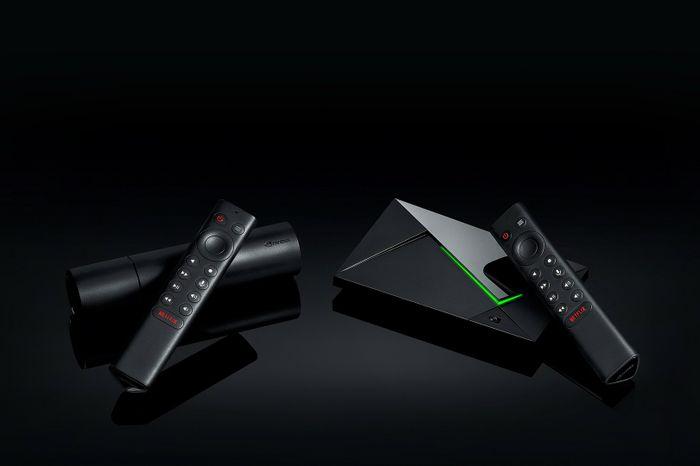
Nvidia raised the Shield TV Pro from $199.99 to $299.99 on October 2, citing component and memory costs seven years after launch. Devices still being built pay today's memory prices whatever year they debuted, so old hardware now reprices alongside new launches.
The Product Desk · Product desk
What happened
- Nvidia has also ended production of the base Shield TV, the 2019 model that had already been out of stock for months.
- The Shield TV Pro had just been restocked at Best Buy when the new price took effect.
- Nvidia said early this year that it would keep supporting the Shield TV's software for the foreseeable future.
- Apple TV 4K and various Roku streamers also went up in price earlier this year, according to 9to5Google.
Compiled by The Product DeskSomething wrong?How this is made
Why it matters
- cost Buyers who only wanted the basic Shield now pay double to stay on Nvidia's box, because the only model left costs $299.99 against the old $149.99 entry price.
- decision Teams that standardised on the Shield have to choose between paying $100 more per box on the next order and requalifying a different streamer mid-rollout.
- precedent A sold-out, seven-year-old box taking a 50% increase gives other makers of long-running hardware a template for mid-life price rises justified by component costs.
Anyone buying a Shield TV Pro this week gets an Nvidia Tegra X1+ processor [4] and no AV1 support [5], the hardware Nvidia first sold in October 2019 [2]. According to 9to5Google, the box has not been refreshed in the better part of a decade [6]. At $299.99 against a $199.99 launch price, it costs 50% more than it did on day one [1][3][1].
The comfortable assumption about a seven-year-old device is that its costs were settled long ago. That holds for units sold out of a warehouse. Nvidia still builds the Shield: Nvidia's Andrew Bell told Ars Technica earlier this year that it is still being actively manufactured [13]. Ars's explanation is that Nvidia has no stockpile of pre-AI hardware to sell, so new units face the same supply chain constraints as today's smartphones and computers [14].
Here's what Shield buyers actually do, by Bell's account: they buy every unit Nvidia makes [13]. A product that sells out can carry a $100 increase without leaving boxes on shelves. Its buyers also have few like-for-like alternatives. 9to5Google still ranks it among the most capable Android TV streamers on the market [16], and the person it is for wants hardware decoding for almost any media format, plus AI upscaling [4].
"Starting October 2, SHIELD Pro will be priced at $299. The cost of components, including memory, has increased substantially across the industry," a spokesperson told Ars Technica [12]. Both outlets tie that to AI demand for memory. 9to5Google called it "RAMageddon" [17], and Ars wrote that in 2026 anything with memory or storage is getting more expensive, years-old tech included [15]. The statement as quoted does not mention AI, and Nvidia did not say how much of the $100 is memory [12].
The size of the increase is close to a rival's. 9to5Google put the Google TV Streamer's recent rise at $50, to $149 [11], about 51% on its earlier $99 price [3].
For a reorder list, I'd sort each device by two questions: is the maker still building it, and does it sell everything it makes. A device still in production that still sells out, as the Shield does by Bell's account [13], takes its next price from current component costs, whatever year it launched. A device sold from existing stock is insulated only until that stock runs out [14]. If the Shield is already your standard streamer, I'd pay the increase and keep the fleet uniform. The tradeoff is $100 more per box than launch buyers paid, for the same 2019 chip [1][3].
What to watch
- Whether Nvidia says the Shield TV Pro still sells every unit it makes at $299.99.
- Whether Google, Apple or Roku announce a second streamer price increase this year as memory costs keep rising.
- Whether Nvidia keeps its software support promise now that the Shield line is down to a single model.