Science1 publisher2 min readPublished
Saturn's Oct. 4 opposition puts the planet in the sky all night at its brightest
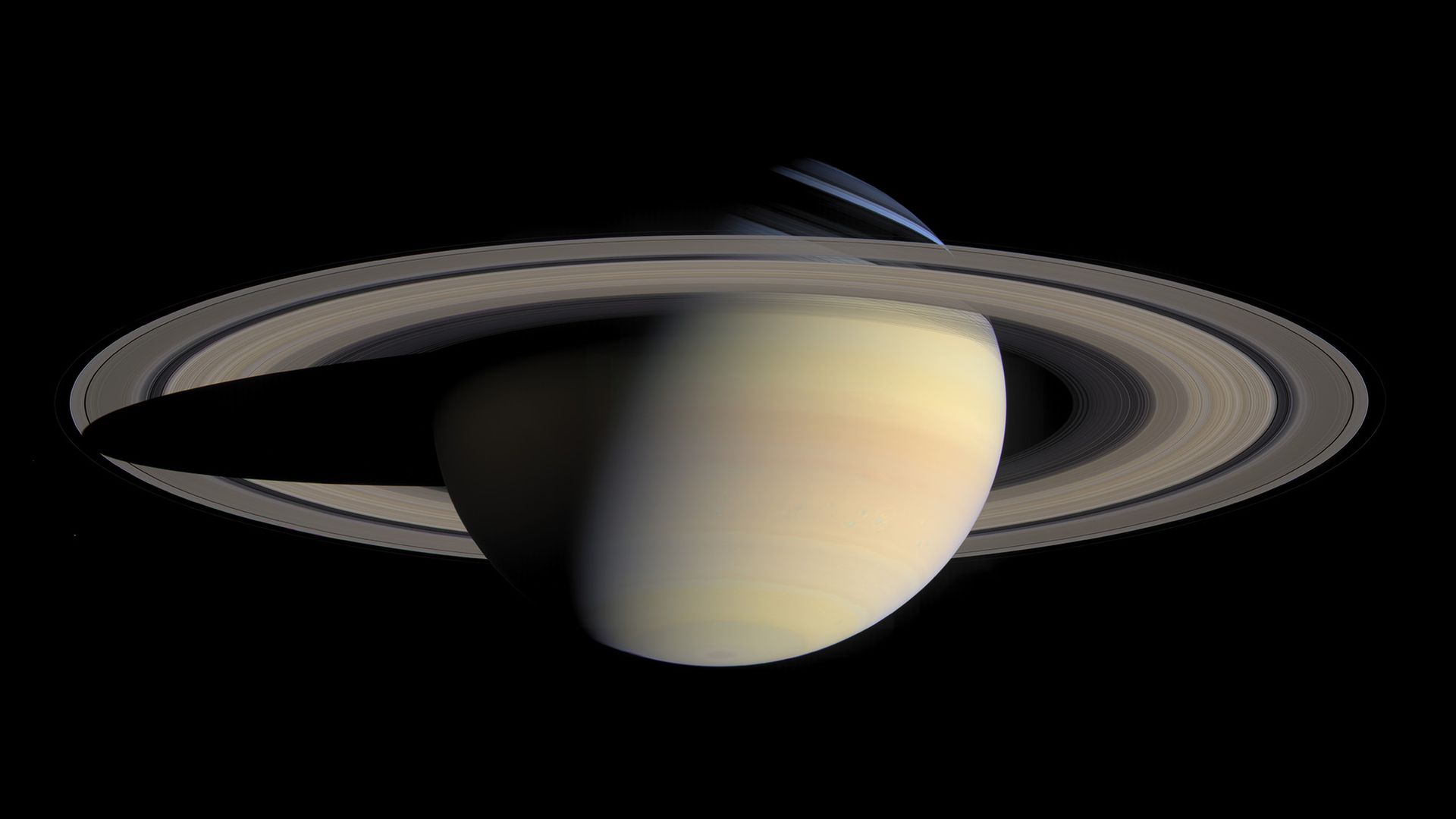
Saturn reaches opposition on Sunday, Oct. 4, when it is 784 million miles from Earth and visible to the naked eye all night. Without a telescope the planet is a bright, steady point of pale-yellow light, and seeing its rings still takes one.
The Scientist · Science desk
What happened
- Around opposition Saturn rises in the east near sunset fully lit, climbs highest around midnight and sets in the west around sunrise.
- Live Science rates the nights of Sept. 30 to Oct. 4 as the best mix of brightness, visibility and all-night observing.
- Saturn's rings looked almost edge-on from Earth in 2025 and are now gradually opening again.
- Telescopes with larger apertures and higher magnification may also pick up some of Saturn's moons, including its largest, Titan.
Compiled by The ScientistSomething wrong?How this is made
Why it matters
- constraint The only condition the source attaches to seeing Saturn without optical aid is a clear sky, so local cloud over the peak nights matters more than the planet's extra brightness.
- decision Saturn stays a prominent evening target through October, so an observer clouded out at the peak can still find it later in the month and lose only the all-night visibility.
- cost Anyone who skips this season entirely waits until the Oct. 18, 2027 opposition for the next yearly peak.
The brightening is Earth's doing. Opposition is the point where Earth passes directly between a planet and the sun. Saturn then sits opposite the sun in our sky, the same arrangement that gives us a full moon [3]. Jamie Carter, a Cardiff-based freelance science journalist writing for Live Science, ties the timing more to where Earth is in its orbit than to Saturn's own path around the sun [13][3]. For those few days Saturn is the only planet visible all night [2].
For finding the planet, you really can go without equipment. Under a clear sky, according to Carter, Saturn is easy to pick out without any optical aid as a bright, steady point of light between Pisces and Cetus [6]. The other half of the opposition bonus, a disk "about as large as it gets," describes what a telescope shows [5]. The rings need a telescope too, although a relatively modest backyard instrument will show them [7]. Carter wrote that "observing Saturn's rings for the first time is one of the most memorable sights available to amateur astronomers" [12].
The thing this doesn't tell you is the size of the effect. The article says Saturn's light is brighter now than at other times of the year [5]. It does not give a magnitude, or a comparison with the planet at its faintest. A reader has no way to judge how much a later look gives up, which is the number anyone deciding between a cloudy Sunday and a clear night later in the month would want.
The article is broad in one line and exact in another. It calls the few weeks on each side of Oct. 4 an excellent time to start looking [14], then narrows the ideal to the nights of Sept. 30 through Oct. 4 [10]. That is five nights: four before opposition and opposition night itself, with none after [1].
The rings change more slowly. Saturn's axial tilt means our viewing angle on them shifts across its roughly 29-year orbit around the sun [9]. Opposition comes around every year. The ring angle runs on that much longer cycle, and Carter describes the view this year as increasingly clear [16].
What to watch
- Published magnitude figures for this opposition, which would show how much brightness a later-October look gives up.
- How far the rings have opened by the Oct. 18, 2027 opposition, after lying nearly edge-on in 2025.