Product1 publisher3 min readPublished
A $1,688 home humanoid ships this fall. Read the payload spec, not the price tag.
Nori Robotics put a wheeled, 19-degree-of-freedom humanoid on sale for less than 2 percent of a typical six-figure platform. The spec sheet shows exactly where the money went missing.
The Product Desk · Product desk
Drafted by a language model from the sources cited here and checked against its claim ledger before publication. How we use AISend a correction
What happened
- San Francisco-based Nori Robotics has launched the Nori A3, an American-assembled humanoid robot priced at $1,688.
- The Nori A3 is set to begin shipping this fall; the company says its first batch went fast and a limited second batch is shipping this fall.
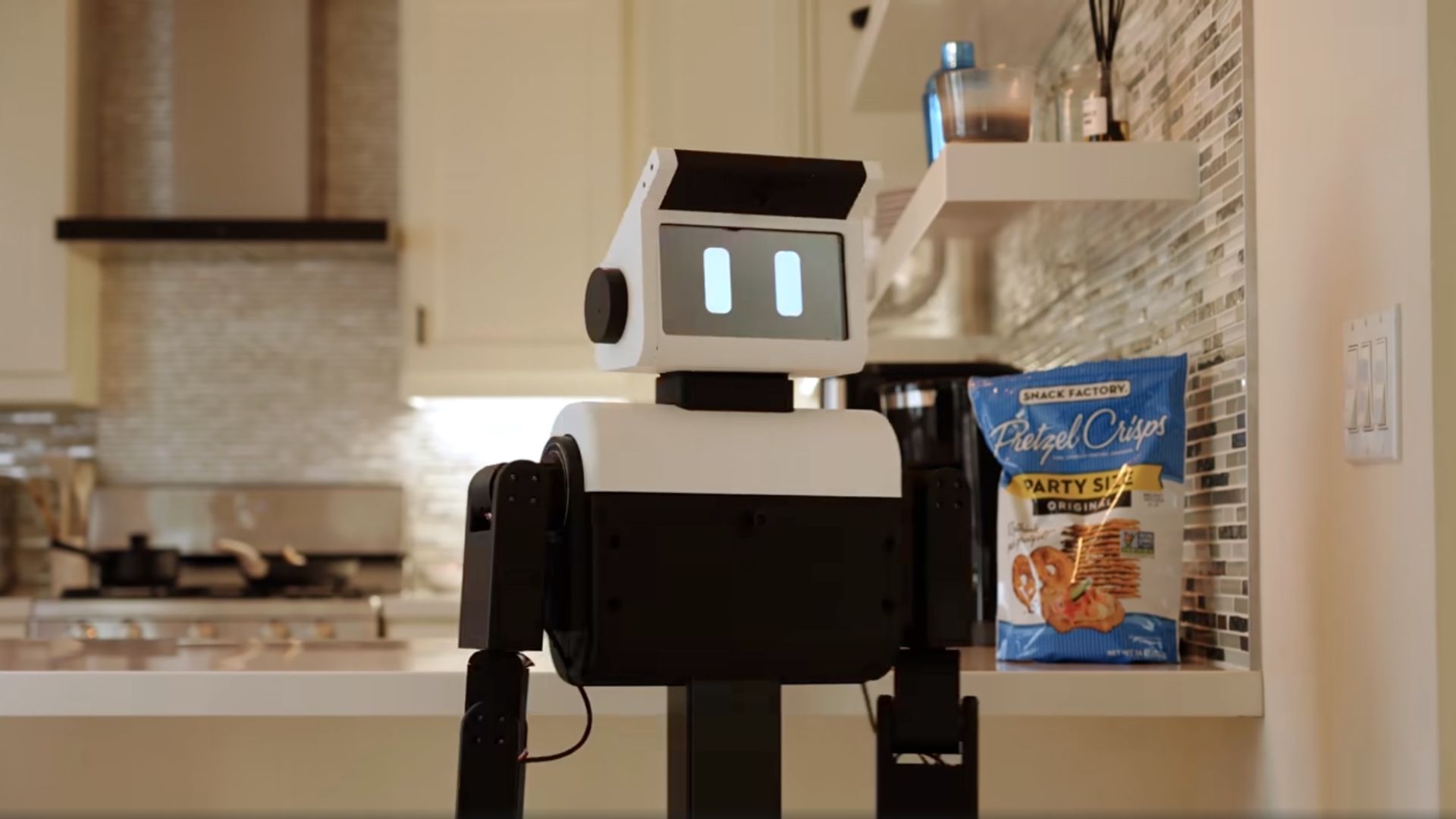
- The Nori A3 uses a wheeled base rather than walking on two legs, with the upper body handling physical tasks; it has 19 degrees of freedom and a central body that can raise and lower its head and arms.
- The robot can lift up to 122 pounds (55 kilograms) vertically, but its payload drops to 3.3 pounds (1.5 kilograms) when its arms are fully extended.
- According to Nori Robotics, the A3 can fetch food from a refrigerator, pour drinks, load dishes into a dishwasher and fold clothes.
Compiled by The Product DeskSomething wrong?How this is made
Why it matters
Nori Robotics, based in San Francisco, has launched the Nori A3, an American-assembled humanoid priced at $1,688, with a limited second batch due to ship this fall [1] [2]. Humanoids are normally sold with six-figure price tags [12], so the A3 lands at roughly 1.7 percent of the low end of that range [1] and effectively sets a new floor for anyone quoting hardware in this category.
The number worth holding onto is not $1,688. It is 1.5 kilograms. Nori says the A3 can lift up to 55 kilograms (122 pounds) vertically, but its payload falls to 1.5 kilograms (3.3 pounds) when the arms are fully extended [4]. That is about 2.7 percent of the headline lift figure [2]. The tasks the company names -- fetching food from a refrigerator, pouring drinks, loading dishes into a dishwasher, folding clothes [5] -- are reach tasks. The vertical figure describes a column moving mass close to the base; the 1.5 kilogram figure describes what the machine can actually do at arm's length [4]. Anyone specifying against this platform should design to the smaller number.
The rest of the bill of materials reads consistently. Legs are gone: the A3 rides on a wheeled base rather than walking, with the upper body doing the manipulation and a central body that raises and lowers the head and arms across 19 degrees of freedom [3]. Perception is lidar plus four 720p cameras at the hands, head and neck [6], with a speaker and microphone for spoken commands [7]. Battery life is quoted at six to eight hours [8]. Independent assessments cited by Interesting Engineering hold that the A3 is not a fully bipedal humanoid and is not designed to match the speed or capability of more expensive platforms, but that the combination of sensors, manipulation and price makes it an accessible entry point into physical AI [13].
Autonomy is the part the price does not appear to buy outright. The company's answer is a Skill Marketplace, described by Forbes as an app store for the robot, where owners share skills they have taught the A3 and install capabilities built by others [9]. Nori's own framing is a developer pitch, not a consumer one: "We're excited to see what developers, researchers, and teams build when capable humanoid hardware becomes this accessible," the company wrote on LinkedIn, adding that the first batch sold out quickly [14]. Read plainly, buyers are being sold a body and a distribution channel for behaviours that do not exist yet.
Supply is the other open question. First units shipped on 21 July [10], but the company has historically run small production batches, so availability could stay tight if demand rises [11].
Three things to watch. Whether the fall batch ships on schedule and at the same price [2]. Whether the Skill Marketplace accumulates skills that hold up at 1.5 kilograms of extended payload and 720p vision [9] [4] [6]. And whether competitors respond by matching the price and inheriting the same compromises, or by publishing extended-reach payload figures next to their own headline numbers.