Product4 publishers3 min readPublished Updated
Figure melts its retired Figure 02 humanoids in Finland to keep their actuators secret
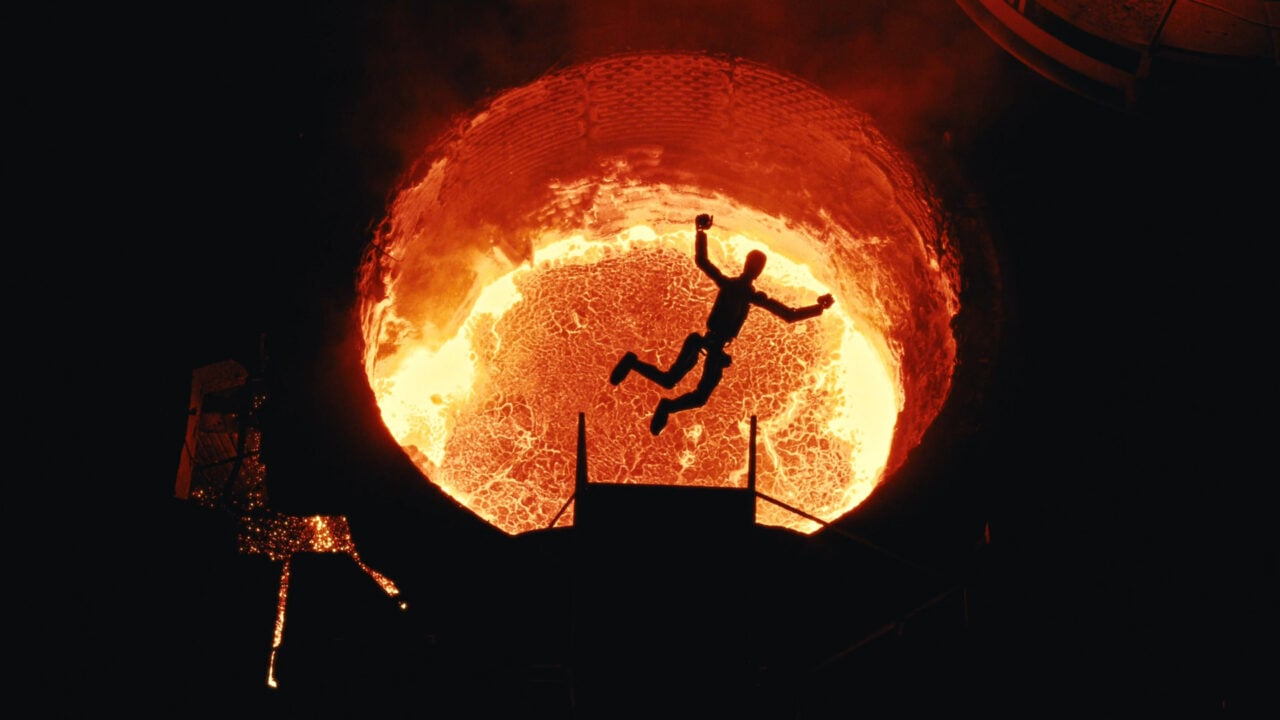
Figure melted its retired Figure 02 humanoids in a Finnish steel furnace to protect its actuator designs, after US and Mexican foundries turned them away. Teams shipping proprietary hardware with batteries inside now have reason to plan disposal before launch.
The Product Desk · Product desk
What happened
- Figure said its expanding Figure 03 fleet made the older robots impractical to maintain and that dismantling each one would pull engineers off Figure 04.
- Figure is taking preorders on metal bars cast from the remains at $500 to $1,900 each, and the most expensive tier has already sold out.
- Arnold Schwarzenegger proposed the melt in a tweet to CEO Brett Adcock and appears in Figure's F.02 Decommission film.
Compiled by The Product DeskSomething wrong?How this is made
Why it matters
- constraint Batteries left inside a machine closed off every US and Mexican foundry Figure asked, so a maker that wants units melted whole either pays for battery removal or ships them abroad.
- cost Teaching robots to jump into a furnace still took engineering time. That weakens the staffing reason Figure gave for skipping a teardown.
- decision Hardware teams with proprietary parts now have a case for lining up a disposal partner that accepts whole units before launch, since Figure found its only taker overseas after the fleet had retired.
- precedent A celebrity disposal film plus a merchandise line gives other robot makers a template for staging a fleet's retirement as a public event.
Somebody at Figure had to contact metal foundries in the US and Mexico and ask whether a humanoid robot could jump, battery packs and all, into their melt. "None of the metal foundries we contacted in the US and Mexico would let us jump a robot with lithium-ion batteries into their expensive equipment," the company wrote in its blog post [2]. One steel foundry, in Imatra, Finland, volunteered [3].
Figure's case for destruction is about intellectual property. Its post said the Figure 02 robots were no longer maintainable and that it would destroy them to keep their "custom-built actuators and other intellectual property" from leaking [1]. According to Dexerto's account, Figure said protecting that hardware ruled out ordinary disposal, and that dismantling each robot would take engineers away from Figure 04 [5][4]. Getting the batteries out would, I'd expect, mean opening every machine, the same per-unit work Figure said it could not spare engineers for.
So Figure taught the robots to jump. It trained them in simulation to leap off cliffs [6], then on airbags at its San Jose campus, with stunt performers' movements as the reference [7]. Figure says the robots then jumped into the molten steel autonomously [9]. A 75-ton electric arc furnace finished the job within 24 hours and six melts [8], an average of about four hours a melt [1].
Hardware teams tend to treat retirement as a back-office task for whoever owns compliance. Figure ran it as a product release, with a film and a price list. Arnold Schwarzenegger tweeted "You should melt them" to chief executive Brett Adcock [12], after the company asked the internet how to retire the fleet, according to its September 30 announcement [13]. He appears in the F.02 Decommission film [14]. The remains are being cast into preorder bars priced from $500 to $1,900, and the top tier has sold out [10]. A few robots were kept at headquarters [11]. Neither report describes a resale or parts-recovery plan, or gives the size of the fleet.
The stated reason and the work done do not line up neatly. The jump training was engineering time, spent on a fleet Figure called unmaintainable, by a company that said it could not spare engineers to take the robots apart [1][4]. "We really trained robots to jump autonomously, shipped them to Finland, and had them leap into a vat of molten steel," Figure wrote [15].
For a team shipping proprietary hardware, the forcing test is whether it can name, before launch, a facility that will accept a whole dead unit. Two axes sort the answer. One is whether a retired unit still holds design value a competitor could extract. The other is whether its battery comes out without a teardown. If the unit holds little design value and the battery comes out easily, resale or standard recycling works. Little value but a hard-to-reach battery means budgeting the teardown, because nothing inside needs guarding. Valuable parts with an accessible battery let a team pull the packs first, removing the objection the US and Mexican foundries raised [2]. Figure sat in the last box, with valuable parts and no appetite for teardown, and the only foundry that said yes was in Finland [3].
What to watch
- Whether Figure discloses how many Figure 02 units were melted and how many bars it casts, which would show whether bar sales cover the cost of the Finnish melt.
- How Figure plans to retire its Figure 03 robots, and whether the next fleet gets a teardown or the same furnace route.
- Whether US or Mexican foundries or recyclers publish terms for accepting whole battery-powered robots as more humanoid fleets age out.