Invest1 publisher3 min readPublished
A 364% raise resets the WNBA's cost line before its revenue line is settled
WNBA players won the biggest pay jump in U.S. pro sports history, taking the average salary to $564,000. Anyone pricing a women's sports asset is now underwriting a different business.
The Investor · Invest desk
Drafted by a language model from the sources cited here and checked against its claim ledger before publication. How we use AISend a correction
What happened
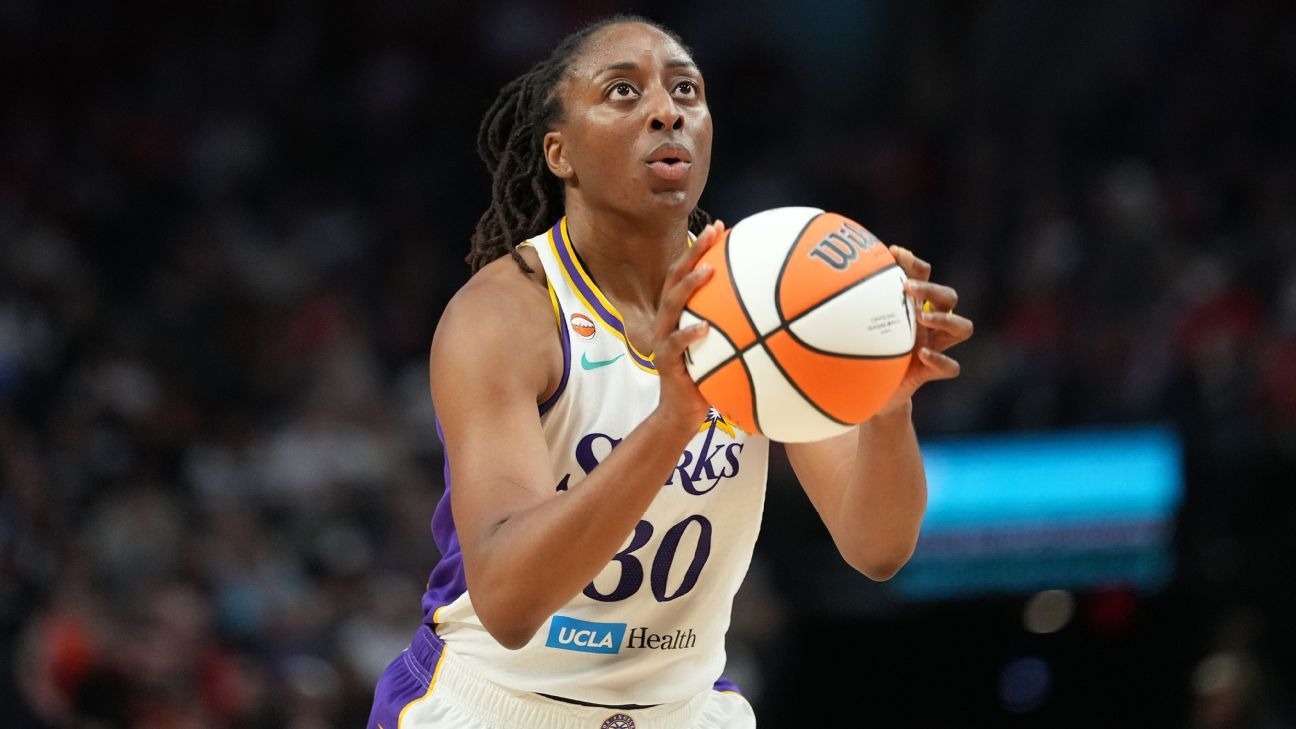
- Nneka Ogwumike, 36, was the WNBA's No. 1 draft pick in 2012 and is currently playing her 15th season.
- Ogwumike is an 11-time all-star, the second-most in WNBA history, and was the 2016 MVP and league champion with the Los Angeles Sparks.
- In 2016 Ogwumike became president of the players' union, the WNBPA.
- Ogwumike steered the union through a major collective-bargaining agreement in 2020 that included historic protections such as parental leave.
- The WNBA experienced historic growth after the 2024 arrival of a rookie class including Caitlin Clark and Angel Reese, but player compensation did not keep up.
Compiled by The InvestorSomething wrong?How this is made
Why it matters
WNBA players closed their bargaining cycle with a 364% raise, which Fortune describes as the largest jump in the history of U.S. professional sports [8]. The average player is earning $564,000 this season [9], which means the largest controllable line in a league's operating model was repriced before the revenue case finished proving itself.
The sequencing matters more than the headline number. Fortune reports that the WNBA grew sharply after the 2024 arrival of a rookie class including Caitlin Clark and Angel Reese, but that player compensation did not keep up [5]. Record ticket sales and television viewership sat alongside growing resentment among athletes and fans about salaries [6]; Clark's rookie pay was $76,000 [7]. On the reported average, players now make roughly 7.4 times that figure [19]. If the 364% applies to average compensation, the implied pre-deal average was about $122,000 [18].
That is the number to hold onto when reading any pitch deck for a franchise, an expansion slot or a rights package. Growth stories in women's sports have often been underwritten on the assumption that talent cost stays cheap while attendance and viewership compound. This deal removes that assumption, and it did so from the labour side rather than through an owner-led revenue-sharing formula. The counterparty was not just the WNBA but the NBA, which owns much of it [12].
The person who ran it is leaving. Nneka Ogwumike, 36, was the league's No. 1 draft pick in 2012 and is playing her 15th season [1]; she is an 11-time all-star, the second-most in league history, and the 2016 MVP and champion with the Los Angeles Sparks [2]. She became president of the players' union in 2016 [3] and steered it through the 2020 agreement that added protections including parental leave [4]. She was on Zoom from a Boston hotel room two days before announcing her retirement [15].
The process was not smooth, which is itself information about how much friction the next round will carry. Ogwumike had to hold together a membership running from veterans on five-figure salaries to 22-year-old NIL millionaires [12]. Breanna Stewart and Kelsey Plum sent a letter outlining concerns with the union's handling of the talks [13]. The union went six weeks without hearing back from the league, and negotiated into the early hours in New York before training the next morning [14]. The players had Nobel-winning economist Claudia Goldin in their corner [11]. Fortune reports that WNBA players are now the highest-paid athletes in women's team sports [10].
Ogwumike also played through the period when games were rarely broadcast and the league came close to collapse during the pandemic [20], which is the relevant memory for anyone assuming this asset class only moves one way.
Watch the talent market she is leaving into: Ogwumike has signed on with Project B, a soon-to-launch international league proposing to extend the careers of star men and women through exhibition games around the world [16]. Watch, too, whether the league office starts absorbing ex-players. Athletes have taken to calling Ogwumike their own "commish" amid dissatisfaction with league leadership, and she has said the head office should include more former players [17].