Invest2 publishers3 min readPublished
Booking's CFO says AI pays off for companies that use models and watch the bill
Booking Holdings CFO Ewout Steenbergen says AI's returns go to model users who police the bill, with chatbots referring under 1% of room nights. So far, the savings he can point to are inside the company, in customer service and engineering.
The Investor · Invest desk
What happened
- Customer service went first: bookings are growing at a high-single-digit rate while service costs are slightly down, and Steenbergen said cost per booking has fallen "by a lot."
- Booking's roughly 9,000 engineers are getting about 30% more code into production, counting only merge requests that pass testing and quality control.
- In-app AI tools show customers taking a little less time to book, converting slightly more often and cancelling slightly less, he said.
- Connected Trip transactions, where travelers book more than one travel vertical for the same trip, grew at a low-double-digit rate at Booking.com in the second quarter.
Compiled by The InvestorSomething wrong?How this is made
Why it matters
- decision Engineering teams are scored on cost per merge request, so Booking's token spending can keep climbing. What limits it is whether shipped code grows faster than the bill.
- capability At about 30% more shipped code, Booking's roughly 9,000 engineers turn out what about 11,700 would have at the old rate. Booking can put that extra capacity toward Connected Trip and its in-app tools.
- exposure Booking is building its AI tools for the two-thirds of customers who come to it directly. An assistant that intercepted those customers would take traffic Booking does not pay to acquire.
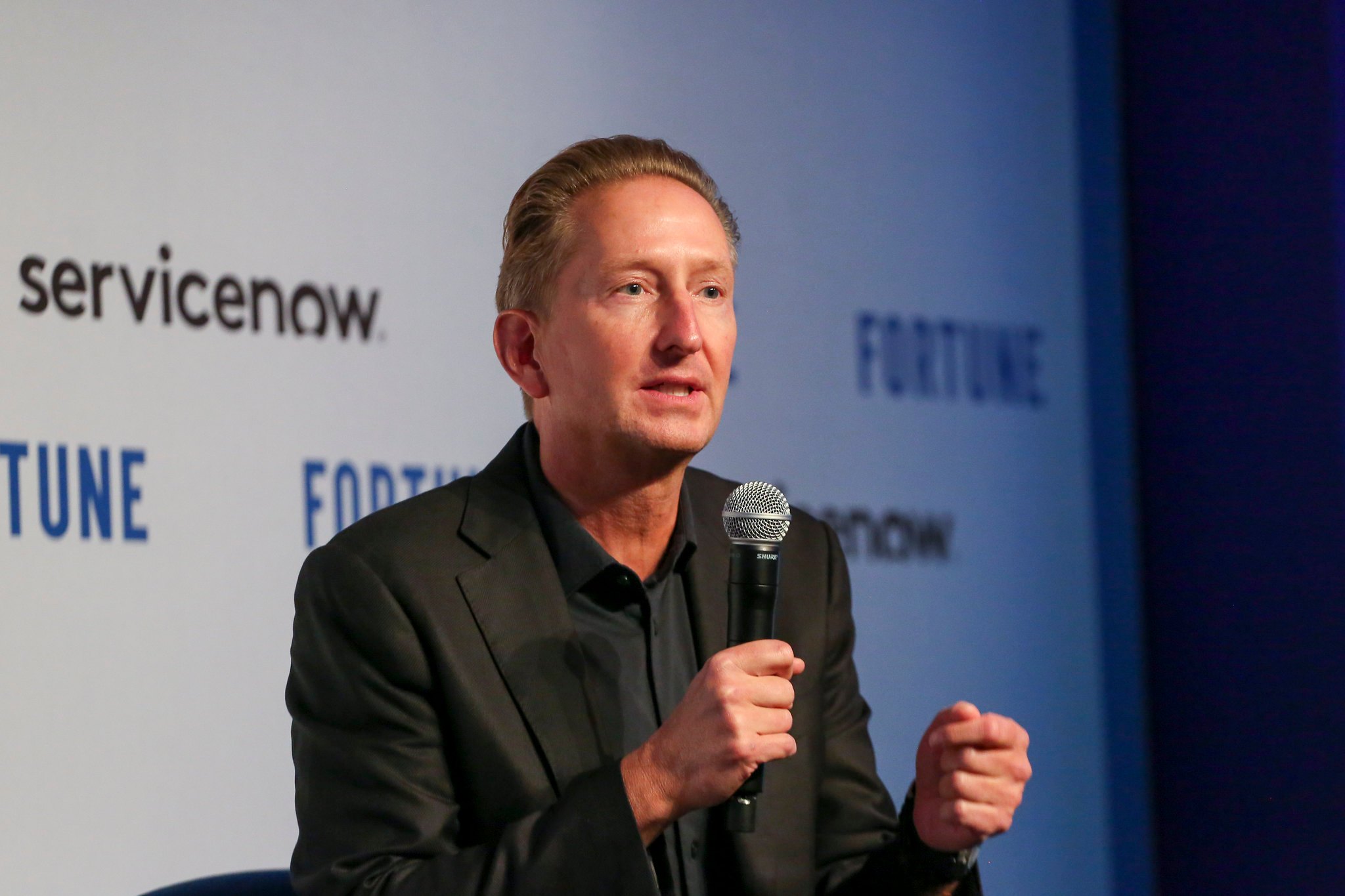
"I even think that the hyperscalers that spend hundreds of billions on the development of their large language models, they don't really know what is going to be the ROI," Steenbergen said at Fortune's AIQ Summit at the New York Stock Exchange [1]. His condition for everyone else is narrower. "The returns will be there for those processes that are being redesigned end to end," he said, "but you also have to make sure that those costs on the other hand are not going out of control." [3]
The work Steenbergen described at Booking is choosing models and metering them. Basic and open-source models handle simple tasks and more expensive models take the complex ones, a practice he called "effective model cost routing" [7]. Engineering groups are then measured on total IT cost per merge request, a number that adds human and AI-token costs together [8]. Token spending can go up, he said, as long as the cost of each merge request reaching production comes down [8].
The customer side rests on one number. On the August call for the second quarter, Steenbergen said referrals from large language models, paid and unpaid, were under 1% of total room nights [4]. Paid search, social media and metasearch sites bring about a third of customers, and Booking spends $8 billion to $9 billion a year on them [9]. On those two measures the paid channels are more than 33 times the size of the chatbot channel, although customers and room nights are not the same unit [2]. Booking decides where the paid money goes with constant A/B tests and large optimization models [10].
The under-1% figure can move three ways. Chatbots can stay a small source of room nights, leaving the internal savings as most of what AI returns to Booking for now [4]. They can grow as a paid channel and add another seller of traffic to a marketing bill that Booking is telling investors AI will make cheaper [19][4]. Or assistants can book hotels directly, and the referral figure would never register it, because it counts only referrals that end in a Booking room night [4].
Travelers visit about five platforms on average before booking, Steenbergen said, and AI could cut that research [14]. His case against the third outcome is about supply. "The hotel is still the hotel and the airline is still the airline and the rental car is still the rental car," he said [15]. It does not settle who keeps the customer if five platforms of research shrink to one assistant [14].
I think the evidence so far supports the cost half of Steenbergen's case and leaves the revenue half open. The counter-case is his own. He said the bigger opportunity is growth, and that AI could turn a "more transactional" Booking into "a much more high frequency business" [16]. Of the in-app tools that would have to deliver it, he said, "It's very early stage, so it's not a lot of data." [13] If customers using those tools start booking trips more often, the revenue half is proven and the cost-only reading is wrong.
What to watch
- Booking's next quarterly LLM referral figure, and whether it rises above 1% of room nights or is split between paid and unpaid referrals.
- Any figure showing Booking's cost per merge request still falling in a period when its token spending rises.
- Whether Booking's paid-marketing spend falls as a share of bookings, the cheaper-marketing claim it is making to investors.