Invest1 publisher2 min readPublished
Honeywell and Ecolab say frontier AI errs too often and costs too much for physical work
Honeywell's CTO put frontier AI at maybe 85% accuracy against the 99.9999% customers demand, and Ecolab said top models can cost more than people. Ecolab has since cut its token costs 70% to 80% by tuning, so cost looks like the easier of the two limits to fix.
The Investor · Invest desk
What happened
- Honeywell fine-tunes open-source models, partly because its customers want sovereignty over their own data and models.
- Ecolab runs a mix of frontier and open-source models, including Anthropic's Claude and OpenAI's.
- Ecolab's AI chief described a "human in the lead" model, saying agent technology is not mature enough to run at scale on its own.
- Ecolab expects $325 million in annual run-rate savings by 2027, and Wijesinghe said significant amounts are already in hand.
Compiled by The InvestorSomething wrong?How this is made
Why it matters
- exposure Frontier model vendors are most exposed on high-volume industrial work, the jobs where Ecolab found the best model's token bill ran above the cost of people.
- constraint Model improvements will reach buildings more slowly than phones, because each over-the-air update needs an operator and a building cannot go dark for 90 minutes.
- decision Honeywell has to win building deals on energy results, since its customers already get 7% from existing controls and are asking AI for 30% to 40% more.
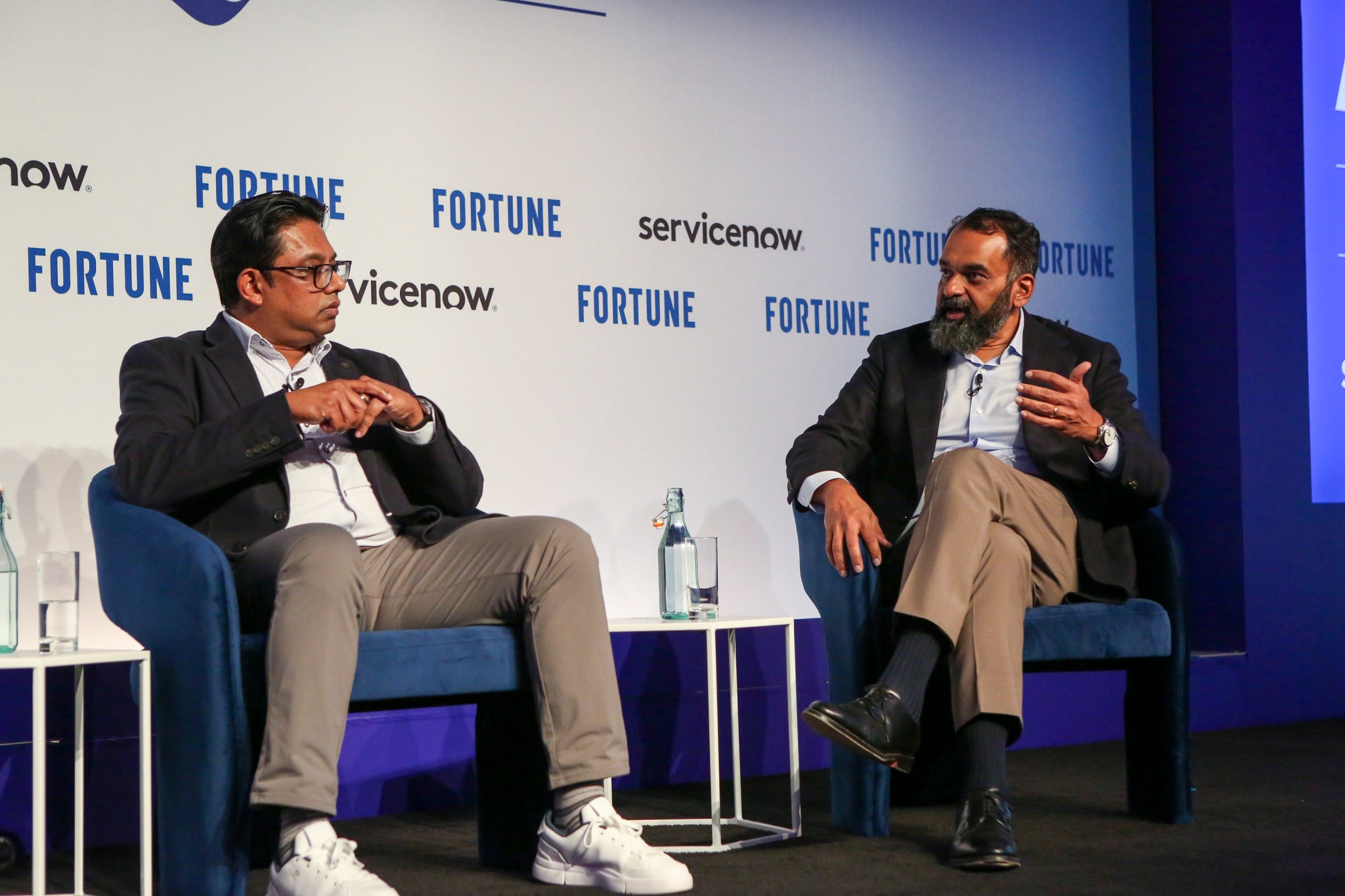
At 85% accuracy, a system gets 150,000 of every million decisions wrong. The 99.9999% that Honeywell's customers demand allows one [1]. Suresh Venkatarayalu, Honeywell's chief technology officer, gave the frontier figure as an estimate, saying the models "could be at 85%," at Fortune's AIQ Summit at the New York Stock Exchange on Thursday [2][16].
Ecolab's limit is cost, or rather cost at volume. AJ Wijesinghe, its chief AI officer, said that when the company put "the best model that's out there" on high-volume work, "the tokenomics go off the roof" [3]. "Sometimes it's more expensive than having humans," he said [4]. Ecolab then optimized its models and cut token costs by about 70% to 80%, according to Wijesinghe, leaving 20% to 30% of the original bill [5][2]. A cut that size puts a model under the cost of a person only where the untuned version cost less than about 3.3 to 5 times as much as that person [3]. Fortune's report does not say whether Ecolab's tuned models now come in under human cost, or how much of the company's savings target comes from AI [13].
Both companies tune models to the job [5][11]. "Sometimes you don't have to have the fastest car," Wijesinghe said [7]. Honeywell adds outside support to the tuning: it hand-picks open-source models and works with Nvidia's Nemotron team, and it announced a partnership with Nvidia at its recent investor day [18][12]. Venkatarayalu said an unsupported open-source model without guardrails would be "dangerous" [18].
If tuning keeps cutting cost while accuracy stays near 85% [2], the model never runs a site alone, and the comparison becomes AI plus an operator against an operator. If tuned models get close to 99.9999% [1], one operator can oversee more sites and labor savings come back into the case. A third outcome pays through operations. Ecolab's sensors in dishwashers, pest traps and water systems are there to cut service visits and predict maintenance [15].
I think the third outcome is the one both executives are building toward. Venkatarayalu said the move is toward "a semi-autonomous world" and that "autonomy is also not about removing people" [8]. On that view, cheaper tokens make AI affordable as an addition to staff, and the return has to show up as lower energy use and fewer visits. The counter-case is a tuned model that reaches 99.9999% [1]. Then one person can supervise many buildings, and Wijesinghe's comparison with the cost of humans becomes the case for the purchase [4]. The view is wrong if either company starts pricing its AI on the jobs it removes.
What to watch
- Whether Ecolab's updates on its 2027 savings target say how much comes from AI, and whether that share comes from fewer staff or fewer service visits.
- Any accuracy figure Honeywell publishes for its tuned open-source models, measured against the 99.9999% standard its customers set.
- Results from buildings where Honeywell's agents catalogue HVAC, fire and access systems over BACnet and then run them.