Invest1 publisher3 min readPublished
Ninepoint charges 65 basis points for an actively managed bet on US-Canada energy integration
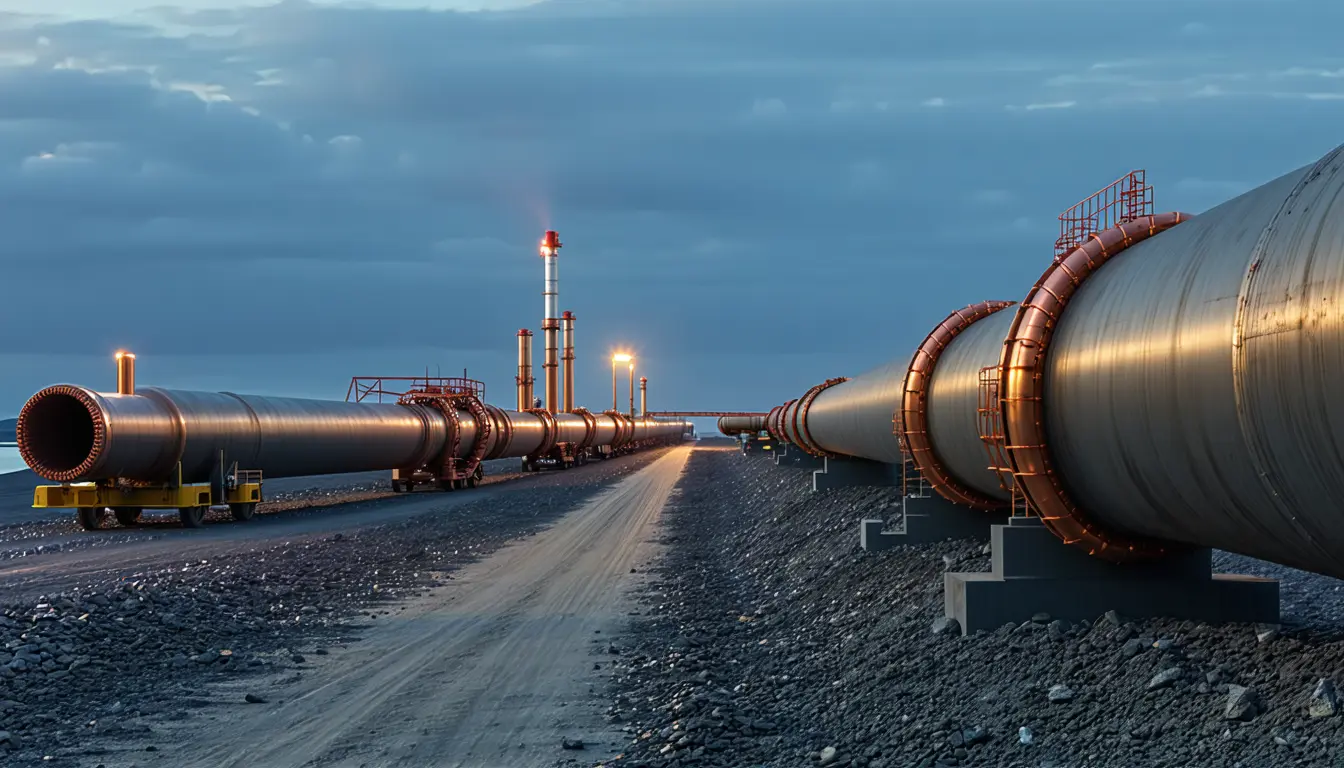
ENRG began trading on NYSE Arca on September 22 holding 25 to 50 names. The rising data-center electricity demand behind the pitch reaches that book through uranium, copper and pipeline tolls. Two-thirds of its oil and gas producers are American.
The Investor · Invest desk
What happened
- Ninepoint Partners, based in Toronto, started trading its first U.S.-listed fund on September 22, the actively managed Ninepoint North American Energy Independence ETF on NYSE Arca under the ticker ENRG.
- The SEC filing sets a management fee of 0.65% and lists Tidal Investments as adviser with Ninepoint Partners as sub-adviser.
- Ninepoint built the fund around the view that energy integration between the United States and Canada will hold despite the current trade and political tensions across the border.
- The Canada Energy Regulator counted Canada as the source of 63.4% of U.S. crude oil imports and almost 100% of the natural gas the United States imported in the period.
Compiled by The InvestorSomething wrong?How this is made
Why it matters
- cost At 0.65%, the holder pays $650,000 a year for every $100 million in the fund. The manager's stock picking has to clear that before the buyer beats a cheap energy index.
- decision Grid access and approved sites now decide whether a mining operator keeps hashing or turns the site over to AI and high-performance computing. The fund's holdings sit upstream of that choice.
- contradiction Cryptopolitan carries two sizes for the U.S. interconnection queue and warns against treating them as equivalents, so any estimate of how much new data-center load the grid can absorb depends on which definition the reader accepts.
A book of 25 to 50 names puts the average position between 2% and 4% of assets [2]. The disclosed sleeves are energy supply, transport infrastructure, nuclear energy and uranium, and electrification inputs including copper and critical minerals [4]. Up to 10% of the fund can sit outside North America [5]. The described portfolio includes no utilities and no independent power producers.
The data-center demand in the pitch reaches those sleeves at a remove. The IEA reported data-center electricity demand up 17% and named grid connections, transformer stations and other infrastructure as the bottleneck on new connections [14]. A uranium miner sells fuel for reactors. A copper miner sells wiring for the grid.
About two-thirds of the fund's oil and gas producers will be US-based, Wilson told Reuters, while Canadian pipeline operators and uranium, copper and other metals miners make up most of those asset classes [7]. So the cross-border half of the position sits in pipeline operators and miners. "It would be naive to think that the headline stuff is going away any time in the next two years," Wilson said [8].
The integration claim itself is documented in trade data. The EIA put US natural gas imports from Canada at an average 8.6 billion cubic feet a day in 2025 [10], and cross-border electricity trade at $3.2 billion, 67% of it imports from Canada [11]. That works out to roughly $2.14 billion moving south [3]. Cryptopolitan quotes Ninepoint portfolio manager Eric Nuttall saying that "Energy security stopped being an abstraction with Russia's war in Ukraine and China's export controls on rare earths" [13].
On the connection side the same account carries two numbers. CoinShares cited a US interconnection queue of roughly 2,600 GW; Berkeley Lab counted more than 2,060 GW of generation and storage waiting at the end of 2025 [16]. The gap is about 540 GW, a quarter above the Berkeley count [4], and Cryptopolitan attributes it to differing queue definitions and reporting dates [17]. CoinShares also put the weighted average ex-tax cash cost of producing one Bitcoin at about $75,500 in the second quarter of 2026 [15].
In my view the integration premise is well documented. The route from it to fund returns is not. Data-center load shows up in this portfolio only if it moves uranium contracting, copper volumes and pipeline throughput, and the fund description discloses no weight for any of those. Two other readings are available. One is that ENRG is an actively managed North American oil and gas fund with an AI label attached, given that two-thirds of its producers sit on the US side [7]. The other is that the buyer pays the 0.65% fee for access, not for a demand forecast: Canadian pipeline and uranium exposure inside a US wrapper [3].
What to watch
- The first holdings file, which will show the actual Canada weight and how the book splits between pipelines, uranium and copper.
- A tariff that lands on Canadian crude or gas flows, testing the integration premise on volumes instead of rhetoric.
- The next Berkeley Lab queue report, showing whether the backlog waiting at the end of 2025 grew or cleared.