New Zealand's under-16 bill makes age checks a statutory duty, and someone has to hold the scans
The Online Safety Bill names Instagram, TikTok, Snapchat and Facebook, permits facial age estimation and digital ID, and caps fines at 10 percent of global revenue. Nobody has said who keeps the face scans.
The Watch · Security desk
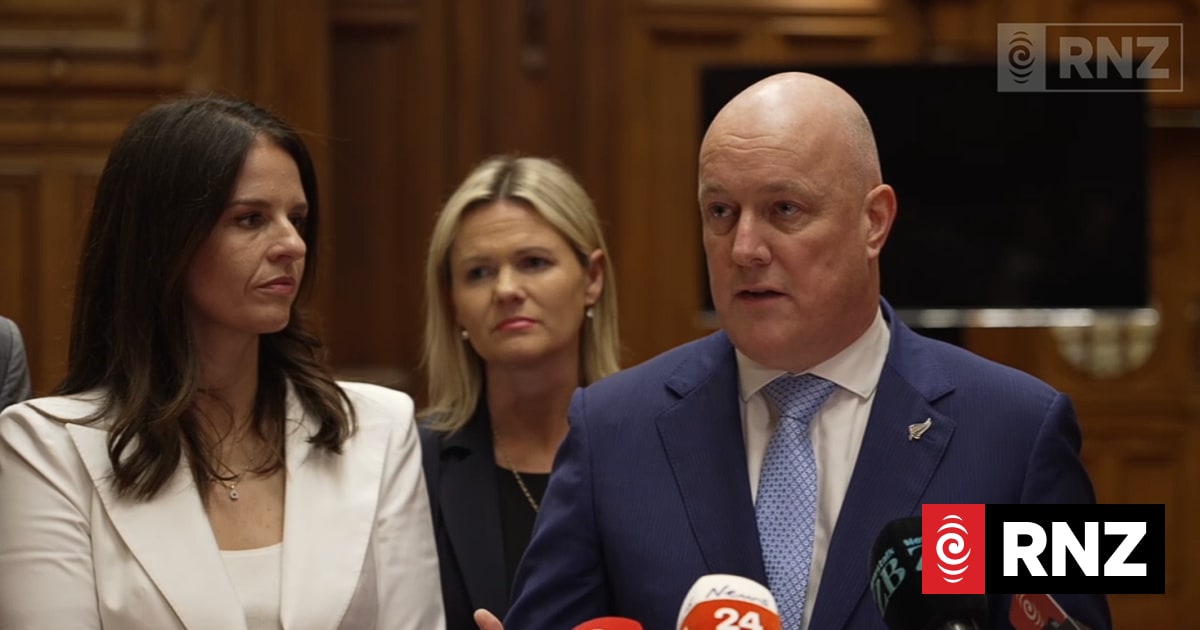
What happened
- New Zealand's Government has introduced the Online Safety (Minimum Age and Child Safety Risk Assessment) Bill to Parliament.
- The under-16 restriction would attach to high-risk services identified as Instagram, TikTok, Snapchat and Facebook.
- Platforms that fail their obligations could be fined up to 10 percent of global revenue.
- A new online safety regulator inside the Department of Internal Affairs would monitor, investigate and enforce.
- The Record reports the bill faces opposition from other New Zealand politicians and that its passage is uncertain.
Why it matters
- cost Education Minister Erica Stanford's framing puts every enforcement cost on one payer: platforms carry the legal obligation, and no penalty is proposed for children, parents or caregivers.
- contradiction Luxon cites Australian minimum-age rules already changing behaviour, while The Record cites independent studies finding that law hard to enforce with teens still on the platforms.
- constraint France legislated at 15 while New Zealand and Spain aim at 16, so a multinational service cannot ship one age gate and be done with it.
- precedent Extending risk assessment and reporting duties to AI companion services means anything with an account and a conversational surface can expect to inherit child-safety paperwork.
The load-bearing words are "reasonable steps" [2]. The bill offers four ways to satisfy them: existing account information, facial age estimation, digital ID services and formal identification [4]. Those are not four grades of the same control. Existing account information is a birthday field nobody checked. Facial age estimation and digital ID mean a platform, or a vendor acting for it, receives a face or a government credential and rules on it. A statute that lists both without saying which one clears the bar leaves the definition to be settled afterwards, by a regulator and by whatever enforcement record accumulates.
Operators resolve that kind of ambiguity upward, because the downside is lopsided. Picking the weakest permitted check and being told later it was not reasonable is the expensive outcome. Running facial age estimation on everyone is merely costly. So the predictable end state is that a large share of adult users on the named services get age-checked as well, because you cannot sort 15 year olds out of a population without inspecting the population.
Then comes the part that never gets legislated first. Neither published account of the bill describes what a platform must do with a face scan or an ID record once the check has passed [10]. An age-assurance record has no product use the moment it has done its job, and every month it stays on disk it is something that can be breached or subpoenaed. The duty to collect is being drafted now. The duty to destroy is in neither account.
The evidence base repays a close read too. The Government says one in three children aged 13 to 17 spends at least five hours a day on social media [11]. Five hours a day is 35 hours a week [17], which is a working week. But the cohort that produced the figure straddles the line the bill draws: 16 and 17 year olds are two of the five ages counted, and both would remain permitted users at a threshold of 16 [18]. The statistic supports intervention. It does not by itself support that number.
For anyone running a service with accounts, the durable part of this is not the ban. It is that age assurance stops being a product argument and becomes a documented obligation with an evidentiary trail attached. Whatever a platform does at signup is the exhibit it hands over when a regulator asks how a 15 year old got in, and the same record is the thing an attacker will eventually go looking for.
What to watch
- Whether the bill survives parliamentary opposition intact, and whether the 16 threshold moves during select committee.
- Whether the Internal Affairs regulator issues guidance on which age-check methods count as reasonable steps, and on how long verification data may be kept.
- Whether the Australian enforcement studies are put in front of New Zealand legislators, and what they do to the definition of compliance.
Clarity's read
What the record supports and how the coverage leans. The claims behind it follow.
Reality
- Evidence55
- Adoption14
- Hype gap+24
- Incentives66
- Confidence58
Claim ledger
Ranked by verification strength, evidence, and original report placement.
- [1]
The New Zealand Government introduced the Online Safety (Minimum Age and Child Safety Risk Assessment) Bill to Parliament, beginning the legislative process for under-16 social media restrictions.
- [2]
The proposed law would require high-risk social media platforms to take reasonable steps to prevent children under 16 from accessing their services, and to establish whether users are over 16.
- [3]
High-risk platforms covered by the proposal include Instagram, TikTok, Snapchat and Facebook.
- [4]
The Bill allows multiple age-checking methods: existing account information, facial age estimation, digital ID services and formal identification.
- [5]
Companies that fail to meet their obligations could face fines of up to 10 percent of global revenue.
- [6]
An online safety regulator within the Department of Internal Affairs would independently monitor compliance, investigate platforms and enforce the law.
- [7]
Australia became the first country to institute a ban for children under 16, but independent studies have shown the law has been difficult to enforce and many young teens are still on the platforms.
- [8]
The proposed bill faces opposition from other New Zealand politicians and it is unclear how likely it is to become law.
- [9]
The framework would also cover emerging services, including AI companion platforms, and would require platforms used by children to regularly assess the risks they pose and report on how those risks are identified and reduced.
- [10]
Neither published account of the Bill describes any requirement governing retention, handling or deletion of age-assurance data such as face scans or ID records after a check is completed.
- [11]
According to the Government, one in three children aged 13 to 17 spends at least five hours a day on social media.
- [12]
Luxon said the Government does not expect every child to stop using social media but that early evidence from Australia showed minimum age requirements were already changing behaviour.
- [13]
In February, French lawmakers approved legislation banning children under 15 from accessing social media platforms, with the measure expected to take effect at the start of the next school year.
- [14]
Earlier this year Spain announced plans to prohibit social media access for children under 16.
- [15]
Social media bans are spreading, with a number of European countries, Turkey, Brazil, Indonesia and Canada either pursuing legislation or implementing laws already passed.
- [16]
Education Minister Erica Stanford said the Bill places legal obligations on platforms and that no penalties are proposed for children, their parents or caregivers.
- [17]
Five hours a day is at least 35 hours a week.
- [18]
The 13-to-17 cohort behind the Government's usage figure spans five age-years, of which only 13, 14 and 15 fall under the proposed threshold; 16 and 17 year olds, two of the five ages counted, would remain permitted users.
Get this ledger inside ChatGPT. Ask about any of our stories and the answer brings its figure, each claim’s verdict and the sources. Free, no account.
Sources
2 independent publishers whose own reporting we read for this story.
- thecyberexpress.comNew Zealand Moves to Ban Social Media for Under-16s
1 article · August 25, 2026
- therecord.mediaNew Zealand to pursue social media ban for children under 16
1 article · August 24, 2026
Topics and entities
Follow any of these and your For You feed starts watching them — no settings page required.
Topics
- Platform Compliance and EnforcementFollow
- Age Assurance and VerificationFollow
- Privacy and Identity Data HandlingFollow
- Global Under-16 Social Media BansFollow
- Child Online Safety RegulationFollow
Entities
- Erica StanfordFollow
- Facial Age EstimationFollow
- Department of Internal AffairsFollow
- Online Safety (Minimum Age and Child Safety Risk Assessment) BillFollow
- SnapchatFollow
- France's Under-15 Social Media LawFollow
- FacebookFollow
- InstagramFollow
- Christopher LuxonFollow
- TikTokFollow
- New Zealand GovernmentFollow
- Digital ID ServicesFollow
- Australia's under-16 social media banFollow