Invest2 publishers3 min readPublished
Trump's America.gov puts Gemini and Grok at the front door of 29,000 federal sites
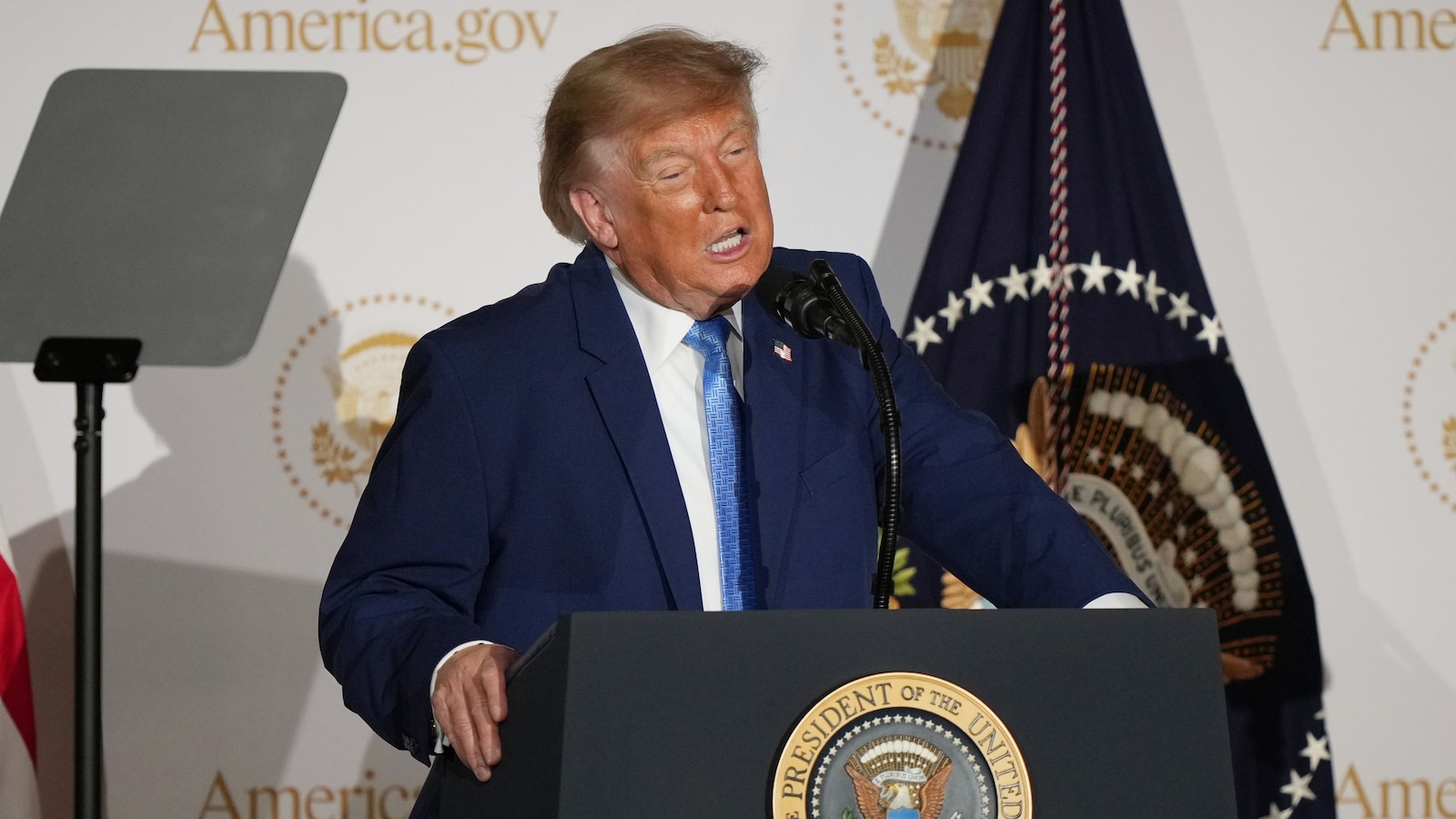
Trump's administration launched America.gov, a chatbot running on Google's Gemini and xAI's Grok that draws on roughly 29,000 federal websites. No contract or price has been published, so for now the two vendors have a position in front of federal web traffic and no disclosed revenue from it.
The Investor · Invest desk
What happened
- The launch version answers questions and points users to where services live; Gebbia said users should be able to complete and track processes on the site from 2027.
- FedScoop reported it was not immediately clear how the AI was procured or how it protects privacy, and Google and xAI did not immediately comment to CNBC.
- Trump named DOGE member Edward Coristine as lead engineer and thanked Musk, who founded DOGE, for bringing in the talent behind the project.
Compiled by The InvestorSomething wrong?How this is made
Why it matters
- cost If the models came on OneGov-style terms of almost no cost to agencies, Google and SpaceXAI are paying to serve traffic Gebbia puts at 40 million people a day, and what they get back is position.
- constraint One mandated entry point tied to Login.gov will make the models behind it harder to swap once the 2027 layer is handling identity and documents.
- exposure A group Musk founded led the build and Musk's Grok answers the questions, so the unpublished procurement record is where any conflict-of-interest question would be tested.
"We have great partners behind the scenes," Gebbia told CNBC shortly before the site went live around 10 a.m. ET [10][18]. He named the partners [2]. Google and xAI did not immediately respond to CNBC's requests for comment [8]. FedScoop reported that it was not immediately clear how the AI underpinning the platform was procured [7].
The traffic is easier to measure than the price paid to serve it. "Every day, 40 million people interact with a government website trying to get something done," Gebbia told CNBC [11]. That comes to about 14.6 billion interactions a year [1]. Today they are spread across roughly 29,000 sites [3], or about 1,400 per site per day on average [2]. The only price signal in the record is indirect: GSA's OneGov initiative provides AI services to agencies at almost no cost, and USAi gives agencies access to several models at once [12]. The sources do not say whether America.gov's models came through either program. If they did, a vendor sitting behind this front door pays for the placement with its own inference bill.
The government put two companies' models behind what Trump called "one front door for every single question" [19][2]. Transactions are scheduled for later: the launch version answers questions and tells users where services are, and Gebbia said the plan for 2027 is to let users continue processes on the platform and track their progress [5]. His example was submitting name-change documents after a marriage without leaving the site [6]. The executive order will last longer than the chatbot. It directs the GSA head, the National Design Studio and the OMB director to establish America.gov as "the single point of entry for Americans to access covered services online" and to integrate Login.gov with it [4].
I'd expect the models to stay on near-free terms, with Google and SpaceXAI absorbing the cost of serving the traffic in exchange for the position, because the programs the government already runs price AI at almost nothing to agencies [12]. An award could instead be published with a dollar value, and the launch would become the paid production deal it looked like on stage. Or the 2027 layer could slip and America.gov could stay a search box over 29,000 sites [3]. The counter-thesis is that the order wires a mandated single entry point to Login.gov identity [4]. Once documents flow through it in 2027 [5], whichever model sits behind it becomes expensive to replace, and that position could be worth more than any first contract. A GSA award with a material paid value would show the placement view to be wrong.
The vendor list is also political. Trump thanked Musk, crediting him as the person who "initially envisioned the transformation of government through technology and brought us the talent to get the job done" [13]. Musk founded DOGE and left before the group reached the end of its mandate [15]. Trump named Edward Coristine, a DOGE member, as the project's lead engineer [14]. Grok's developer, xAI, was acquired by SpaceX and renamed SpaceXAI, according to CNBC [9]. Gebbia called the site "private by design" [16]. The notice above the chat tells users to "share only what's needed" and discloses that it may use approximate location [17].
What to watch
- A GSA or OMB procurement record for America.gov that shows the contract vehicle and a dollar value for the Gemini and Grok work.
- Whether the 2027 transaction layer ships on schedule, starting with document submissions such as post-marriage name changes.
- Comment from Google or SpaceXAI on terms, and any disclosure of how queries are split between the two models.