Science1 distinct publisher3 min readPublished
NASA's next flagship survey telescope will watch hundreds of millions of stars for one-off gravitational blips. That is how you count Earth-mass planets you will never get to look at a second time.
The Scientist · Science desk

Compiled by The ScientistSomething wrong?How this is made
Microlensing is a demographic instrument. A foreground object, usually another star, drifts across our line of sight to a background star and its gravity briefly warps and amplifies that background light; when the foreground star carries planets, each one adds a smaller blip on top of the main signal [8]. The technique reaches down to bodies with Earth-like dimensions [9], but the part that actually shapes the science is geometric: the alignment happens once and never comes back around [11].
That makes the denominator the whole design. Kristen McQuinn, who leads the Roman Space Telescope's mission office, puts the rule of thumb at 10,000 stars watched to see one event per year [10]; the survey's narrow band holds hundreds of millions of them [7]. Scale that naively at the low end, 100 million divided by 10,000, and you land on the order of 10,000 events a year [21]. Real rates depend on stellar density and event duration rather than a linear multiply, so treat it as an order of magnitude only. It still explains the choice. The survey does not look harder than earlier microlensing programs; it simply looks at far more stars at the same instant.
Narrow and deep was the only version that fit. The Galactic Bulge Time-Domain Survey targets a strip roughly eight full moons across [4] because anything wider would have been more than even Roman's panoramic field of view could readily cover [5]. Scott Gaudi of Ohio State University, a member of the commissioning team, describes the trade without decoration: not much of the bulge, but very deep into it, all the way to the other side of the galaxy [6].
The transit yield rides along on the same cadence. An image every 12 minutes [12] is five an hour and 120 across a full day of staring [22], dense enough to catch the repeating dips of planets crossing their stars, and repetition is what lets those systems be revisited later [13]. Planners expect on order of 100,000 such planets from this field [15], against the more than 6,000 exoplanets known now, most of them found by transits [14].
The 100,000 figure says nothing about how many of those planets will be small and cool, because transit detection favours heavier planets on tight orbits [16], even if Roman's sensitivity should extend to objects as small as the moon [17]. Planets thousands of light-years deep in the bulge will also stay out of reach for atmosphere studies. The engineering here was aimed at a census question, and McQuinn frames it that way: not only how many planets, but how many are Earth-like, and how many are bound to a star rather than drifting free [18].
It is a view with a condition attached. If the Earth-mass question for this decade is how common such planets are, fifteen months of one stare is a defensible price for the answer. If the question is what any single one of them is made of, that answer has to come from a different telescope.
Ranked by verification strength, evidence, and original report placement.
A SpaceX Falcon Heavy carrying NASA's Nancy Grace Roman Space Telescope is set to launch from Kennedy Space Center as early as Sunday morning.
Roman was designed for several high-priority studies of far-distant galaxies, with a long stare into the galactic bulge as one of its key tasks closer to home.
Roman will spend more than a quarter of its planned five-year primary mission observing the galactic bulge, a region about 10,000 light-years wide that previous telescopes have scarcely probed in depth.
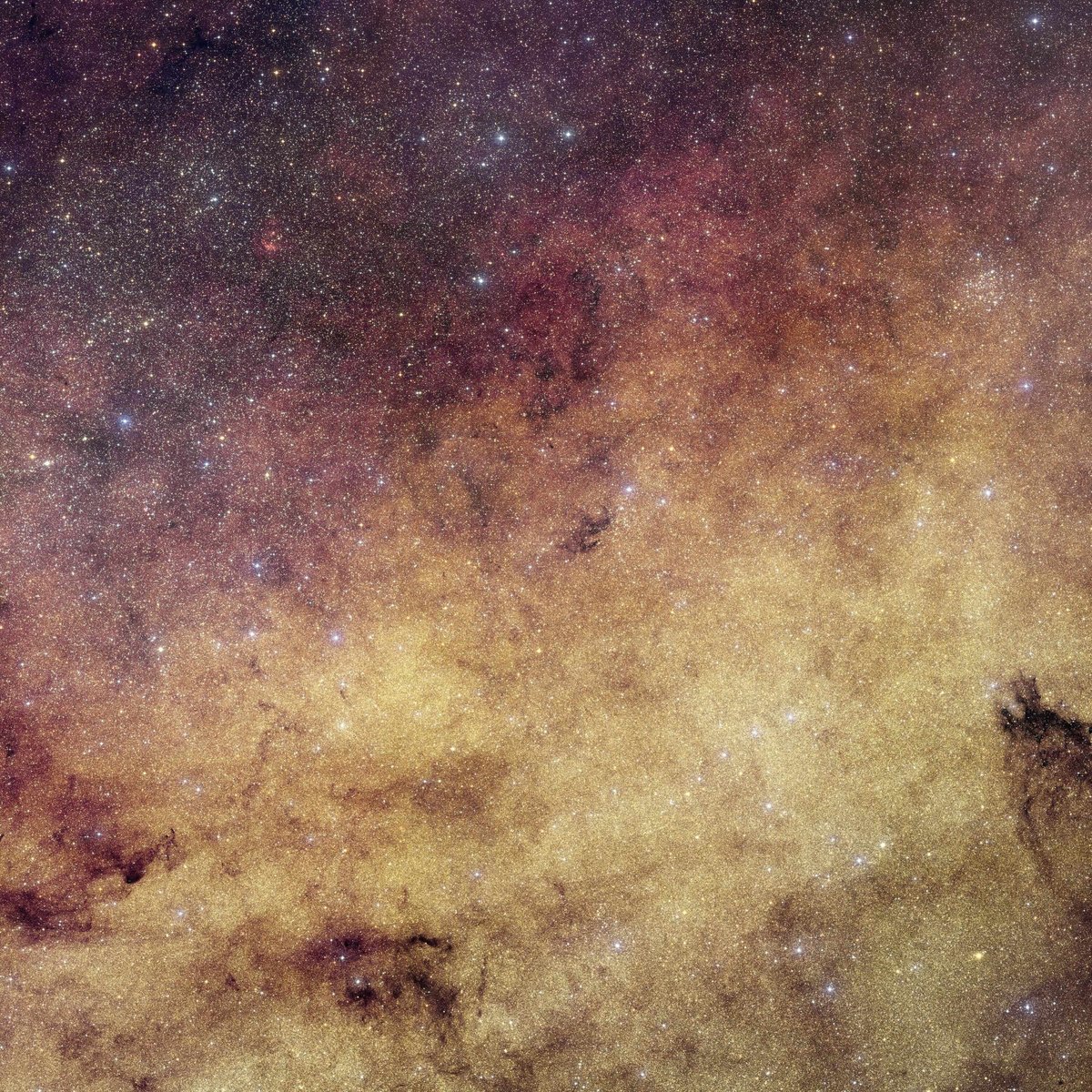
The Galactic Bulge Time-Domain Survey focuses on a narrow band of the Milky Way's center roughly the size of eight full moons in Earth's night sky.
A larger survey field would have been more than Roman, with its panoramic field of view, could readily cover.
Scott Gaudi, an astronomer at Ohio State University and a member of the telescope's commissioning team, says: "We're not going to see that much of the bulge, but we're going to see very deep into the bulge, and in fact, all the way to the other side of the galaxy."
Distinct publishers with included, body-backed reporting in this cluster.
1 article · August 29, 2026
Follow any of these and your For You feed starts watching them — no settings page required.
product
Roman's 100x field is a pipeline bill, and August 30 is when it comes due1 distinct publisher
science
Roman's faint-end science is riding on a stray-light model built at Ames1 distinct publisher
science
Katalyst's servicer spent its fuel on its own tumble instead of raising NASA's Swift telescope1 distinct publisher
product
NASA is flying Roman's coronagraph to learn what still breaks in orbit1 distinct publisher
Evidence-backed comparisons of source perspectives and observed adoption signals. Read the methodology
Which Builder, Operator, and Investor concerns the observed source mix emphasized—not a truth score.
Evidence, demonstrated adoption, hype gap, incentives, and confidence are assessed independently, each on its own current evidence. How these are measured.
One outlet, mission insiders on every number
Split the story in two and it grades differently. The physics and the design specifics — how microlensing works, why transits skew toward big close-in planets, the 6,000-planet tally, an eight-full-moon footprint imaged every twelve minutes — are conventional and checkable. The forward numbers are not: hundreds of millions of stars, 100,000 transiting planets, moon-sized sensitivity, all attributed to Kristen McQuinn's mission office or commissioning-team astronomer Scott Gaudi, with no model, no uncertainty and no outside voice in Scientific American's account.
On the pad, not yet observing
What exists today is a launch window and a calendar. Scientific American has the Falcon Heavy set to fly as early as Sunday and commissioning stretching to a January 2027 operations target, which means the fifteen months on the galactic bulge is allocated time, not logged time. No survey image, no detection, no data release yet supports any of it.
Caveat sold up front, scale left unhedged
Credit where it is due: Scientific American's headline says 'not like you think,' and the piece volunteers the sharpest limitation in the mission's design — microlensing finds are chance alignments, and almost none of those worlds can ever be looked at twice. What pushes the needle slightly positive is the unqualified arithmetic sitting next to that honesty. On the order of 100,000 transiting planets and detections down to moon size are repeated as expectations, from an instrument that has not taken a single frame.
Everyone quoted wants Roman to fly well
The sourcing is entirely internal to the enterprise: the mission office lead, a member of the commissioning team, and a researcher hoping the bulge finally settles a question about stellar ages. That is standard for a pre-launch piece, and none of it suggests bad faith — but nobody in the story has any reason to shade a yield estimate downward. Worth noting too that the page interrupts itself with the magazine's own subscription appeal, a reminder that attention is part of the transaction.
Trust the description, hold the promises
A specialist publication, named sources on the record, numbers that hang together internally — and no second account anywhere in our coverage to test them. That is enough to be confident about what Roman was built to do and how the bulge survey is structured. It is not enough to grade what the survey will actually return, and the first real check does not arrive until observations begin.