Product1 publisher3 min readPublished
Mova's LiDAR-guided robot mower pushed hard into its Gizmodo reviewer's leg
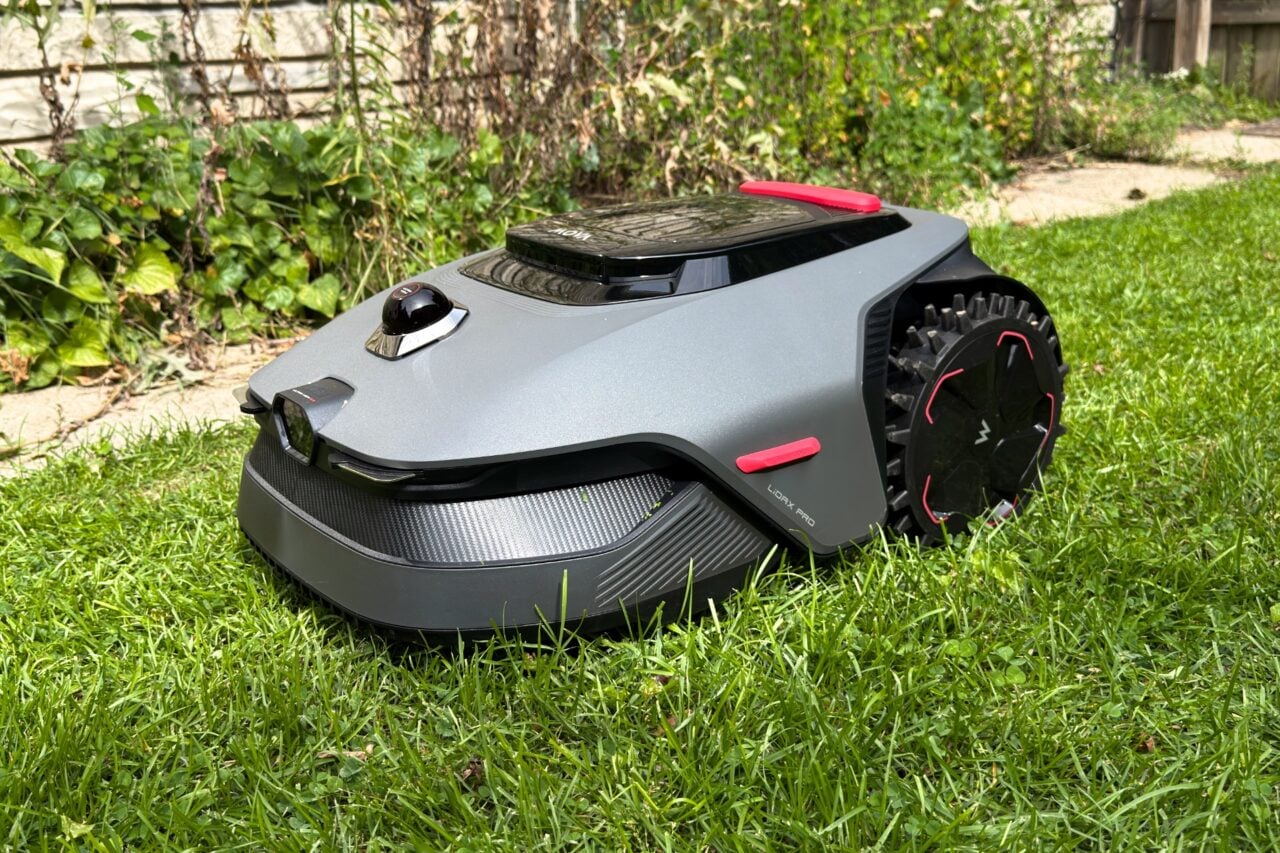
Mova's LiDAX Pro 800 mower pushed hard into a Gizmodo reviewer's leg, though Mova's marketing says it avoids over 300 obstacle types. For yards with children or pets, the review shows a LiDAR spec sheet tells a buyer little about what a mower does on contact.
The Product Desk · Product desk
What happened
- With object detection switched off, the mower repeatedly rammed a raised garden bed and stopped only when a vine wrapped around its rear wheel and lifted it.
- Mova told Gizmodo the mower should 'stop moving forward right away' and back up whenever its bump sensor is triggered.
- When the reviewer put a leg-sized log in its path, the mower climbed it and shut off its blade after the lift sensor tripped.
- The LiDAX Pro 800 is a rear-wheel-drive, LiDAR-navigating mower for smaller yards, sold by Mova, a sub-brand of Dreame.
Compiled by The Product DeskSomething wrong?How this is made
Why it matters
- decision Buyers comparing LiDAR mowers now have to test contact response as its own item, since this model navigated well and still failed to stop when it touched something.
- exposure Households with toddlers would be relying on a lift sensor proven only against a hard log about twice a child's leg, so its behaviour over a small, soft foot is untested.
- cost Mova pays for a loosely tuned bumper with a do-not-buy verdict on a mower the reviewer said could otherwise have been a solid deal.
Gizmodo's reviewer tests every robot mower the same way. "I always step in front of these robots to see how they react," the reviewer wrote [15]. Mova's product page shows a calmer yard. A person sits on the lawn beside a dog while blue beams from the mower, "powered by 3D point cloud data and advanced AI vision," illustrate its detection [3].
That image is what the team tells itself users do: sit still, in plain view of the sensors. What users actually do is messier, as the reviewer wrote: "Obviously, you should never let a child roam freely in a yard where a robotic mower is at work, but unexpected things happen when very young kids are involved" [13].
The pitch is about seeing. Gizmodo gave that side of the machine credit, listing solid wire-free navigation and no need for satellite coverage among its pros [10]. The failure is about contact. When detection misses a leg, the bump sensor is the last check before the wheels keep going. The review's cons list says, "If there's a bump sensor, it doesn't seem to work" [11]. The reviewer wrote that "the company needs to dial up its sensitivity quite a bit" [14].
This is one unit in one review, and it was the outlier. Every mower maker the reviewer has tested makes detection claims like Mova's, and earlier testing gave little reason to doubt them [12]. The other mowers stopped when they touched a leg [4]. The evidence supports a verdict on the LiDAX Pro 800's bump response. It does not show that cheaper mowers as a class fail to stop for people. Many rear-wheel-drive models now sell for under $1,000, where robot mowers cost thousands until recently [8]. Gizmodo called this one "a decent, nearly affordable lawn bot with a fatal object avoidance problem" [16].
For a yard with children or pets, I'd sort mowers on two axes. The first is whether detection sees the person. The second is whether the bumper stops the wheels with detection switched off. A mower that sees and stops is the goal. The Roborock RockNeo Q110H showed the next-best case in the same testing: it missed a leg a few times but halted as soon as it bumped it [4]. A mower that sees but ignores its bumper stays safe only until detection misses for the first time. The LiDAX Pro 800 landed in the worst box. It missed the leg and kept pushing, with enough force that the reviewer "could see it easily knocking over a toddler" [1].
Mova's product page describes only the first axis [3]. The second takes minutes to check on any mower. With object detection off, pressure on the bumper should stop the wheels, as it did on the other mowers Gizmodo tested [7].
What to watch
- Whether Mova ships a firmware update raising the LiDAX Pro 800's bump sensor sensitivity, as the reviewer said it needs to.
- Whether other reviewers who run the detection-off bumper test on the LiDAX Pro 800 get the same result as Gizmodo.
- Whether Mova changes its product page image of a person sitting in the yard while the mower works.