Leadership7 publishers2 min readPublished Updated
Meta launches camera-free Ray-Ban Audio glasses as venues continue banning camera-equipped models over privacy concerns
Nightclubs, restaurants and DEFCON banned Meta glasses because they film. The new audio pair drops the camera, keeps the microphones and the Muse agent, and from the front it looks like an ordinary Ray-Ban.
The Board Room · Leadership desk
What happened
- Meta introduced Ray-Ban Meta Audio at Connect, its first camera-free glasses, priced from $349 with pre-orders open and shipping on October 13 in Clubmaster and Burbank styles.
- The company said more than 100 glasses options will be on sale across Ray-Ban, Oakley and Meta Glasses by the end of the year, with a connection to a personal AI agent from Muse.
- Ray-Ban Meta Gen 3 keeps the camera at 12 MP with 3K video, adds a six-microphone array and nine hours of battery, and is available now from $449.
- Business Insider reported that nightclubs, restaurants, Rhode Island Comic-Con and the DEFCON security conference have all made rules banning Meta glasses.
Compiled by The Board RoomSomething wrong?How this is made
Why it matters
- constraint A rule phrased as no Meta glasses now has to catch a frame that a reviewer says is indistinguishable from ordinary Ray-Bans at the front. The enforceable version has to describe capabilities instead of brands or shapes.
- decision Anyone revisiting a device policy has to choose whether it governs recording hardware or listening hardware. The cheaper model only does the second, and it still reaches the same agent.
- contradiction Business Insider reads dropping the camera as an answer to the backlash. The Guardian reports Meta says the audio glasses have been in the works for several years. Sales of the cheaper pair will not settle how much privacy sentiment drove the design.
- precedent A security conference and a comic convention have already shown that event organisers will write device rules. The camera-free model leaves the next organiser drawing a line around microphones. A microphone rule is harder to police at a door.
Two Ray-Ban lines account for about half the catalogue Meta is counting. The audio pair comes in 23 colour and lens combinations and Gen 3 in 27, which is 50 of the more than 100 options promised by year end [1]. The 100 figure is largely merchandising, but it also makes a rule written around how a device looks harder to apply, because there are now 50 ways for two products to look.
Both Ray-Ban lines talk to the same assistant. Meta said the glasses connect to a personal AI agent from Muse [6], and Business Insider reported that a wearer can talk with Muse in real time through the camera-free pair [7]. The $100 between the two lines buys a 12 MP camera and 3K video recording [2].
Meta's visible privacy signal is attached to the camera. The company said Gen 3 has a built-in LED light that helps make people around you aware if you are taking photos or video [24]. The Guardian reported that all of Meta's smart glasses carry an LED that flashes when recording, and that Meta said it had improved tampering detection, including during a livestream [13]. The audio glasses have microphones and speakers for music, calls and the AI assistant [18]. Meta did not describe an indicator for the microphones [4].
The rules already on the books came out of the camera. The Guardian reported that the category faces a backlash from sceptics and privacy campaigners over its ability to record video, and that the glasses are frequently dubbed "perv glasses" or "spy glasses" [12]. On Meta's own platform, Business Insider reported that Instagram said this summer it would remove pickup-artist videos and sometimes whole accounts, and wrote that "the enforcement has been somewhat spotty" [11].
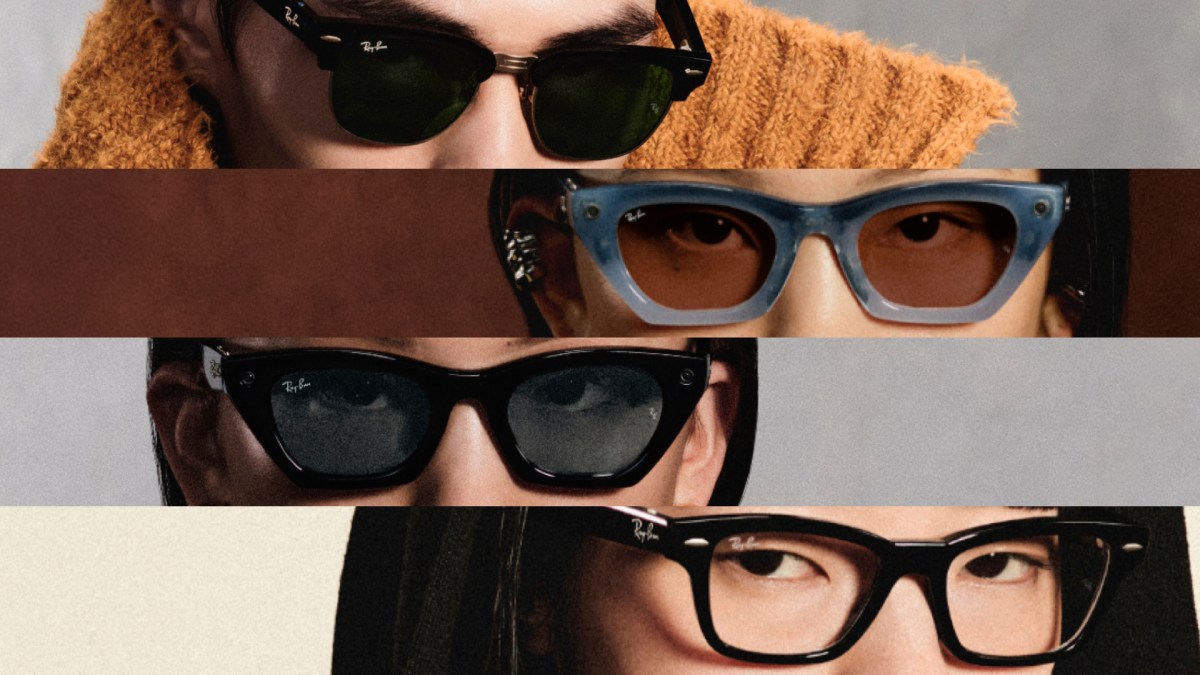
No employer turns up in this record; the parties named as banning the glasses are nightclubs, restaurants, a comic convention and a security conference [3]. The frame they would have to identify weighs 43 grams against 51 for the Gen 2 Wayfarer camera version, about 16% lighter [5], and Business Insider wrote that "From the front, they look like regular Ray-Bans" [9].
Meta is pushing the visible end of the range at the same time. The Guardian reported that Meta Ray-Ban Display went on sale outside the US for the first time, in the UK and Canada from 23 September at 749 pounds, with France, Germany and Italy to follow on 13 October at 899 euros [16]. Business Insider expects the cheaper direction to matter more, writing that the camera-free glasses "might appeal to people who otherwise would never want to buy smartglasses with a camera" [25].
What to watch
- Whether the venues and conferences that banned Meta glasses rewrite the rule to name microphones, or exempt the camera-free model.
- How the camera-free pair sells against the camera version after the 13 October ship date.
- The Meta VR glasses at $1,299.99, due in spring 2027 in North America, Europe and Asia, tethered to a 300g compute puck.