Invest1 publisher3 min readPublished
Meta's Face-Tagging Camera Patent Is a Liability Line Item, Not a Product
A continuation filing describes cameras that name people and index what they did. It is unexamined and unshipped, which is precisely when the regulatory cost is cheapest to estimate.
The Investor · Invest desk
Drafted by a language model from the sources cited here and checked against its claim ledger before publication. How we use AISend a correction
What happened
- Meta Platforms Technologies, the entity that holds Meta's R&D and hardware intellectual property, published a patent for a camera system that identifies people by face and logs what they do.
- The filing describes cameras feeding footage into an AI that tags individuals in frame, detects their actions, and bundles both into media clips served on demand to a phone or headset.
- The filing is a continuation of a 2022 parent application and its status is "Ready for Examination" - not granted, and not a shipping feature.
- The patent lays out a four-step loop: cameras capture live or recorded footage; a facial-recognition layer flags which specific person is present; a separate action-detection layer reads movements such as picking something up, leaving a room, or a group gathering; and the system bundles findings into individual media files tagged with a person, an action, or both.
- The filing frames retrieval as conversational: a connected device can request footage by query and the system composes the answer from tagged clips rather than requiring scrubbing. The drawings map both server-side and on-device processing flows, with a natural-language understanding pipeline feeding the clip composer.
Compiled by The InvestorSomething wrong?How this is made
Why it matters
Meta Platforms Technologies, the entity that holds Meta's hardware and R&D intellectual property, has published a patent application for a camera system that identifies people by face, detects what they are doing, and bundles both into clips served on demand to a phone or headset [1][2]. The filing is a continuation of a 2022 parent application and sits at "Ready for Examination," so nothing has been granted and nothing has shipped [3] - which is exactly the moment to put a number on the downside rather than the upside.
The described pipeline is a four-step loop: cameras pass live or recorded footage in, a facial-recognition layer flags which specific person is present, an action-detection layer reads movements such as picking something up or leaving a room, and the system emits individual media files tagged with a person, an action, or both [4]. The part that matters commercially is the retrieval layer. The filing frames access as conversational, with a connected device requesting footage by query and a natural-language pipeline feeding a clip composer, so the answer is assembled from tagged clips instead of scrubbed out of a timeline [5]. The drawings map both server-side and on-device processing flows, and show a glasses wearer observing a room of people [5][8].
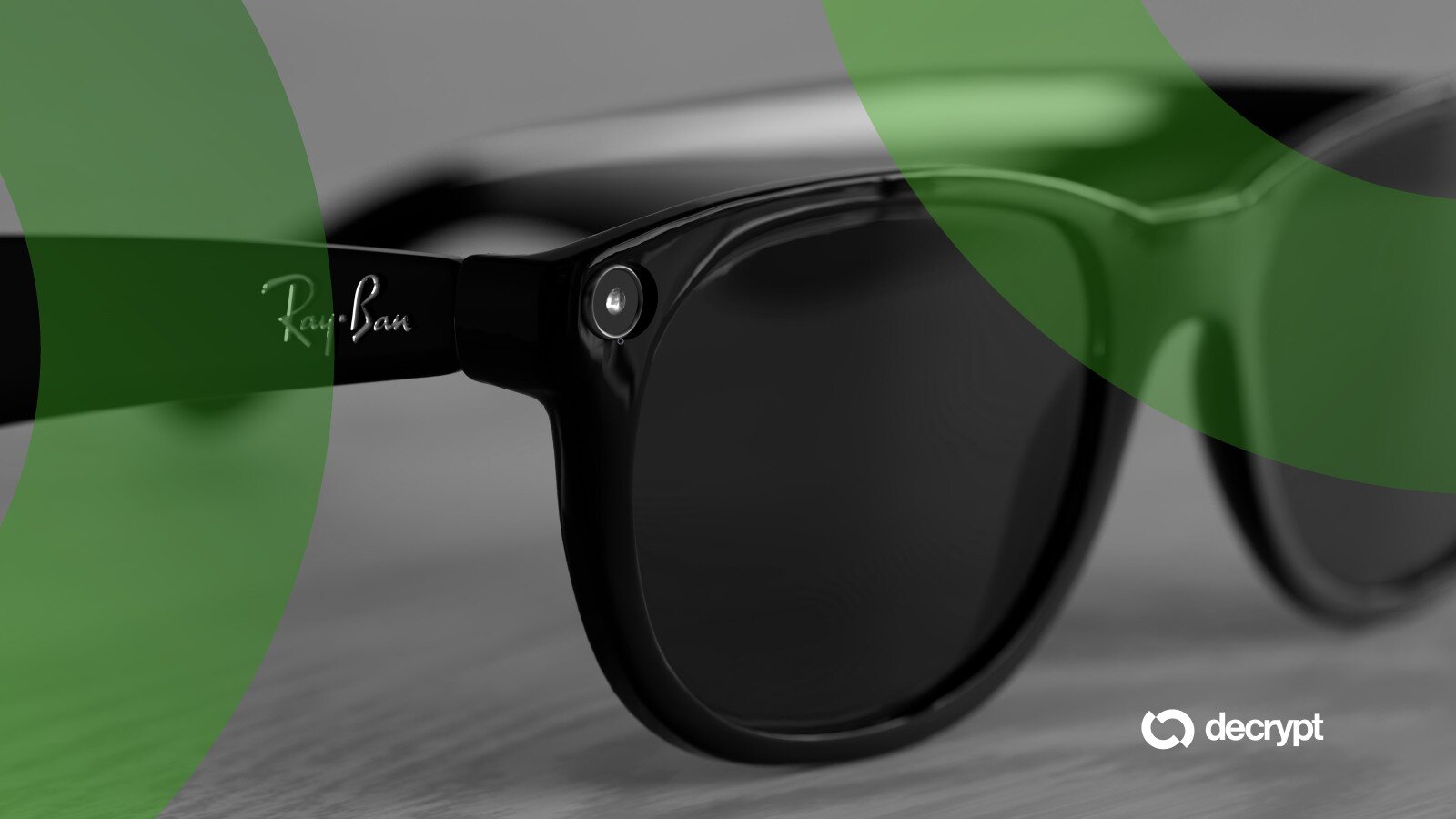
That is not a doorbell feature. It is an index of bystanders, and the same corporate entity already ships the hardware that would populate it: the Ray-Ban glasses built with EssilorLuxottica, first shipped in 2023, which record first-person video and let the wearer ask an AI about what it sees, plus the Quest headsets [6][7]. The parent application predates that launch by a year [11]. Facial recognition is the step that moves the device from recording what the wearer points at to naming who is in the room [8].
Price the exposure from what is already on the record. Democratic senators have pressed Meta over facial recognition in its smart glasses, warning that real-time face identification could expose people to stalking and harassment, according to Decrypt's earlier reporting [9]. Owners of the recently released glasses have been able to quietly record strangers in public, and contractors have reviewed private footage [10]. Add a name to the stranger and a queryable log to the footage and the disclosure risk stops being about one wearer's discretion and becomes a database question. Patent publication does not build the feature, but it does put intent on the record in a form that regulators and plaintiffs can read and cite, which is a real cost of the cheap option that a continuation filing represents.
Two things are worth watching. First, examination: Patentlyze rates grant likelihood as medium [12], and the useful signal is not whether a patent issues but whether the independent claims survive with identity tagging intact or get narrowed to consenting, enrolled subjects. Second, whether Meta's public product framing starts distinguishing on-device matching from server-side matching, since the filing covers both [5]; that distinction is the one that determines who holds the biometric record and therefore who is answerable for it. Until then, treat this as an unfunded contingency on the wearables line, not a roadmap item.