Science1 publisher3 min readPublished
Native gardens on 14 Melbourne nature strips drew seven times the pollinators of untouched verges
Researchers who planted 14 Melbourne nature strips with native gardens counted seven times the pollinators and twice the species found on untouched strips. The controlled design makes the gain credible on the strip itself, though whether whole suburbs gain insects has yet to be measured.
The Scientist · Science desk
Drafted by a language model from the sources cited here and checked against its claim ledger before publication. How we use AISend a correction
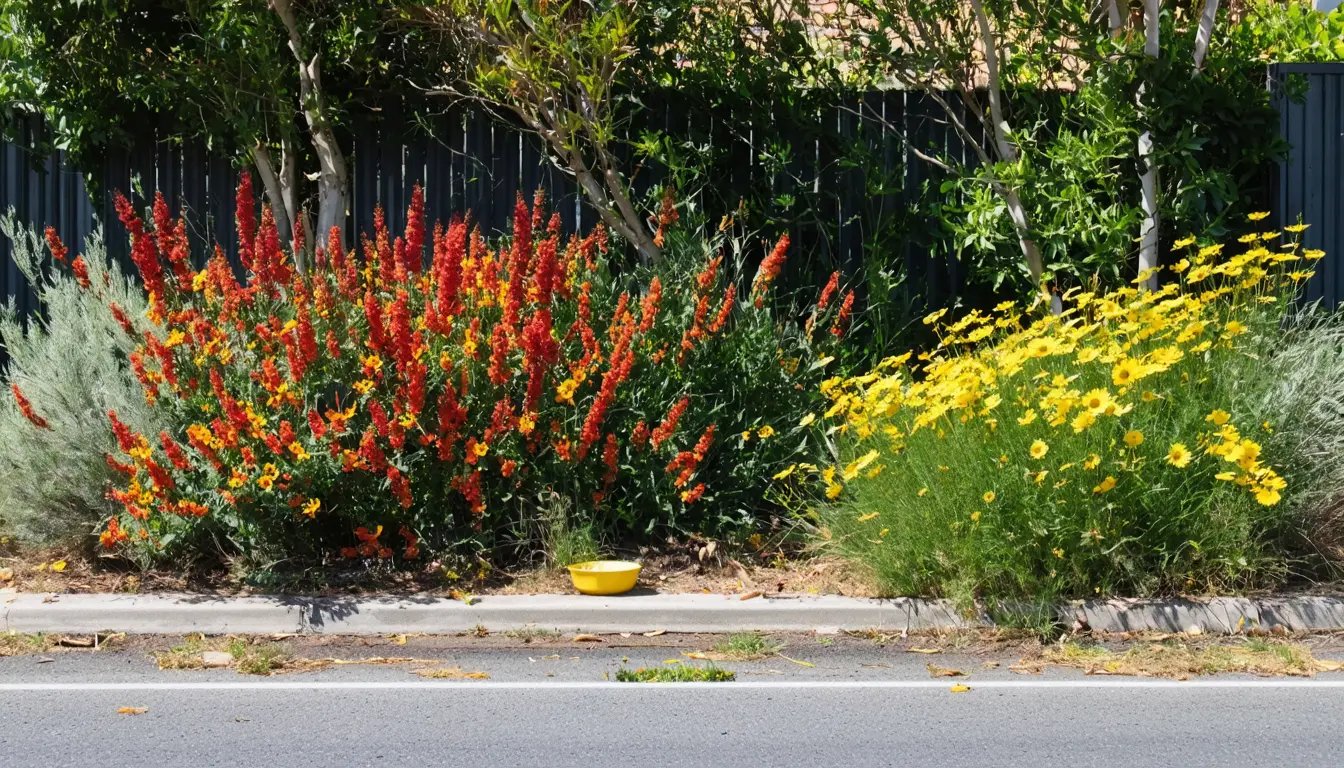
What happened
- The team used a before-after-control-impact design, surveying insects before and after planting on both the new gardens and strips left untouched.
- The gardens went in across Brunswick, Coburg and Fawkner, in a partnership with the City of Merri-bek and the residents beside each strip.
- The survey targeted native bees, beetles and butterflies as well as introduced honeybees.
- By the researchers' account, nature strips make up more than one-third of Melbourne's public green space.
Compiled by The ScientistSomething wrong?How this is made
Why it matters
- decision Councils that already permit nature-strip gardens can now cite a controlled field trial when they push residents toward native plantings.
- constraint Recommended species lists still have to come from existing knowledge of local insects, since every trial garden was a native mix tested only against unplanted strips.
- cost Residents bear part of the cost of scaling up, because each trial garden was planted with the adjacent homeowner's help and city-wide coverage means recruiting them strip by strip.
The control strips are the reason to take the result seriously. A plain before-and-after comparison could credit the gardens with what was really a change of season or a good year for bees. Because untouched strips were surveyed over the same period, a rise that happened everywhere shows up on them too, and only the gap between the two sets counts toward the gardens [5]. The researchers wrote: "If the gardens made a difference, the comparison would show it" [15].
Then the denominator. Both gains [7] were measured against strips that are usually mowed grass with a lone tree, a setup the researchers say offers few resources to urban animals that need complex vegetation for food, nesting and shelter [2]. A large multiplier on a low base can still be a modest number of insects. The account does not give the raw counts, the number of control strips, how long sampling ran or what a garden cost to install.
"More plants and more variety should mean more animals, and more kinds of them. That's the theory, anyway. We wanted proof," the researchers wrote [13]. The trial tested those two ideas together. Every garden was a planting of natives known to feed or shelter local insects, set out under the council's nature-strip guidelines [6], and the comparison was with unplanted strips. So the result favours a garden over turf. It cannot split the gain between plant variety, the choice of natives, or simply having flowers where there were none. The split matters because insects differ in what they need. Australia has more than 1,500 native bee species, according to Australian Museum figures the researchers cite [10], and specialist insects stick to one or a few plants, sometimes a single species [11].
The thing this doesn't tell you is whether the suburb gained insects. A count on a strip records where pollinators turned up. A garden that drew bees from a neighbour's backyard would score well on that measure without changing how many bees Brunswick supports. The researchers set their work against worldwide insect decline [8] and the roughly 87.5 percent of flowering plants that rely on animal pollinators [9]. Linking the trial to those stakes needs population counts across whole suburbs, over years.
Permission is already settled. Councils across Greater Melbourne allow nature-strip gardening, some with permits, and many steer residents toward low-growing natives [3]. Summed across a city, the researchers wrote, the strips come to "hundreds of hectares of public land doing almost nothing" [14]. On this evidence I'd back councils that encourage native nature-strip gardens, because a planted strip clearly beats grass for pollinators on the strip itself. The claim that verge planting helps reverse insect decline needs evidence from beyond the kerb.
What to watch
- Publication of the full study with raw insect counts, the number of control strips and the survey period, which would show how large the gains are in absolute terms.
- Repeat surveys of the same gardens in later years, to test whether the effect holds as plantings mature, spread or lapse.
- Any per-strip costing from Merri-bek or other Melbourne councils, which would show whether verge planting is cheap enough to scale across a city.