Science1 publisher2 min readPublished
Two insect traps in New York parks will screen for species the DNA barcode library cannot match
Emily Hartop of the NTNU University Museum thinks the Central Park and Prospect Park traps will turn up species new to science, and she thinks the same protocol would work in Trondheim. The second claim is the testable one.
The Scientist · Science desk
What happened
- Emily Hartop, an entomologist at the NTNU University Museum in Trondheim, is working with the Centre for Biodiversity Genomics at the University of Guelph, the media outlet Vox, the Prospect Park Alliance and the Central Park Conservancy.
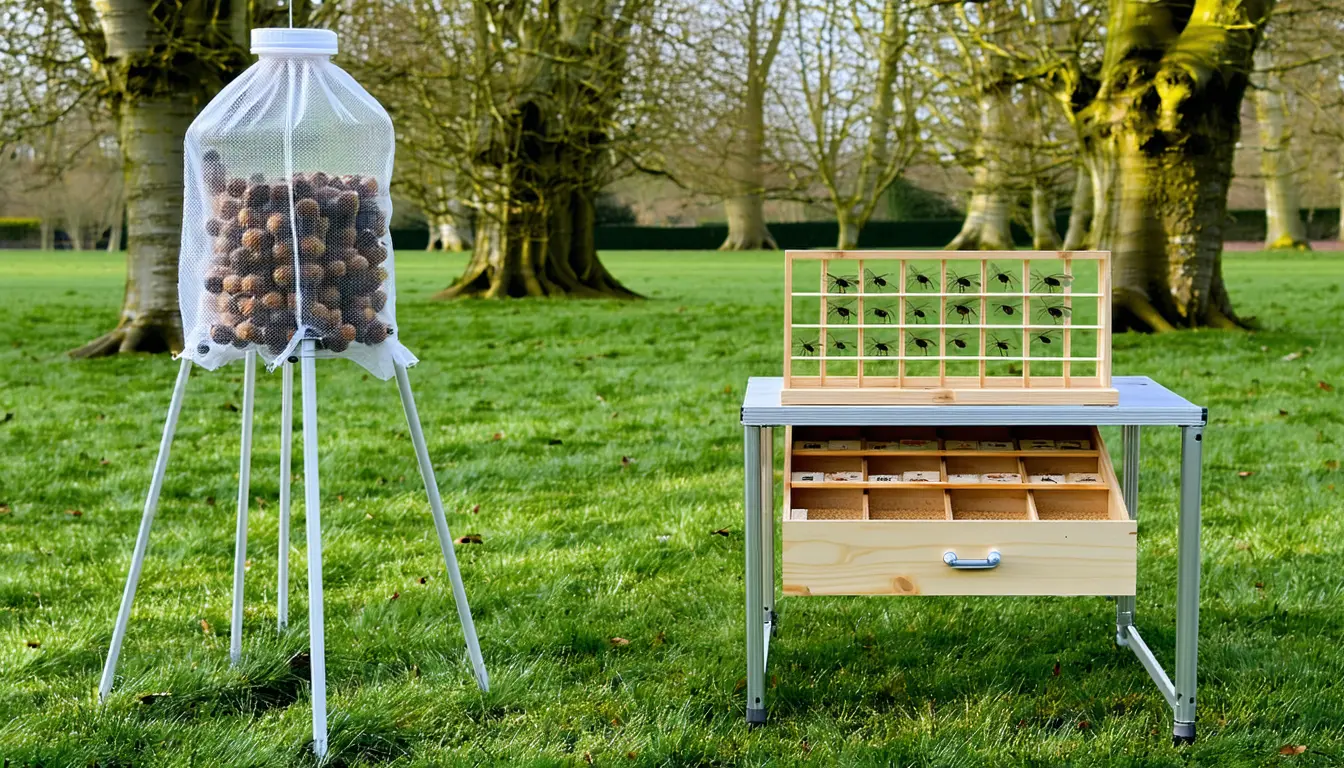
- Two tentlike Malaise traps now stand in Central Park in Manhattan and Prospect Park in Brooklyn, guiding insects into a container of ethanol that kills and preserves them.
- Once a month the catch travels to Guelph, where a short defined stretch of each specimen's DNA is read as a barcode and compared against a large reference library of known species.
- Anything confirmed as new then has to be formally described and given a name, laborious work that can often take a couple of years.
Compiled by The ScientistSomething wrong?How this is made
Why it matters
- constraint Sequencing throughput is not what caps this kind of work. A monthly barcoding run can nominate candidate species faster than the small number of people competent to describe them can adjudicate.
- capability Barcode screening moves the scarce specialist to the end of the pipeline, so two traps and a handful of people can prospect for undescribed insects in a city park.
- precedent A positive result makes undescribed insects the default assumption for well-visited urban green space, and anyone claiming a fully catalogued local fauna would need trapping data to support it.
A barcode with no match in the reference library has two possible explanations, and only one of them is a new species [5]. The other is a species someone described decades ago whose DNA nobody has ever sequenced. The sequencing step cannot separate those cases. Sorting them out falls to a specialist in the relevant group, and unmatched specimens get shipped to one; Hartop takes the humpbacked flies, a species-rich family of small flies she works on globally [6].
The size of the gap being probed is Hartop's own estimate, given in round numbers. "Scientists have formally named around 2 million species, but the actual number of species is perhaps 10 times higher," she said [8]. Run that out and you get 20 million species in total, 2 million of them named, leaving about 18 million without names, or roughly 90 percent of the whole [9]. The 2 million is a count. The multiplier is an estimate, and she presents it as one.
Hartop expects a result, and she expects it anywhere. "It's highly likely. In my field, discovering new species is the rule rather than the exception," she said [10]. She also says that running the same procedures in Trondheim, or almost any other city, would very likely turn up something new [11]. If both of those hold, a hit in Central Park measures the coverage of the reference library and the supply of taxonomists, not the biodiversity of Manhattan.
Two traps give presence and little else. A catch tells you the animal was in that park in that month [3]. Abundance, range and habitat preference need a different design, and a fly that is new to the library may be common a hundred miles away. Phys.org does not report how long the traps will stay up.
The limit Hartop names is people, not sequencers. Dark taxa, in her usage, are the groups that are extremely species-rich and barely known, many of them small insects and mites that get little attention next to mammals and bees [13]. "They are often both common and ecologically important, but we simply don't have enough specialists to get an overview of them," she said [12].
What to watch
- Whether any unmatched barcode survives specialist review and reaches a formal published description, and how long that takes.
- Whether the collaborators release the trap counts: specimens per month, and the share whose barcodes find no match in the library.
- Whether the same protocol is run in Trondheim, which would give Hartop's prediction about other cities something to be measured against.