Science1 publisher3 min readPublished
A spreading PX1 cluster in Uganda dulls both drugs in Africa's front-line malaria pill
Whole-genome sequencing of parasites from hundreds of Ugandan patients links five variants to reduced susceptibility to artemisinin, lumefantrine and mefloquine, according to Nature Medicine.
The Scientist · Science desk
Drafted by a language model from the sources cited here and checked against its claim ledger before publication. How we use AISend a correction
What happened
- Researchers sequenced the whole genomes of Plasmodium falciparum from the blood of hundreds of infected people in Uganda.
- The team found that a cluster of genetic variants showed significantly decreased susceptibilities to the drugs most commonly used to treat malaria in Africa and the United States.
- The findings were published in Nature Medicine in a paper titled 'Emergence and spread of Plasmodium falciparum PX1 polymorphisms associated with decreased susceptibility to antimalarials in Uganda'.
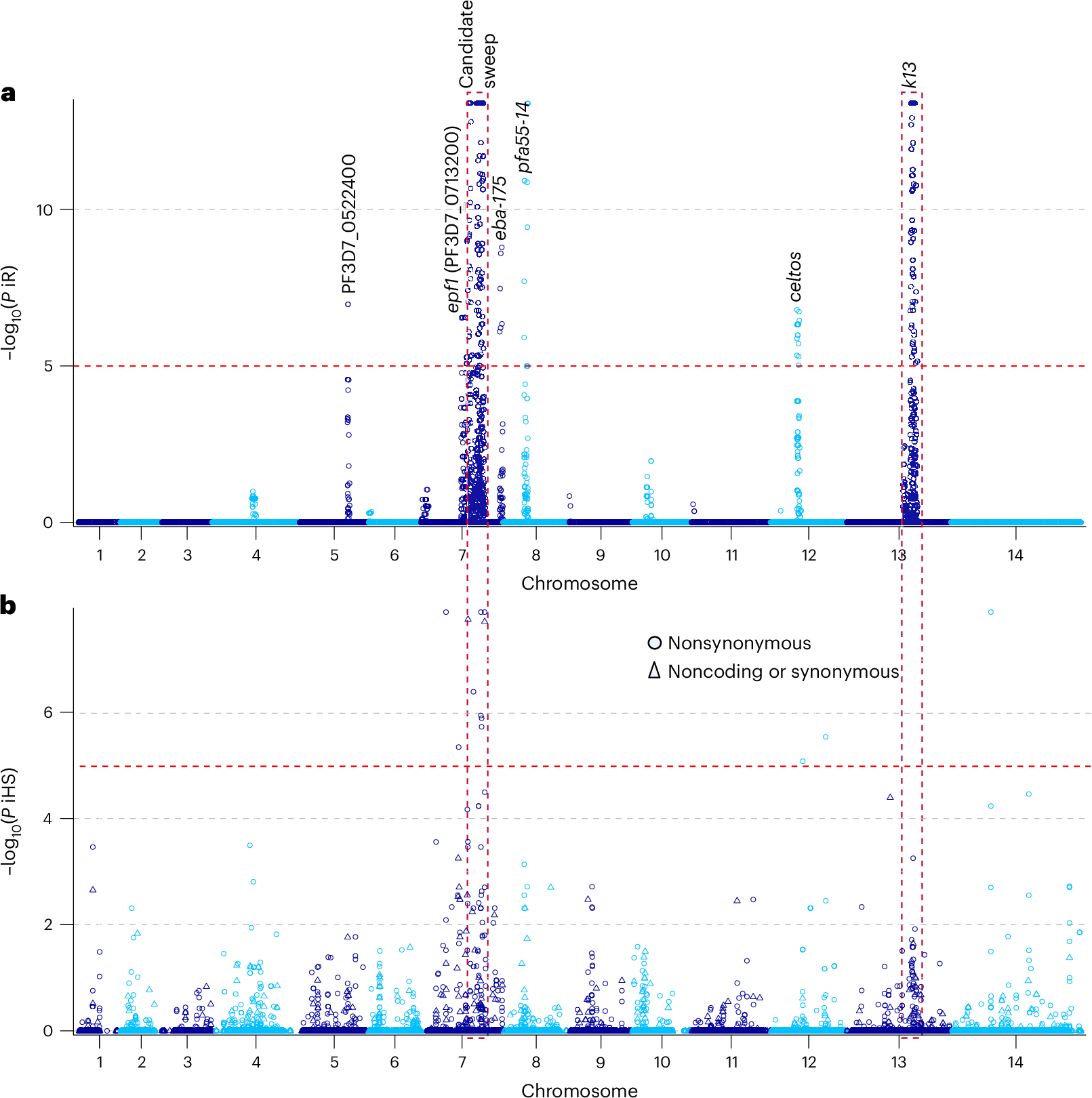
- The researchers identified an area in the genome containing 69 genes.
- Three specific mutations and two deletions were associated with decreased susceptibilities to artemisinin and lumefantrine, both components of artemether-lumefantrine, as well as to mefloquine.
Compiled by The ScientistSomething wrong?How this is made
Why it matters
Researchers who sequenced whole Plasmodium falciparum genomes from the blood of hundreds of infected people in Uganda found a cluster of genetic variants associated with significantly decreased susceptibility to the drugs most commonly used to treat malaria in Africa and the United States [1][2]. The paper, in Nature Medicine, is titled "Emergence and spread of Plasmodium falciparum PX1 polymorphisms associated with decreased susceptibility to antimalarials in Uganda" [3].
The mapped locus covers 69 genes; within it, three point mutations and two deletions were associated with reduced susceptibility to artemisinin, to lumefantrine and to mefloquine [4][5]. That is five variants in one neighbourhood [6]. Artemisinin and lumefantrine are both components of artemether-lumefantrine, or AL [5]. The variants most likely driving the selection sit in a gene encoding a phosphoinositide-binding protein, PX1, which is often found near another gene already known to cause moderate artemisinin resistance [7]. The authors describe this as the first correlation of a gene mutation with reduced susceptibility to multiple drugs used in a malaria combination therapy [8].
The operational problem is that AL is not a marginal product. It has been the primary treatment for uncomplicated malaria in Uganda for about two decades and is the most used artemisinin-based combination therapy across sub-Saharan Africa [9]. A single locus that degrades the response to both the artemisinin component and the partner drug removes the usual fallback of swapping one half of the pill.
Clinical pressure is already visible elsewhere in the system. According to the report, as of 2026 the US Centers for Disease Control and Prevention has been recommending a longer course of therapy after standard doses failed to cure several travellers returning home, which suggests declining parasite susceptibility [10].
Two caveats matter for anyone planning around this. The susceptibility effects were measured in the laboratory using parasites collected from patients, and Jeffrey Bailey of Brown University says future work should test how these mutant parasites affect clinical outcomes of ACT treatment [11][12]. And while the mutation was found to be spreading rapidly inside Uganda, how far it has travelled beyond the country's borders is unknown and needs to be examined [13]. Bailey called the speed of spread concerning, arguing it indicates the variants are important to the parasite's survival [14].
The surveillance value is more immediate than the clinical value. Karamoko Niare, formerly a postdoctoral researcher in Bailey's lab and now an adjunct assistant professor at Brown, says there had been no validated molecular marker of lumefantrine resistance, and that this work supplies a marker that surveillance studies could use to track emerging reduced susceptibility to front-line treatments across Africa [15][16]. Surveillance systems are already being built to track known mutations, drug performance over time and biological markers of resistance [17].
The historical pattern argues against waiting. Chloroquine resistance in P. falciparum was recognised as early as the 1950s, spread to nearly all endemic areas, and the parasite has since acquired resistance to all currently available drugs, including sulfadoxine/pyrimethamine, mefloquine and quinine [18].
What to watch: whether PX1 genotypes get added to national and regional resistance panels this year; whether genotype maps to actual treatment failure in prospective cohorts; and how quickly the marker is screened in isolates from neighbouring countries. Bailey argues the finding underscores the need for models predicting when the drug stops working altogether, and the urgency of developing new antimalarials [19].