Science1 publisher2 min readPublished
Men lost 5.8 mental-illness-free years to isolation and loneliness in a 277,000-adult cohort
A Tulane team tracked 277,489 middle-aged adults and found that exercise, diet, sleep and not smoking blunted the physical cost of objective isolation while leaving the psychiatric cost of feeling lonely largely in place.
The Scientist · Science desk
What happened
- A Tulane group followed 277,489 adults aged 40 to 69 who were free at entry of seven conditions, among them type 2 diabetes, cardiovascular disease, dementia, cancer, major depression and generalized anxiety.
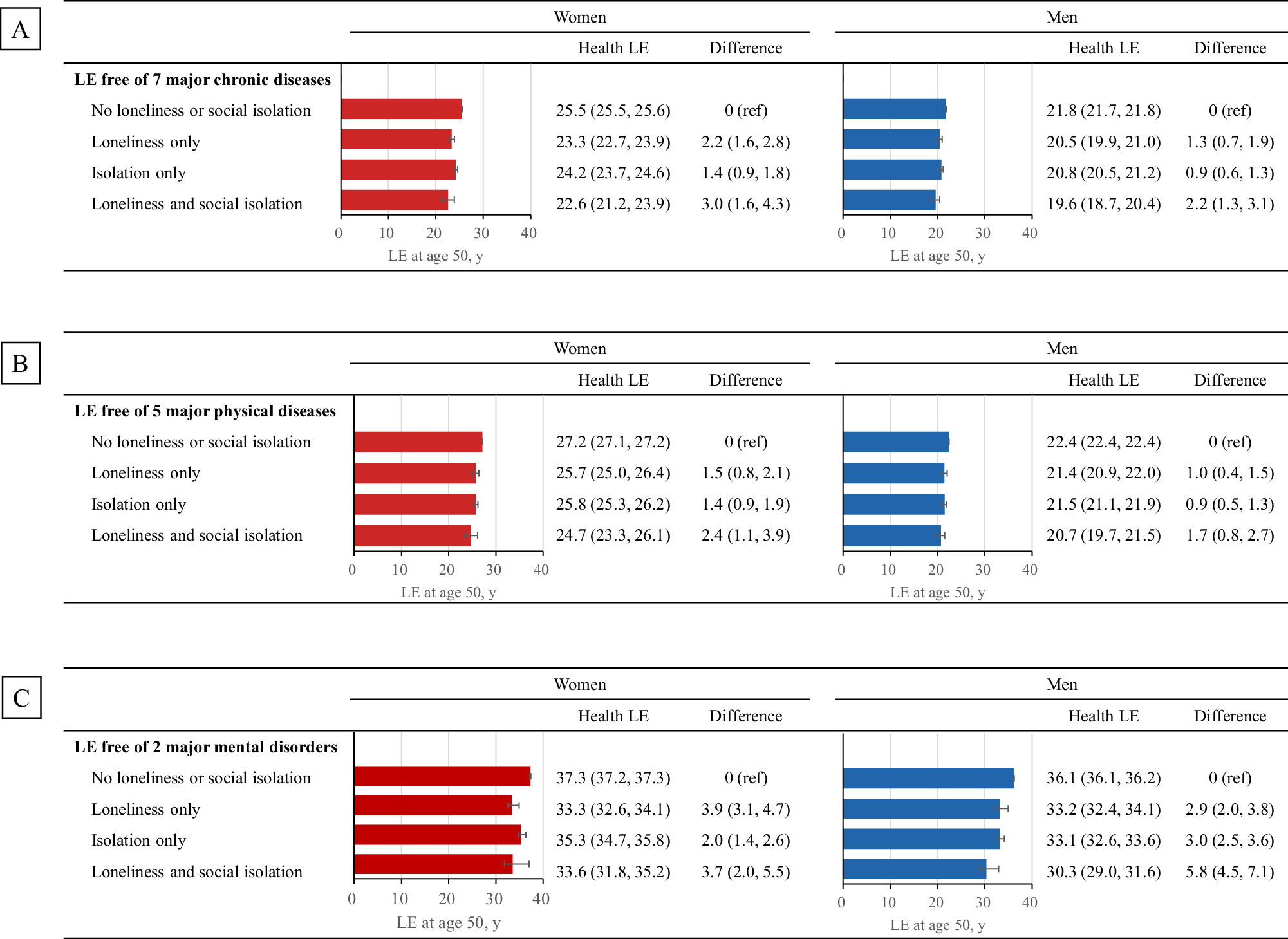
- Men carrying both social isolation and loneliness lived about 5.8 fewer years free of depression and anxiety than connected peers, and for women the gap was about 3.7 years.
- The same dual exposure cut physical disease-free years by 2.4 for women and 1.7 for men, across conditions including heart disease, diabetes, cancer and dementia.
Compiled by The ScientistSomething wrong?How this is made
Why it matters
- decision A wellness program has to pick a target. The four lifestyle levers moved the risk attached to isolation; the risk attached to loneliness stayed where it was, and nothing in the Tulane account substitutes for those levers on that side.
- constraint Because the design is observational, the years-lost figures describe differences between groups followed over time. They do not promise that reducing someone's loneliness returns 5.8 disease-free years to them.
- exposure The cost the lifestyle bundle did not reach is psychiatric, so it lands on mental health capacity and disability claims, in a country where the write-up puts chronic loneliness at nearly half of adults.
- contradiction The publisher's headline credits loneliness alone with nearly six healthy years, while the study's 5.8 belongs to men carrying both exposures and counts only years free of depression and anxiety. A reader who takes the headline at face value has the wrong exposure and the wrong outcome.
The two exposures were not measured the same way. Isolation here is a count of external facts: network size, living situation, how often a person has contact with others [7]. Loneliness is a self-report about dissatisfaction with the quality and depth of relationships, and a person can score high on it while seeing people every day [8].
Regular exercise, a good diet, healthy sleep and avoiding smoking partially counteracted the losses attached to objective isolation and failed to protect against the risks attached to subjective loneliness, according to the Tulane write-up [6]. The write-up states that divergence in words and does not report the effect sizes behind it [16]. Until the interaction terms are in front of me, I would treat the loneliness result as an offset that showed up for one exposure and not the other.
The split between the physical and psychiatric columns is wide enough to steer a program. Men carrying both exposures lost 5.8 years free of depression and anxiety [3] against 1.7 physical disease-free years [5], roughly 3.4 times as much on the psychiatric side; for women the two figures are 3.7 and 2.4, a ratio near 1.5 [14]. Men's psychiatric loss runs 2.1 years above women's, and women's physical loss runs 0.7 years above men's [15]. "This comes down to the gender differences between men and women," said Lu Qi, the lead author and a professor at Tulane [18][17].
Everyone entered free of all seven conditions, including major depression and generalized anxiety, and disease-free survival was benchmarked from age 50 onward [1][2]. That design clears out people whose diagnosed depression preceded their loneliness. It does not clear out people whose loneliness was an early symptom of a depression not yet diagnosed, and an observational study cannot order the two [9]. "Previous studies found that social isolation and loneliness are related to mortality, especially premature mortality, and this study provides additional evidence," Qi said [11].
The 5.8 is years free of the seven named diseases counted from age 50, not years of life [2][3]. The publisher headlined the work "Loneliness Erases Nearly 6 Healthy Years" [13]. The number belongs to men carrying both isolation and loneliness, on the psychiatric outcomes alone [3].
What to watch
- The Nature Communications paper's interaction estimates for the lifestyle score against each exposure separately. Those estimates would show whether the loneliness null is precise or merely undetected.
- Only a randomized test of a loneliness-targeted intervention with depression and anxiety onset as the endpoint says whether those years are recoverable.
- Replication outside the 40-to-69 entry band, since every figure here is benchmarked from age 50.