InvestAlso reported elsewhere3 publishers2 min readPublished
Ledger finds a cellular implant inside a CryptoBilis-sold signer that copies recovery phrases at setup
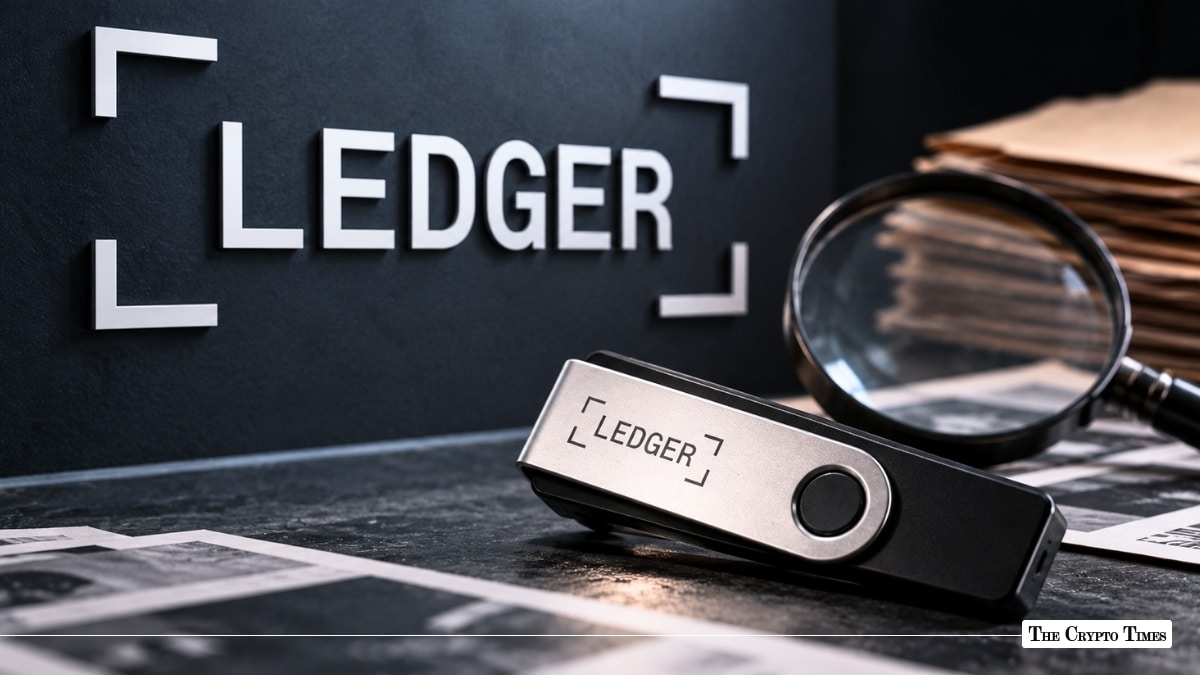
Ledger disclosed on October 13 that an implant in a signer sold by CryptoBilis captures 24-word recovery phrases and sends them over LTE. Every fund loss Ledger has verified involved devices bought through that reseller.
The Investor · Invest desk
Key figures: Bitquery estimated suspected thefts connected to the investigation at approximately $102 million across 324 wallets in an October 12 analysis, unconfirmed. Ledger has confirmed an implant in 1 device.
| Figure | Value | Note | Claim |
|---|---|---|---|
| Suspected thefts, approximately, per Bitquery | $102,000,000 | October 12 estimate; unconfirmed | 11 |
| Wallets, per Bitquery | 324 wallets | 11 | |
| Implant confirmed by Ledger | 1 device | 14 |
What happened
- Ledger had reports of missing funds on October 9 and asked CryptoBilis to stop selling. By October 10 it had found an implant in one customer's device, and CryptoBilis suspended Ledger sales.
- The implant sits inside the casing and watches the screen. Its microcontroller decodes recovery-phrase screens during setup and sends the words out over an eSIM-provisioned LTE link.
- Ledger says the implant leaves the Secure Element, the operating system, transactions and digital signatures unmodified.
- Ledger has not established how the components got into the devices or who installed them, and no arrests or charges have been announced.
Why it matters
- constraint Checks on the chip, the operating system and signatures look at the layers Ledger says the implant leaves alone, so passing them proves little about hardware inside the casing.
- decision Owners of CryptoBilis-sold units must decide what to do about a phrase that was shown on a screen the implant could read, with an implant confirmed in one device and not in all.
- contradiction Ledger ties every verified loss to one reseller (c6) yet is still reviewing reports of modified hardware elsewhere, so neither a blanket warning nor an all-clear for other channels is supported yet.
The loss figure is the softest number in the story. Bitquery's October 12 analysis put suspected thefts at about $102 million across 324 wallets [11], an average of roughly $315,000 a wallet [13], and Ledger has not confirmed the loss calculation, the number of affected customers, or that every suspicious transaction came from the implant [12]. The hard evidence is narrower: Ledger found the implant inside one customer's device on October 10 [3]. That is 324 wallets to one confirmed device [14]. A wallet is not a device, so the ratio is not a count of tampered units, but it shows how much of the picture rests on chain analysis.
The gap bears on the broader rule, that any reseller-bought hardware wallet should be treated as a compromised supply chain. Ledger has not gone that far. "We have not verified a drain linked to a signer bought elsewhere," Ledger said [7], while its researchers keep reviewing reports of hardware modifications in other devices and locations [8]. The account describes CryptoBilis as a reseller serving Southeast Asian markets, and "gray market" is a label it does not use [10].
We think the evidence supports a narrower rule: treat CryptoBilis-sold units as suspect, and treat every other channel as unproven in both directions. Widening it depends on the route the components took into the devices [9], and there are three ways that can come out. If they were fitted at or near CryptoBilis, the risk stays with that stock and the blanket rule overshoots. If they were fitted upstream, on a path other sellers share, the blanket rule is right and the 324-wallet count could rise. If some of the 324 wallets were emptied by something other than the implant, the loss estimate falls toward the cases Ledger can tie to hardware [12]. A single verified drain from a signer bought through another seller would move us to the blanket rule.
What to watch
- Ledger publishing how the components entered the devices, at CryptoBilis or further upstream.
- Ledger confirming or revising Bitquery's $102 million and 324-wallet estimate.
- Any arrest, charge or enforcement action tied to the implants.
Clarity's read
What the record supports and how the coverage leans. The claims behind it follow.
Reality
- Evidence50
- Adoption
- Insufficient
- Hype gap+25
- Incentives
- Insufficient
- Confidence55
Claim ledger
Ranked by verification strength, evidence, and original report placement.
- [1]
Ledger disclosed on October 13 that an unauthorized hardware implant inside a signer sold by Southeast Asian reseller CryptoBilis can capture users' 24-word recovery phrases and transmit them through a cellular network.
- [2]
Ledger received reports of missing cryptocurrency from customers who bought devices through CryptoBilis on October 9, began examining the complaints, and asked the distributor to stop selling and shipping its products.
- [3]
By October 10 Ledger's security team had identified an unauthorized implant inside a device belonging to one affected customer, and CryptoBilis subsequently confirmed it had stopped selling Ledger signers while the investigation continued.
- [4]
The implant sits inside the wallet's casing and monitors the screen; its microcontroller decodes recovery-phrase screens during setup and transmits the words over an LTE connection using a provisioned eSIM.
- [5]
Ledger says the implant does not modify the Secure Element, the Ledger operating system, cryptocurrency transactions or digital signatures.
- [6]
Every fund loss Ledger has verified in the incident involved devices purchased through CryptoBilis.
- [7]
"We have not verified a drain linked to a signer bought elsewhere," Ledger said.
- [8]
Ledger's security researchers continue reviewing reports involving hardware modifications in other devices and locations.
- [9]
Ledger has not established how the unauthorized components entered the affected devices or identified those responsible, and no arrests, criminal charges or completed enforcement actions have been announced.
- [10]
CryptoBilis is a hardware wallet reseller serving Southeast Asian markets.
- [11]
Blockchain analytics firm Bitquery estimated in an October 12 analysis that suspected cryptocurrency thefts connected to the investigation reached approximately $102 million across 324 wallets.
- [12]
Ledger has not confirmed Bitquery's loss calculation, the number of affected customers, or whether every suspicious transaction identified by researchers resulted from the hardware implant.
- [13]
Bitquery's estimate averages roughly $315,000 per wallet.
- [14]
Bitquery's 324 wallets compare with one device in which Ledger has confirmed an implant, a ratio of 324 to 1.
Sources
3 independent publishers whose own reporting we read for this story.
- cointelegraph.comLedger details LTE-enabled spy implants in wallets sold by CryptoBilis
1 article · October 13, 2026
- crypto.newsLedger reveals how hidden chips stole wallet recovery keys
1 article · October 13, 2026
- cryptotimes.ioLedger Explains CryptoBilis Hack as Questions Over Tampered Wallets in Europe, Asia Persist
1 article · October 13, 2026
Topics and entities
Follow any of these and your For You feed starts watching them — no settings page required.