Invest1 publisher3 min readPublished
Korean implant makers expand Chinese plants for a second tender that will score quality
China will score dental implants on quality as well as price in its second national tender, after round one more than halved procedure costs. Korean makers expect gains for their mid-priced implants after the first round left Osstem and Dentium with about a quarter less China revenue last year.
The Investor · Invest desk
Drafted by a language model from the sources cited here and checked against its claim ledger before publication. How we use AISend a correction
What happened
- Open quotation replaces competitive bidding, with the agency weighing each bid's price against the product's quality and giving larger volumes to firms that offer both.
- Medical institutions will report planned purchase volumes, and supply terms including allocations are due by the end of the year.
- In the 2023 round, Korean firms cut prices and won some of the largest contracted volumes, but the extra volume did not make up for the revenue lost to the cuts.
Compiled by The InvestorSomething wrong?How this is made
Why it matters
- constraint Beijing has less price left to take after round one, so the quality score has more room to decide which makers gain volume in round two.
- exposure Korean makers are sizing Chinese plants for larger volumes before the terms exist, so a repeat of round one's price cuts would land on expanded plants.
- precedent Round one also came with expected revenue growth at Osstem and Dentium that did not arrive, so the mid-tier case for round two starts with one failed forecast behind it.
Osstem Implant's Chinese unit took in 178.9 billion won last year, down 22.1% [10], and Dentium's China sales fell 32% to 132.6 billion won [11]. Working back from those rates, the two went from about 424.7 billion won of China revenue to 311.5 billion, a loss of roughly 113 billion won, or about 27% [17].
The cuts came from the ceilings. China set them from existing market prices, so the more a product sold for, the deeper the cut it had to take [7]. The average cost of an implant procedure fell to 6,000 to 7,000 yuan from 15,000 yuan [5], a drop of 53% to 60% [16]. Demand then came in short of expectations as China's economy slowed [9].
The second-round plan, as industry officials relayed it after meeting the National Healthcare Security Administration [1], does not say how much weight quality carries against price or where bids will be capped. Suppose quality counts for a lot and the price step is small. Then Korean products gain volume without giving up much price, since analysts place them below European prices and above Chinese quality [19]. An industry official made that case to Seoul Economic Daily, saying "China largely achieved its policy goal of lowering implant prices through the first VBP round, so the scope for further cuts in the second round will be smaller" [20]. Should quality work as a pass mark, with the cheapest qualifying bid still taking the most volume, round one repeats. Hospital demand is the third variable: small purchase plans from medical institutions would shrink even a generous allocation [4].
I think the first outcome is likelier than a repeat, because the agency chose to add quality to the assessment when it could have rerun a price-led tender [2]. The counter-case is that volume share did not protect Korean revenue last time [8], and the new format still leaves the agency deciding what price is appropriate [3]. The view is wrong if the year-end supply terms carry cuts close to round one's [4].
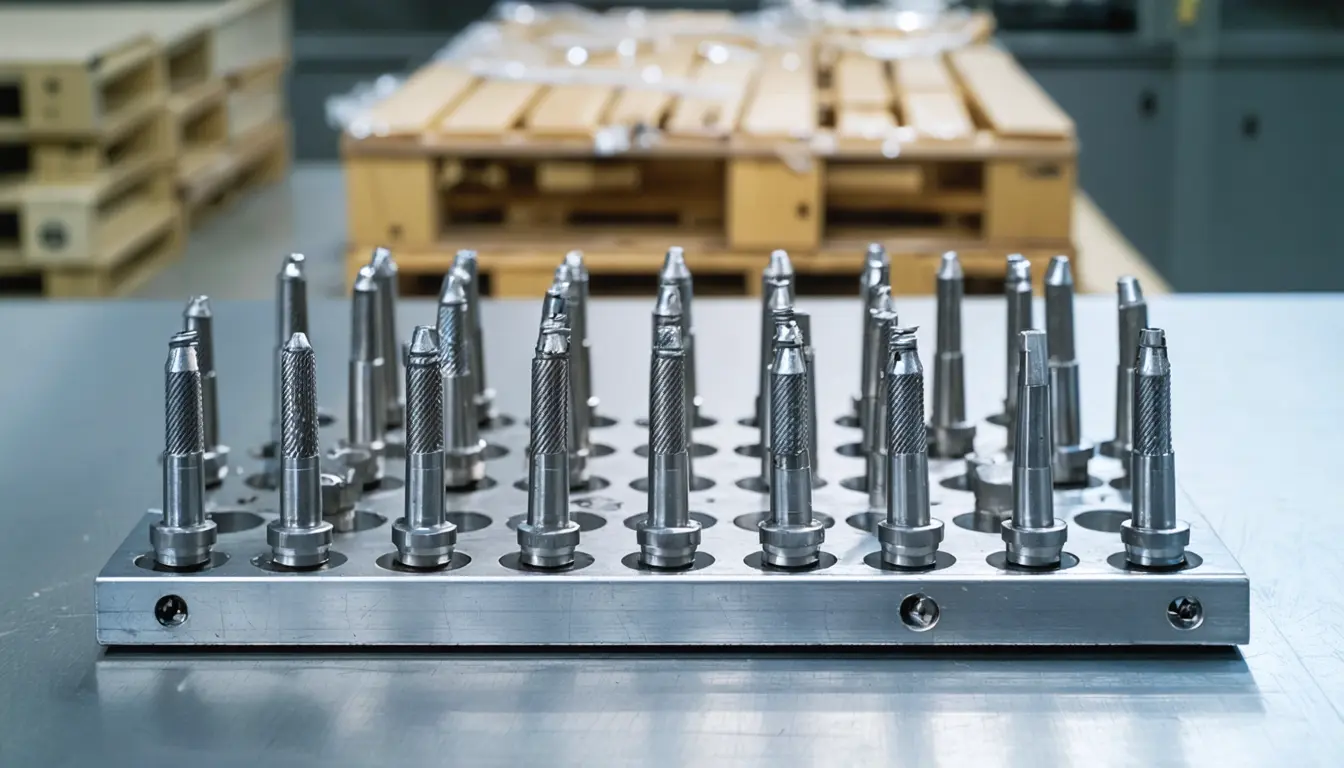
Dentium lifted annual available operating hours at its Shanghai plant to 295,200 from 256,680 last year, a 15% increase [14][18], in the same year its China sales fell 32% [11]. Dio brought its Sichuan plant into full operation in the second half of this year [15]. Osstem widened its range instead, signing an exclusive China distribution agreement with ZimVie last year [13]. Shin Min-soo, an analyst at Kiwoom Securities, said: "Along with smaller price adjustments than in the first round, the second VBP will clear up uncertainty in the Chinese market" [21].
A report on China's oral health care industry projects the implant market at 181.5 billion yuan in 2030, up from 43.1 billion yuan in 2020 [22], a 4.2-fold rise or about 15.5% a year [23]. The base year predates the 2023 tender that cut procedure costs [6][5].
What to watch
- Whether the National Healthcare Security Administration publishes how much weight quality carries against price under open quotation, and how it measures quality.
- Unit prices in the year-end supply terms for Osstem, Dentium and Dio, set against the size of round one's cuts.
- The planned purchase volumes medical institutions report, the first read on whether demand again falls short of the allocations.