Product1 distinct publisher3 min readPublished
Alphabet's robotaxi arm spent years letting its trip counts do the talking. Last week it published a technical case that camera-only, end-to-end driving is not safe enough, timed a week ahead of a two-seater with no steering wheel.
The Product Desk · Product desk

Compiled by The Product DeskSomething wrong?How this is made
Divide the two figures Waymo puts in a single sentence and you get the number a fleet operator actually plans against. About 4,000 robotaxis and 500,000 paid trips a week [7] works out to roughly 125 paid trips per car per week [1], call it 18 a day [2]. That number is the real measure of value: cars leaving curbs with someone in the back who paid.
Tesla's answer is units. A recent filing has the company aiming to build more than 125,000 Cybercabs a year, a two-seater with no steering wheel or pedals [9], which is about 31 times the fleet Waymo runs today [3]. Building things at volume has rarely been Tesla's constraint. The schedule has been: Musk promised a million robotaxis on the road in 2020 [10], and the network that exists runs modified Model Ys in a handful of Texas and Florida cities, with safety monitors coming out of most of those cars only in the past few weeks [11].
Waymo is pitching hardware redundancy, but what it is really doing is defending its record on incident review. Srikanth Thirumalai told Axios that even the best trillion-parameter models still hallucinate, and that physical AI has no reboot, reload or refresh, so you deal with the consequences [4]. That is a liability-and-support argument wearing a sensor argument's clothes.
The person it is written for is not the rider. Riders open the app and wait for a car, choosing a pickup rather than a sensor stack or a technical post about raw pixels on the way to the airport. This post is written for the city official or insurer who will one day need a cause line in a report. New Street Research's Pierre Ferragu read the same post as incumbent rhetoric, writing on X that Waymo "built a driving gas plant that AI at scale makes irrelevant" [12]. Both readings sit on the same evidence, which is why the post produced a weekend-long argument [14] rather than a resolution.
The useful part travels to products with no wheels. Before you replace a pipeline of named stages with one model that maps input straight to output, write the incident note you would have to send when it goes wrong: timestamp, what the system did, and why. If the why can only say that the model produced that, you have bought capability and sold the ability to explain it, and somebody on your team will spend Friday explaining anyway. Waymo's wager is that in a regulated deployment, the explanation is worth the extra hardware on the roof. Anyone shipping a refund engine or a routing model can draft the same note and price that tradeoff for themselves.
Ranked by verification strength, evidence, and original report placement.
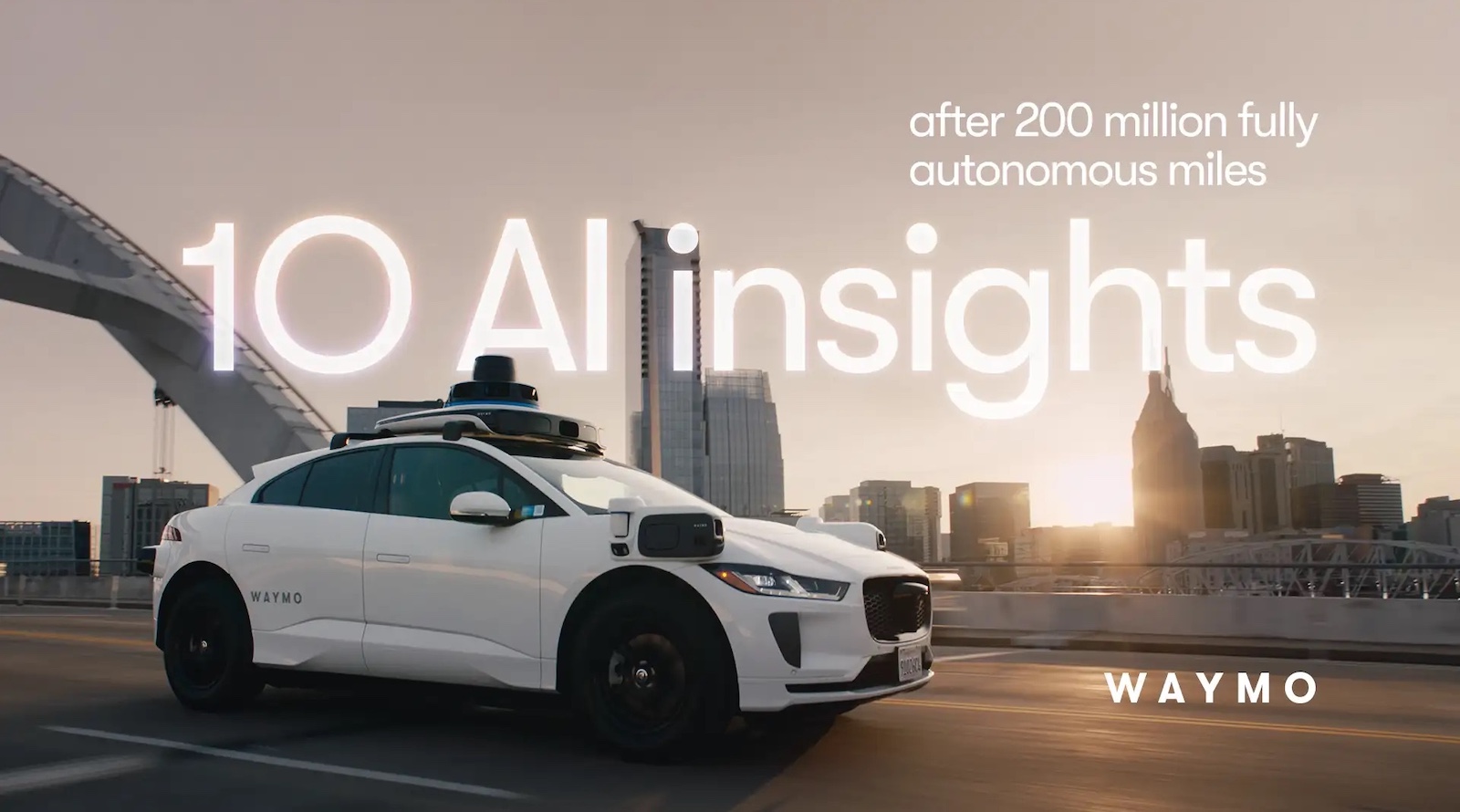
Waymo argued last week that fully autonomous vehicles are not possible without a mix of sensors and that "pure end-to-end" AI systems are not safe enough, in a blog post and an interview with Axios, without naming Tesla.
Srikanth Thirumalai, a VP overseeing Waymo's driving software, wrote that "Cameras are incredible, but they aren't enough" and that after more than 200 million real-world miles the data is clear that safe fully autonomous operations at scale require more, with cameras, lidar and radar creating a redundant world view no single sensor can replicate.
Thirumalai wrote that a pure end-to-end neural architecture that takes in raw pixels and directly outputs steering commands, which is Tesla's approach, will run the risk of black box failures.
Thirumalai told Axios that even the best AI models with trillions of parameters still hallucinate, and that there is no click reboot or reload or refresh in physical AI, so you have to deal with the consequences.
Waymo announced three new markets on Tuesday morning, extending a robotaxi network that is serving customers in more than a dozen U.S. cities.
The Cybercab has no steering wheel or pedals and a relatively small battery, and a recent filing shows Tesla aiming to build more than 125,000 annually.
Distinct publishers with included, body-backed reporting in this cluster.
1 article · September 1, 2026
Follow any of these and your For You feed starts watching them — no settings page required.
product
Waymo cites 200 million miles to argue cameras alone cannot drive a robotaxi1 distinct publisher
product
Waymo opens the trunk: a 5nm ASIC, a quadrillion ops, and a supplier list rivals can price3 distinct publishers
product
Waymo puts its 200 million driverless miles up against the Cybercab's cameras1 distinct publisher
invest
Tesla stakes its robotaxi economics on a pod that seats exactly two1 distinct publisher
Evidence-backed comparisons of source perspectives and observed adoption signals. Read the methodology
Which Builder, Operator, and Investor concerns the observed source mix emphasized—not a truth score.
Evidence, demonstrated adoption, hype gap, incentives, and confidence are assessed independently, each on its own current evidence. How these are measured.
Direct quotes, single conduit
The strongest material is verbatim: Waymo's blog language about cameras, redundancy and black-box failures is quoted at length, and so is the analyst who thinks it is nonsense. Everything else narrows to one pipe. TechCrunch relays the Axios interview rather than conducting it, sources Tesla's production ambition to "a recent filing" it never names, and carries no statement from Tesla at all. The 200-million-mile figure is offered as settling the camera-only question but arrives without the comparison that would settle it.
One fleet has riders, the other has parking lots
Waymo's side of this argument is grounded in service that exists: about 4,000 cars, 14 cities, 500,000 paid trips a week, three more markets announced, roughly 18 rides per vehicle per day. Tesla's side is pre-commercial by the reporting's own account — a year of small trials on modified Model Ys, safety monitors removed only in recent weeks, and Cybercabs registered in Texas and spotted parked rather than carrying anyone. The composite sits above the midpoint because half the story is measurable and half is still an event invitation.
Rhetoric outruns the disclosures on both sides
Two overstatements pull in opposite directions and neither cancels the other. Waymo declares the camera-only debate closed by "the data" while publishing none of the comparison, a week before its rival's stage time — a claim doing competitive work. Tesla's contribution is a two-seater with no steering wheel, a six-figure annual build target and dozens of cars in parking lots. TechCrunch's own hundreds-of-billions market line arrives with no estimate attached. The modest positive reflects that the concrete numbers here, especially Waymo's trip volume, are real and unusually specific.
Everyone quoted has a position
The timing is the tell: Waymo, having let its trip counts speak for years, published a technical safety case seven days before Tesla unveils a car built on the architecture it criticizes. The rebuttal comes from an analyst who covers Tesla, phrased as innovator's-dilemma branding rather than engineering. The most candid moment is Waymo's own spokesperson posting a John Wick image about being outgunned — a company acknowledging it is now in a fight it chose to start. No neutral party, regulator or safety researcher appears anywhere.
Firm on quotes, thin on verification
We can be fairly sure of what each party said, because the words are quoted. We are much less sure of what is true: the safety comparison behind Waymo's conclusion is not shown, Tesla's production number traces to an unnamed filing, its trial scale has no figures, and no second outlet checks any of it. Confidence sits just above the middle — the story's account of a public argument is solid, its account of the underlying capability gap is not yet tested.