Product1 publisher3 min readPublished
Apple will sell a $119 Quest blood panel inside the app that computes your Health Age
The redesigned Health app takes a heart rate reading every five seconds off the Apple Watch Series 12 and Ultra 4, turns it into readiness and Health Age scores, and sells the bloodwork that fills the gap for $119.
The Product Desk · Product desk
What happened
- Apple tied the Health app overhaul to a new Health Sensing System in the Apple Watch Series 12 and Ultra 4: more electrode surface area for ECG contact, photodiodes rearranged in a ring, and power-efficient green LEDs.
- The new watches sample heart rate every five seconds through the day and measure heart rate variability more often, and all of that data is sent to the Health app on the iPhone.
- Oura already sells a comparable Quest panel checking more than 50 biomarkers for $99, and it discounts that test.
Compiled by The Product DeskSomething wrong?How this is made
Why it matters
- constraint A paid coaching app is now priced against guidance that ships with a watch the customer has already bought, and the sensor data it would want to interpret lands in Apple's app first.
- cost The customer pays $119 plus a trip to a lab for the input that makes Health Age work, so the cost of Apple's most differentiated score sits with the user.
- decision Teams built on HealthKit have to choose between competing with Health Age and feeding it, and they have to choose before Apple has said which inputs it exposes.
- precedent A platform selling a diagnostic panel from a system app means the phone now sells the lab test itself, and the next lab chain to sign a wearable deal negotiates against a $119 shelf price and 2,000 US draw sites.
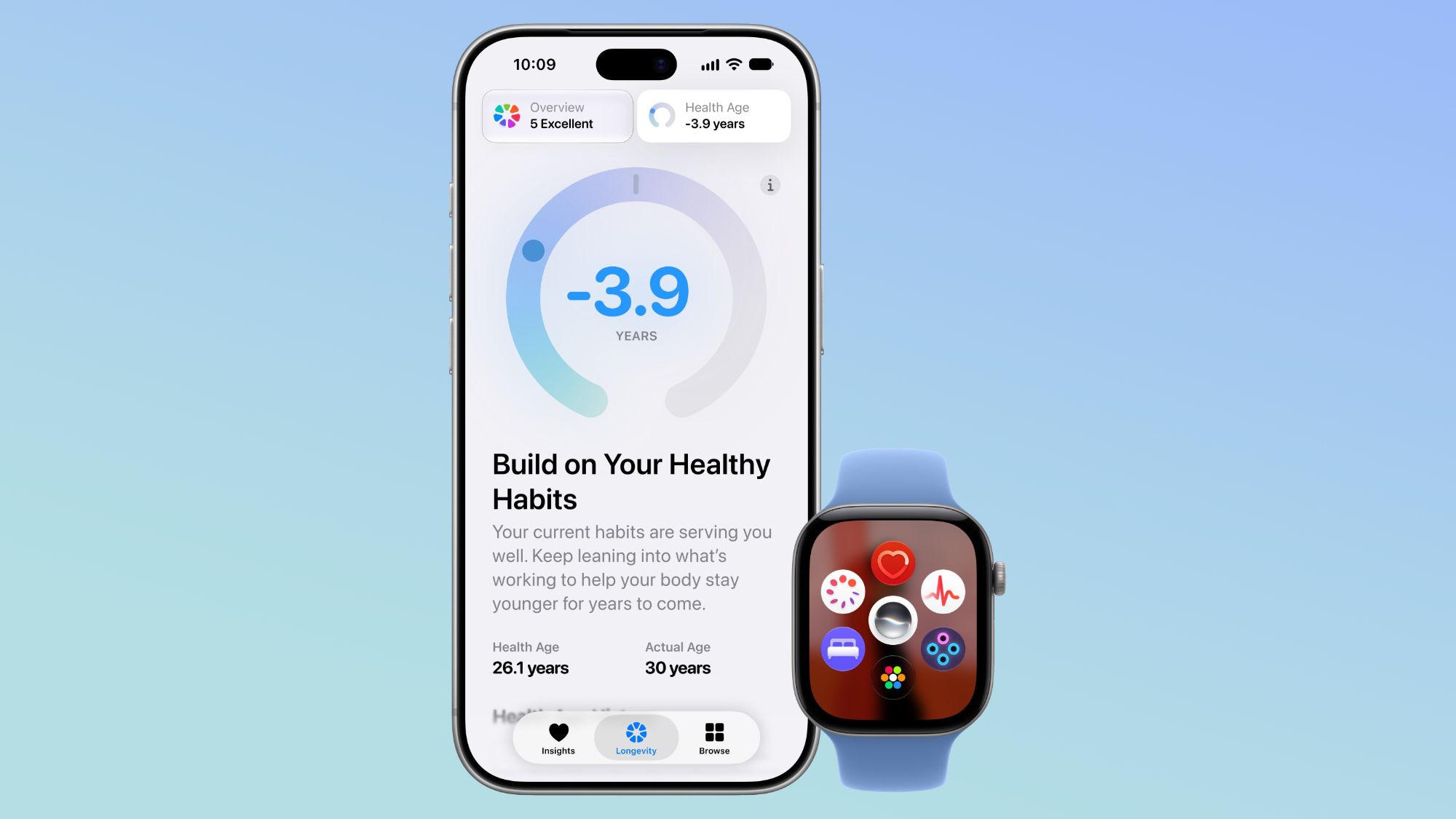
Someone taps the new Longevity tab next year and finds a Health Age assembled from VO2 max, resting heart rate, HRV, sleep and biomarkers from blood work, and they have never had blood drawn [9]. Apple will sell them the draw for $119, in the same app [11].
A heart rate reading every five seconds is 12 a minute and 17,280 across a day [3] [19], and all of it goes to the Health app on the phone [3]. Apple Intelligence writes the Insights tab out of that pile: a summary of the latest sleep metrics or a new peak in VO2 max, with custom advice on readiness, fitness and heart health in a For You section [5]. Readiness is a 0 to 10 score built from recent activity, vitals and sleep score, and it appears on the watch, in the Fitness app and in Insights [7]. Apple's own example of personal guidance is a suggestion to add intervals to your morning run if you are working on cardio [6].
Oura got to the lab side first. Its Quest panel covers more than 50 biomarkers for $99, and Oura runs discounts on it [14]. Apple's covers more than 50 biomarkers for $119 [11], which is $20 and about 20 percent more [20]. Both send the customer to a Quest location, and Quest has roughly 2,000 of them in the US [15]. Apple's checkout sits in the app that computes the score the panel feeds, and Apple says the results come back combined with Apple Watch data and analyzed on the iPhone [11].
The announcement does not measure whether anyone buys the panel, or opens Insights twice; it settles placement and inputs. The camera work makes the same point on a smaller budget: Apple is adding at-home movement evaluations, including a VO2 max test in which the iPhone camera tracks you through the moves [17].
The panel is not in the Health app yet, and the full list of what it includes is not public [13]. The accuracy claim under all of this is Apple's own, and it is narrow: Apple says that in a head-to-head study against other wearables, using an ECG chest strap as reference, the new Apple Watch had the most accurate heart rate sensing [4]. MacRumors' guide puts the redesign in iOS 27 next year [18], and it does not say which of the new streams or scores a third-party app will be able to read [21].
For anyone shipping a consumer health app, two axes are enough for the Monday conversation. The first is whether the feature depends on data Apple now generates on the wrist or sells at a Quest counter [3] [11]. The second is whether the user has a standing reason to open your app to get it, such as a clinician on the other end, an insurer, a device Apple does not make, or a protocol for one condition. Features that need Apple's data and give the user no reason to leave the Health app are the ones to stop funding. What survives that sort is what a customer would still pay for. Apple's price for the one input it cannot take off the wrist is $119 [11].
What to watch
- Whether Apple discounts or bundles the $119 panel once it actually goes on sale in the Health app.
- What the iOS 27 betas expose to HealthKit developers: the five-second heart rate stream, the readiness inputs, or only finished scores.
- Whether Oura moves its $99 Quest price or folds the panel into its subscription.