Invest1 publisher3 min readPublished
Research labs and AI developers took most of the 7,000 humanoids sold in 2025
The International Federation of Robotics counted humanoids as their own category for the first time and found about 7,000 sold worldwide last year, most of them to research institutions and AI developers buying machines to generate training data.
The Investor · Invest desk
What happened
- The International Federation of Robotics, counting humanoids for the first time, put worldwide sales for industrial and professional service use at about 7,000 in 2025, most of them bound for research.
- IFR secretary general Susanne Bieller said most factory pilots run at single-digit or sometimes double-digit robot counts.
- Bank of America Global Research expects humanoid shipments of 90,000 units in 2026 and 1.2 million by 2030, according to technology.org.
Compiled by The InvestorSomething wrong?How this is made
Why it matters
- constraint A buyer acquiring machines to generate AI training data reorders when the model needs fresh data, so the purchase cycle that funds this market has nothing to do with headcount or line capacity.
- exposure Anyone underwriting the 90,000-unit path for 2026 is underwriting roughly thirteenfold growth in twelve months from a base where the biggest visible deployments are in the tens.
- contradiction IFR excludes consumer and military machines and counts on its own definition, while Unitree and AGIBOT publish on theirs, so the 7,000 sizes a category and not the number of humanoids built last year.
- decision Pilot operators now face a reorder decision that turns on operating hours and task completion. Volume in 2026 depends on how those pilots convert.
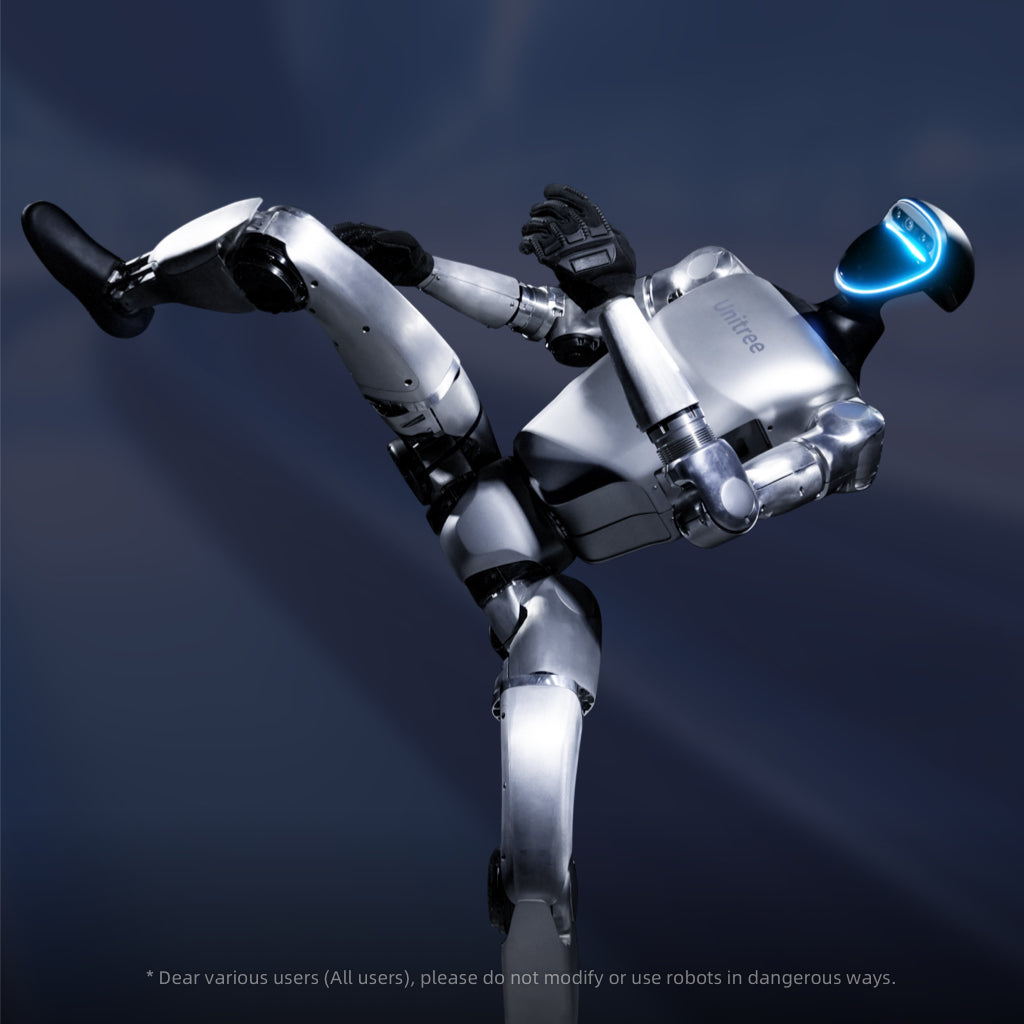
A lab buying one humanoid to generate training data does not reorder when a production line expands. Susanne Bieller is secretary general of the Frankfurt-based IFR. She told Reuters that many of last year's buyers were research institutions and companies using the robots to generate data for AI models, and not employers looking to replace human workers [2]. Unitree's own mix points the same way: nearly 75% of its humanoid sales went to universities, research organizations and individual developers [4].
Set the 7,000 against the rest of IFR's book. It logged about 542,000 conventional industrial robot installations in 2024 [8], alongside an estimated 199,000 professional service robots sold that year for uses including transport, hospitality and cleaning [9]. Humanoids come to 1.3% of the industrial figure and 0.94% of the two lines combined [10].
The forecasts assume a different market. Bank of America Global Research expects 1.2 million shipments by 2030 [11], which from a 2025 base of 7,000 requires sales to nearly triple every year for five years [13]. Bieller said most factory pilots involve only "single-digit or sometimes double-digit numbers of robots" [5]. At 50 robots a site, the bank's 90,000 units for 2026 is 1,800 separate deployments; at ten robots a site it is 9,000 [15].
Where IFR drew its line matters to the number. A humanoid has to look mostly human and work autonomously in environments designed for people, and it does not have to be bipedal [6]. Consumer and military humanoids are left out, and medical robots are assessed separately [7]. Unitree and AGIBOT publish shipment figures using their own definitions, supplier samples and reporting periods, so a higher count from one does not necessarily conflict with a lower one from the other [14]. The figures also do not show how many machines are actually in use, how often they operate, or whether they deliver enough value to justify their cost [21].
I would expect 2026 to land closer to 7,000 than to 90,000. Cryptopolitan reached the same conclusion, writing that annual sales are likely to stay nearer the IFR count until companies start ordering humanoids in larger fleets [19]. The counter case is state money. China's National Development and Reform Commission has announced a state-backed venture capital fund expected to attract about 1 trillion yuan over 20 years for robotics, AI and other high-tech industries [16]. That works out to an average of 50 billion yuan a year [18]. A subsidised fleet order is still a fleet order. What would settle the question is one buyer taking delivery of hundreds of machines on a single purchase order, or second orders coming out of the pilots already running. IFR says the next test is operating hours, task completion and repeat orders once machines are delivered [3].
What to watch
- IFR releases its full 2025 industrial and service robot figures on September 24, which sets the denominator the humanoid count is measured against.
- A single named buyer taking delivery of hundreds of humanoids on one purchase order, or second orders out of the factory pilots already running.
- Whether Unitree's near-75% research and developer share falls as it ships to industrial customers.