SecurityNot yet confirmed elsewhere1 publisher2 min readPublished
Huntress maps an Akira ransomware attack from Registry traces and the ransomware's own logs
Huntress's agent, installed after an Akira ransomware attack, flagged a GOST tunnel on a domain controller set up about four hours after encryption began. The evidence that the ransomware ran came from Registry entries, event logs and Akira's own log files left on disk.
The Watch · Security desk
What happened
- The tunnel ran as svchost.exe from C:\PerfLogs\Temp under the SYSTEM account and loaded a file named config.dll.
- Windows Event Logs showed the attacker reached the endpoint over RDP from a workstation the customer did not own.
- Shortly afterward the attacker opened the Bitdefender console, and four Bitdefender endpoint services were logged as stopped.
- Shellbags placed the attacker in a folder an Akira log listed as a target, while a PowerShell command deleted volume shadow copies at the same time.
Why it matters
- decision When EDR goes in after the compromise, Registry hives, Event Logs and Akira's logs are the remaining record of entry and execution, so collecting them has to come before any host rebuild.
- exposure A GOST tunnel on a domain controller survives the encryption event; a recovery that restores data without finding and removing it leaves the attacker a route back into the domain.
- decision If Huntress is right that procdump dumped lsass.exe, credentials on that host were taken before any agent was present, and password resets have to treat them as compromised.
- constraint The late install cost the investigation its view of initial access, which Huntress says is what would have told the victim where to focus remediation.
The agent recorded none of the evidence that put Akira's ransomware on the host. Huntress worked from Windows Registry artifacts including Shellbags, Windows Event Logs and the log files Akira left on the affected endpoints [8]. The Event Logs also named each Bitdefender service as it stopped, under Service Control Manager event 7036 [10]. Huntress researchers wrote that "one limited telemetry stream does not mean that there aren't important clues in other places that can build a picture about what happened during the incident" [2].
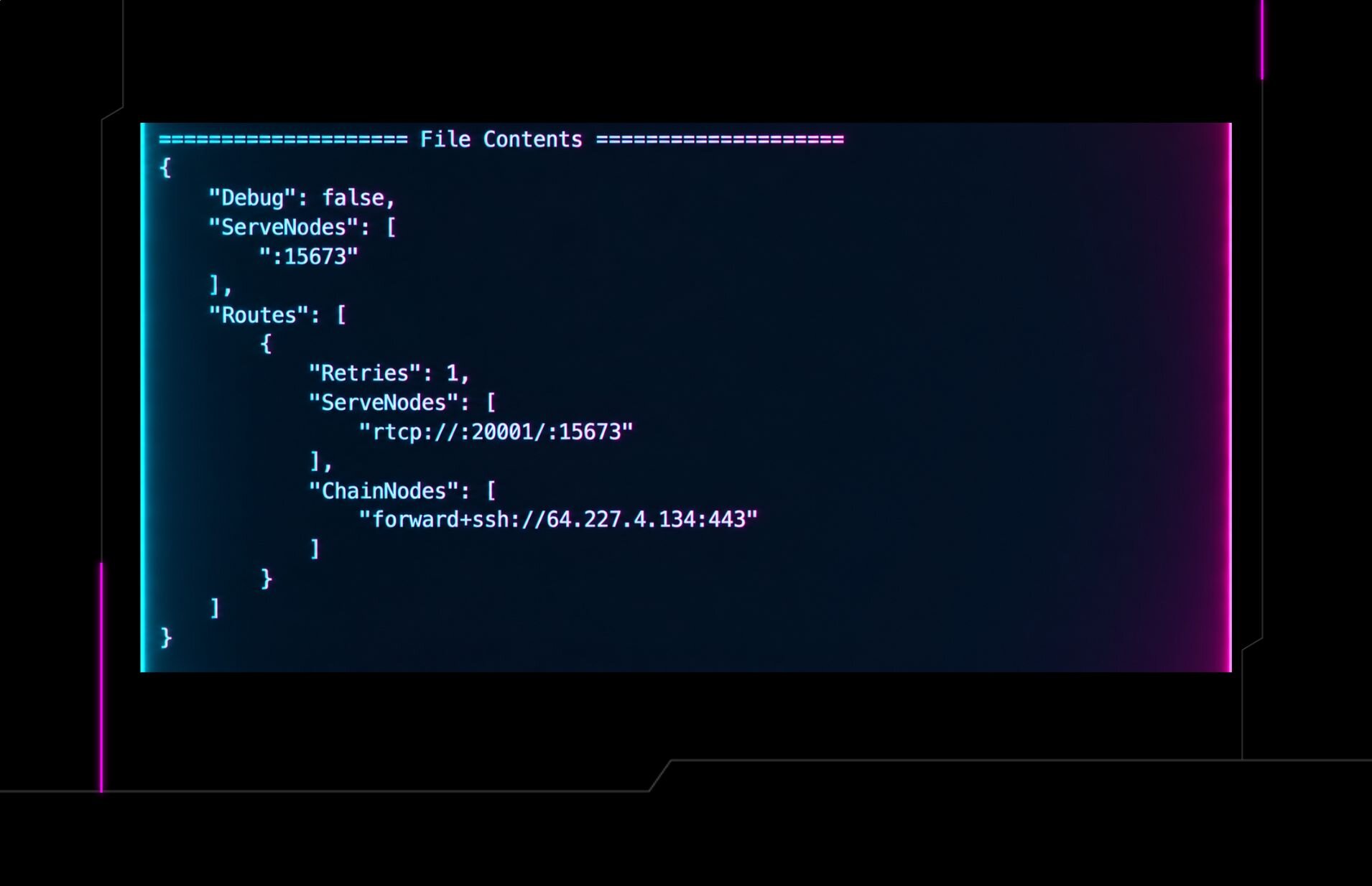
The agent did catch the tunnel. Huntress tied the svchost.exe alert to the launch of GOST [7]. GOST is an open-source proxy and tunneling tool written in Go. It supports several protocols with built-in encryption and can chain proxies [12]. The attacker installed it for persistence after encryption had already started [14]. It sat on a domain controller [6]. On that timeline, the intruder set up a way back into the domain after the ransomware had run [14].
Parts of the chain are inference. Huntress wrote that procdump.exe was run from C:\PerfLogs "presumably to perform credential theft by dumping the contents of the lsass.exe process" [11]. Its researchers say they mapped "some parts of the attack" [3]. They also wrote that an earlier install would have shown how the attacker got in [15]. The write-up does not identify the victim or the Akira affiliate, and it does not say how the attacker got the RDP access used from the outside workstation [1][9].
Huntress has written before that its agent sometimes arrives after an attacker is already inside. Sometimes that is a response to an incident; sometimes the organization is partway through a rollout [13]. In this case Huntress calls the shadow copy deletion a common Akira action [5].
What to watch
- Any Huntress follow-up on how the attacker obtained the RDP access used from the non-customer workstation, the step its late install could not see.
- Other Akira write-ups that show GOST staged from C:\PerfLogs after encryption would make this a repeated affiliate pattern.
Clarity's read
What the record supports and how the coverage leans. The claims behind it follow.
Reality
- Evidence58
- Adoption
- Insufficient
- Hype gap+10
- Incentives55
- Confidence55
Claim ledger
Ranked by verification strength, evidence, and original report placement.
- [1]
In September, the Huntress agent was deployed on an organization that had been targeted in an Akira ransomware attack, after the compromise had occurred.
- [2]
one limited telemetry stream does not mean that there aren't important clues in other places that can build a picture about what happened during the incident
- [3]
Huntress researchers pieced together Registry data, Akira log files, and more "in order to map out what happened during some parts of the attack."
- [4]
Without a recorded ransomware command line, Shellbags showed the threat actor accessed the folder, an Akira log file indicated the ransomware targeted it, and a concurrent PowerShell command removed volume shadow copies; Huntress said the timeline provides strong evidence of execution.
- [5]
Huntress described the removal of volume shadow copies as a common Akira action.
- [6]
After the Huntress agent was installed in early September, an EDR signal on a domain controller showed svchost.exe executed from the C:\PerfLogs\Temp\ directory under the SYSTEM account, loading config.dll.
- [7]
Huntress said the command line shown in that EDR signal is associated with the launch of the GOST tunnel.
- [8]
Lacking EDR telemetry, researchers worked from what was available on the impacted endpoints: Windows Registry artifacts (including Shellbags), Windows Event Logs, and Akira log files.
- [9]
Windows Event Logs showed the threat actor accessed the impacted endpoint via Terminal Services/RDP from a workstation not owned by the customer.
- [10]
Shortly after the RDP access, the threat actor accessed the Bitdefender console, and four Bitdefender services (Endpoint Update, Endpoint Integration, Endpoint Protected and Endpoint Security) were logged as stopped under Service Control Manager event 7036.
- [11]
procdump.exe was run from the C:\PerfLogs folder "presumably to perform credential theft by dumping the contents of the lsass.exe process"
- [12]
GOST (Go Simple Tunnel) is an open-source network proxy/tunneling tool written in Go; Huntress said its support for multiple protocols with built-in encryption and proxy chaining makes it attractive to threat actors.
- [13]
Huntress has written previously that its agent is sometimes deployed after an attacker has already accessed or compromised an environment, sometimes in response to an incident and other times while the organization is still rolling out the agent.
- [14]
About four hours after initiating the file encryption processes, the threat actor deployed a GOST tunneling tool for persistence.
- [15]
Huntress said that had the agent been installed earlier, it would have picked up other indicators and shown what the threat actor was doing and how they got in, which would help the organization decide which areas to focus on during remediation.
Sources
1 independent publisher whose own reporting we read for this story.
- huntress.comUp a Creek Without a Command Line: Mapping an Akira Ransomware Attack
1 article · October 6, 2026
Topics and entities
Follow any of these and your For You feed starts watching them — no settings page required.
Topics
- Digital Forensics and Incident ResponseFollow
- RansomwareFollow
- Endpoint Detection and ResponseFollow
Entities
- HuntressFollow
- Akira ransomwareFollow
- GOSTFollow
- BitdefenderFollow
- ProcDumpFollow
- rcloneFollow