Product3 publishers2 min readPublished
HP's $699 OmniBook 5 14 adds OLED to the MacBook Neo template
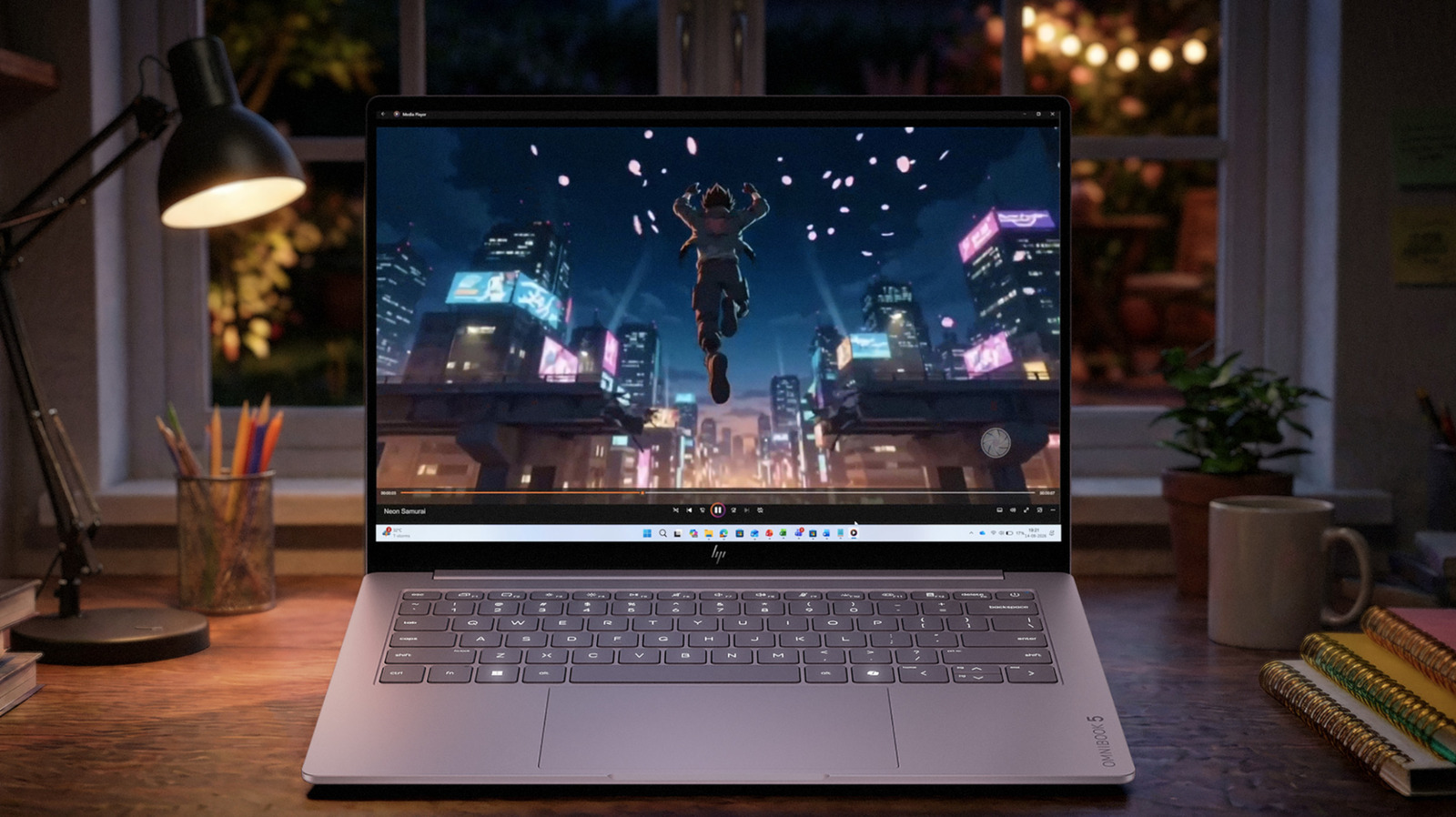
HP's $699.99 OmniBook 5 14 copies the MacBook Neo's 8GB of RAM and four colors while putting an OLED screen in every configuration. The $699 buyer gets that OLED as a 300-nit, 1920 x 1200 panel, so the sharper 400-nit screen is a March 2027 purchase.
The Product Desk · Product desk
What happened
- Configurations go up to an Intel Core 7 350, 16GB of RAM and a 1TB SSD, and every model includes a 1080p webcam, dual speakers, HDMI and a 3.5mm audio jack.
- At 2.56 pounds and as thin as 0.46 inches, the OmniBook is slightly lighter and thinner than the MacBook Neo, according to The Verge.
- Engadget's reviewer could name only one other inexpensive laptop with an OLED display, Acer's recently launched Swift Go 16 AI.
- Engadget says the laptop goes on sale this month but that HP has not set a specific date, while The Verge puts the launch in October.
- The ProBook 4 G2iS business laptop, which HP calls its thinnest business notebook at 0.47 inches, launches in December with no price yet.
Compiled by The Product DeskSomething wrong?How this is made
Why it matters
- contradiction Engadget describes the display as a 2.5K touchscreen on a 180-degree hinge, so a shopper who reads only that review may expect a screen that The Verge's spec list puts outside the $699 model.
- decision Schools and offices that want the 2560 x 1600 panel have to choose between ordering the 1920 x 1200 model at launch and holding orders for about five months.
- constraint Paying extra for the Core 7 and 16GB gets no extra ports, because every configuration has just two 10Gbps USB-C ports alongside HDMI.
A shopper comparing HP and Apple at around $700 [18] will see one feature on HP's side that the Neo doesn't have [3]. Both launch write-ups put it in the headline. The Verge's says HP's answer to the Neo "comes with OLED" [16], and Engadget's says the OmniBook "features an OLED screen" [17]. A product team can tell itself that one word settles the comparison. The person who buys the base model gets a panel The Verge described as having "a passable 1920 x 1200 resolution" [5].
The rest of the early read favors Apple. The Verge does not expect the OmniBook to beat the Neo on raw processing power or on screen brightness, going by its reviews of other Wildcat Lake laptops [7]. Beyond the panel, HP's additions are mostly cosmetic, such as the sleeker lid logo it usually keeps for pricier models [15]. I'd recommend the base model for people who mostly work indoors and want OLED at the Neo's price. The tradeoff, on The Verge's early evidence, is a slower chip and a dimmer screen than the Neo's [7].
Users notice battery life every day, and so far the only evidence on it comes from HP. The 42-hour figure comes from HP's own local video playback tests [12], and Engadget expects CPU-intensive software to drain the machine faster [19]. The Verge expects "some good-to-great battery life" from the Wildcat Lake chips but wrote that "we'll have to see how it delivers in actual testing" [9].
Anyone placing an order can sort HP's launch claims into a 2x2. One axis asks whether a feature is in the $699.99 configuration [1]. The other asks whether it ships at launch. Of the screen features, only the OLED panel itself is in the base box on day one [3][5]. Touch ships at launch in a version that neither review prices [6]. The 2560 x 1600, 400-nit panel falls in the last cell: it isn't in the base box, and it arrives about five months after the October launch [6][1]. Before signing off, add a third column for who measured each number. For battery life, the only measurement so far is HP's [12].
What to watch
- Independent battery tests of the Wildcat Lake OmniBook 5 14 measured against HP's 42-hour video playback figure.
- HP's prices for the touchscreen model and for the 2560 x 1600, 400-nit panel due in March 2027.
- Whether Dell, Asus or Acer put OLED into the base configurations of their own $699 Neo rivals.