Invest1 publisher2 min readPublished
Kansas bankers pay to attack Republican Sen. Roger Marshall over swipe fees
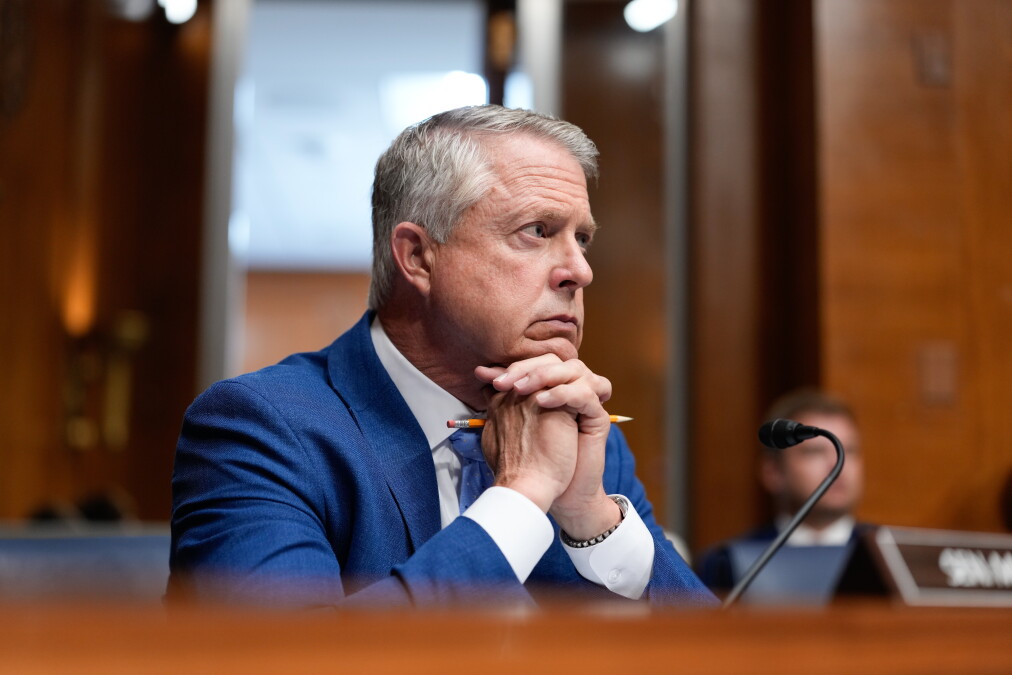
Kansas bankers put about $250,000 into a roughly $1 million ad buy against Republican Sen. Roger Marshall over his swipe-fee bill. With co-lead Dick Durbin retiring, a Marshall loss would leave the Credit Card Competition Act without either lead Senate sponsor.
The Investor · Invest desk
What happened
- The Cook Political Report has moved Marshall's race from "likely Republican" to "lean Republican."
- Recent polls suggest Marshall could become the first Republican to lose a Senate race in Kansas in nearly 100 years.
- His opponent, Democrat Adam Hamilton, a Methodist minister, has drawn disaffected Republicans and independents, according to Kansas State's Nathaniel Birkhead.
- President Trump supports the Credit Card Competition Act, and Marshall is among the Republicans most heavily aligned with him.
- The bankers partnered with the Electronic Payments Coalition, arguing the bill could harm consumers and restrict access to cards offered by community banks.
Compiled by The InvestorSomething wrong?How this is made
Why it matters
- cost Money spent against Marshall helps Democrat Adam Hamilton, so an industry with a history of Republican allies is paying to raise the odds of a Democratic pickup over one bill.
- exposure Trump's separate call for card rate caps keeps issuers exposed to White House pressure whoever wins the Kansas seat or ends up carrying the bill.
- precedent A state bankers' group openly funding attacks on a sitting Republican makes it easier for other state bank groups to target Republican swipe-fee backers in their own delegations.
About $250,000 of the roughly $1 million is the Kansas Bankers Association's own money, a quarter of the buy [1]. The other $750,000 or so came from its partners in the campaign (American Banker does not say how that sum was split) [2]. The trade paper says the Trump era has scrambled the traditional alliance between Republicans and the banking industry [8]. Marshall is its example of a Republican willing to join Democrats against an industry that has historically had stalwart allies in his party [16].
Jaret Seiberg expects the Kansas result to say little about cards. "It's bread-and-butter issues of inflation, higher gas prices, diesel prices, agricultural issues that are driving that race," the TD Cowen analyst said [9]. "Credit cards are just along for the ride," he said [10].
Nathaniel Birkhead, a political scientist at Kansas State University, puts the bill inside a wider Republican turn toward the cost of living. "It is an interesting shift that I think taps into just the broader concerns that people have about being economically precarious, and so I think Republicans are taking up on that," he said [14].
Those two readings carry different risks for issuers and networks. If Marshall loses on inflation and diesel, the industry still faces a bill that American Banker judges unlikely but possible to pass whatever Kansas decides [11]. If he wins in deep red Kansas after a bank-funded campaign aimed at his sponsorship [1][6], other Republicans learn that backing the bill costs them little. I think the second outcome is the one issuers should worry about. It would show the industry's money failing against the bill's own sponsor.
Seiberg summed up the pattern around the bill in one line. "Every time Trump tweets about swipe fees, the banks get up in arms, the merchants celebrate," he said [13].
Here is what would prove this view wrong. If Marshall loses and other Republicans then back away from the bill, senators will have treated the result as a verdict on cards, and Seiberg's prices-first reading of the race will not have held in Washington.
What to watch
- Whether Cook moves the Kansas race again, from lean Republican toward toss-up, before the vote.
- Whether another Republican senator steps forward to lead the Credit Card Competition Act alongside Marshall or in Durbin's place.
- Whether the Electronic Payments Coalition runs similar ads against other Republican supporters of the bill.