Science2 publishers3 min readPublished
Four Google TPUs head to orbit to test whether AI chips can shed heat in a vacuum
Google will fly four TPUs on a Planet-built Suncatcher satellite aboard SpaceX's Oct. 1 rideshare and track radiation and heat for a year. Lab tests have already covered launch loads and a five-year radiation dose, so cooling in a real vacuum is the least-proven part of the design.
The Scientist · Science desk
What happened
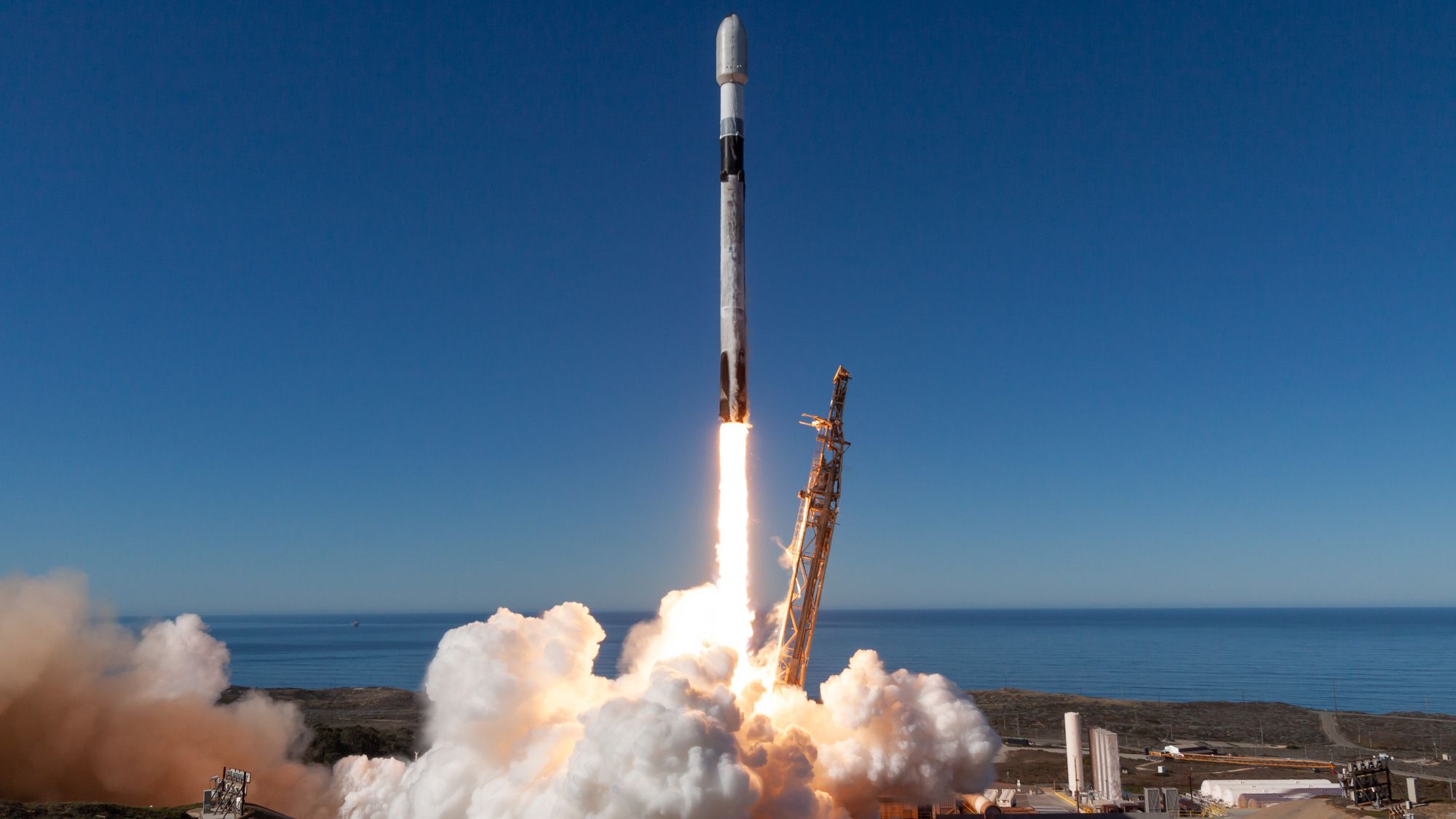
- Google said on Sept. 24 that a Project Suncatcher prototype will fly on SpaceX's Transporter-18 rideshare, scheduled to launch Oct. 1.
- The satellite, built by Planet, carries four TPUs and is planned to operate for a year, according to The New York Times.
- Google will track how space radiation affects the chips and how well the heat they generate is carried away.
- Before launch, Google shook the satellite along three axes to simulate loads of 50 to 100 g and says the hardware held up.
- The laser links a working cluster would need are a separate test, planned with two satellites in 2027.
Compiled by The ScientistSomething wrong?How this is made
Why it matters
- constraint A one-year flight covers a fifth of the five-year horizon Google tested for, so its long-term radiation case will keep resting on proton-beam data.
- decision Google has said it will refine its cooling design from what the flight shows, so the thermal design of later Suncatcher satellites depends on this year's in-orbit readings.
- constraint Even a clean result covers four chips on one satellite; satellites with dozens of TPUs each, flown in linked clusters, stay unproven until later tests.
Google's case for putting AI hardware in orbit is power. The company says satellites in low Earth orbit get near-constant sunlight and can generate up to eight times more solar power than on Earth [13]. SpaceX has a larger plan of the same kind. It aims to operate a million-member constellation of Starmind AI satellites and to start building it as soon as next year, according to Space.com [14]. This flight is the first time Google has sent its own AI chips into orbit [16].
Radiation already has a ground result behind it. At a proton-beam facility, Google ran AI workloads on Trillium TPUs while exposing them to radiation and monitoring errors. It says initial results showed the chips withstood a total dose greater than a five-year space mission would deliver [7]. The result is Google's own, from a lab. The coverage reports the dose outcome but no error counts from those runs. For a chip doing inference, how often a calculation comes back wrong is what an operator would ask about first.
The flight will not replace that test on dose. It is planned to last a year, according to The New York Times [3]. A year is a fifth of the five-year mission Google used as its benchmark [15]. The flight will record a year of radiation effects on chips actually running in orbit [4].
Cooling is the harder question. There is no airflow in space to carry heat away [5], and TPUs pack their heat into a small area [8]. "We're working on a number of different approaches for this, including a combination of heat pipes and radiators to cool the chips," Google wrote [1]. "So far, our team has tested the technology in a thermal vacuum chamber that simulates both the thermal and vacuum environment in space," the company added [2]. The prototype is meant to gather data about orbital conditions that ground testing cannot provide [18].
In my view the radiator readings are the result to wait for. Cooling is the part Google has said it will redesign from what it learns. "We'll see how our new TPU cooling system works in space and refine our designs as we learn more," the company wrote [3].
The flight will not show whether the design scales. The prototype carries four TPUs [3]. Google's longer-term design calls for satellites carrying dozens of TPUs each, flying in clusters [9]. Space.com describes those clusters as dozens of spacecraft [10]. A heat-pipe system that clears the heat of four chips says little directly about one handling dozens [3][9].
The clusters also need laser links with very high bandwidth over short distances, while the satellites keep track of their positions relative to one another [11]. "Maintaining the necessary connection requires extraordinary precision, similar to hitting a coin-size target from miles away while both points are in motion," Google wrote [4]. Planet will build the two satellites for that test as well, according to The New York Times [12].
What to watch
- Whether Transporter-18 flies on Oct. 1 and the four TPUs run workloads in orbit after surviving launch.
- Whether Google publishes in-orbit radiator temperatures and radiation error counts, and whether the cooling design changes for the 2027 satellites.
- The 2027 two-satellite laser-link test, the first check on whether Suncatcher hardware can work as a networked cluster.